
Visby Harbour: What Is There and How to Reach the Old Town
Visby harbour is two quite different places in one. North of the walls lies the modern cruise berth, built for large Baltic vessels, while inside the town the grassy park of Almedalen marks where medieval ships once tied up. This guide covers what stands at each, how the walk between them works, and which sights sit within a short stroll.
Allow half a day to do it properly: the berth to the old town on foot, a loop past Kruttornet and the wall, the climb to Kyrkberget for the view, then Strandgatan and the lanes back down. That leaves time for Gotlands Museum or a fika without rushing.
Visby harbour at a glance
The harbour sits on the east side of Visby, on the island of Gotland in the Baltic Sea. The modern cruise berth lies to the north of the old town, while the medieval harbour area is now Almedalen, a park that runs along the waterfront just beyond the town wall. Between the two, the walled town climbs gently uphill from the water.
That geography makes the harbour easy to use as a starting point. You arrive at the water, walk south or south-west, and the wall, towers and church spires come into view within minutes. Almost everything described on this page is reachable on foot, with no bus or taxi needed once you are ashore.

The cruise berth: two large ships at once
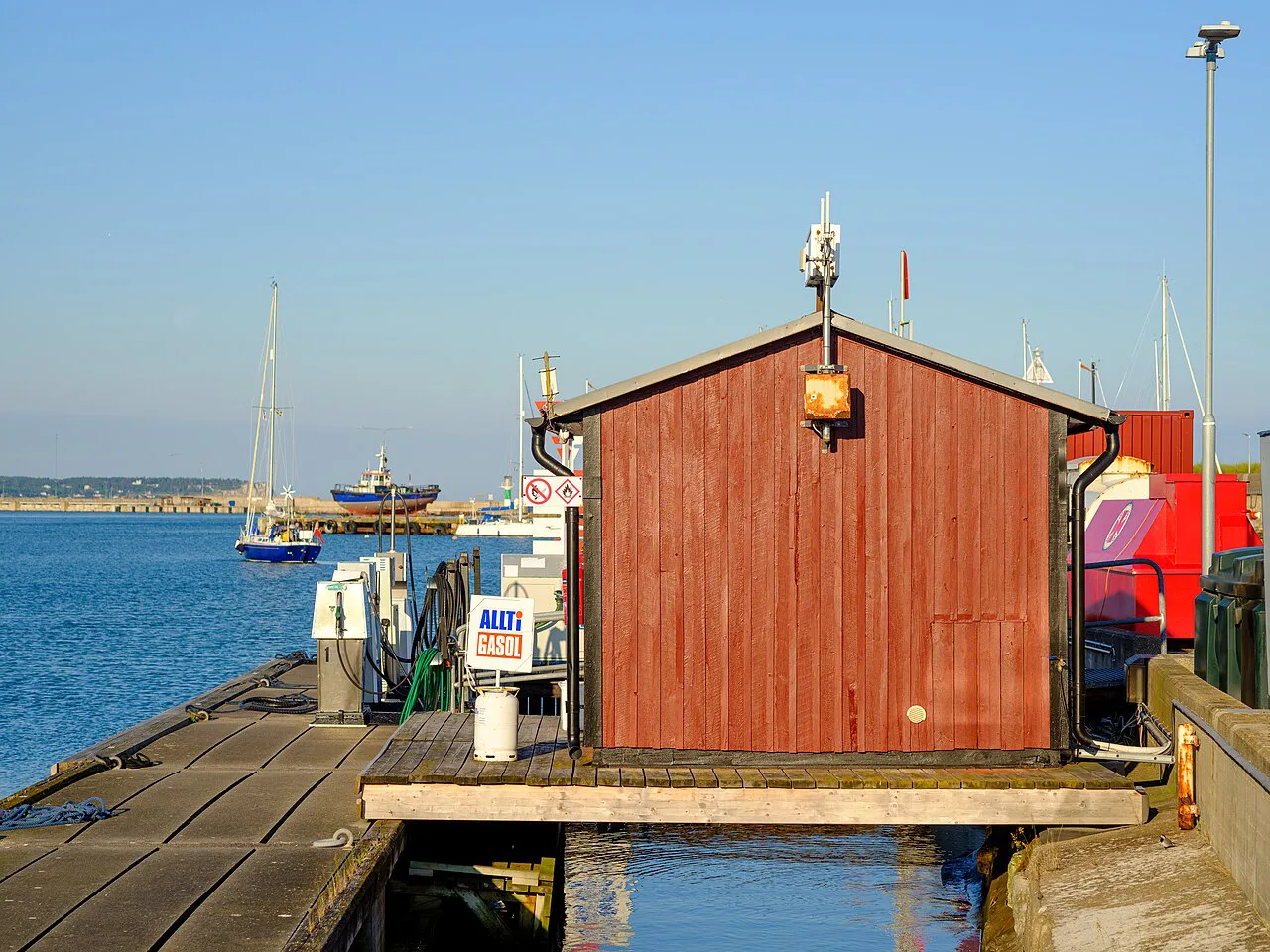
Visby's cruise berth was built in 2018 by Region Gotland together with Copenhagen Malmö Port, and it can take two vessels of up to 340 metres alongside at the same time. The berth itself extends 530 metres into the sea, including its abutments, so the walk along the quay is a long one when it is busy.
Visby is a regular call on Baltic Sea itineraries, with lines such as Princess, Viking Ocean Cruises and Holland America among those that stop there. If you are arriving by sea, the ship's own programme is the thing to check for arrival and departure times, since the berth handles vessels rather than publishing a public timetable.
Facilities at the berth beyond the quay itself change with the season and the operator, so treat anything you read about shuttles or terminal services as something to confirm on the day. The reliable facts are the scale of the berth and the fact that it sits outside the walls, north of the old town.

Walking from the berth into the old town
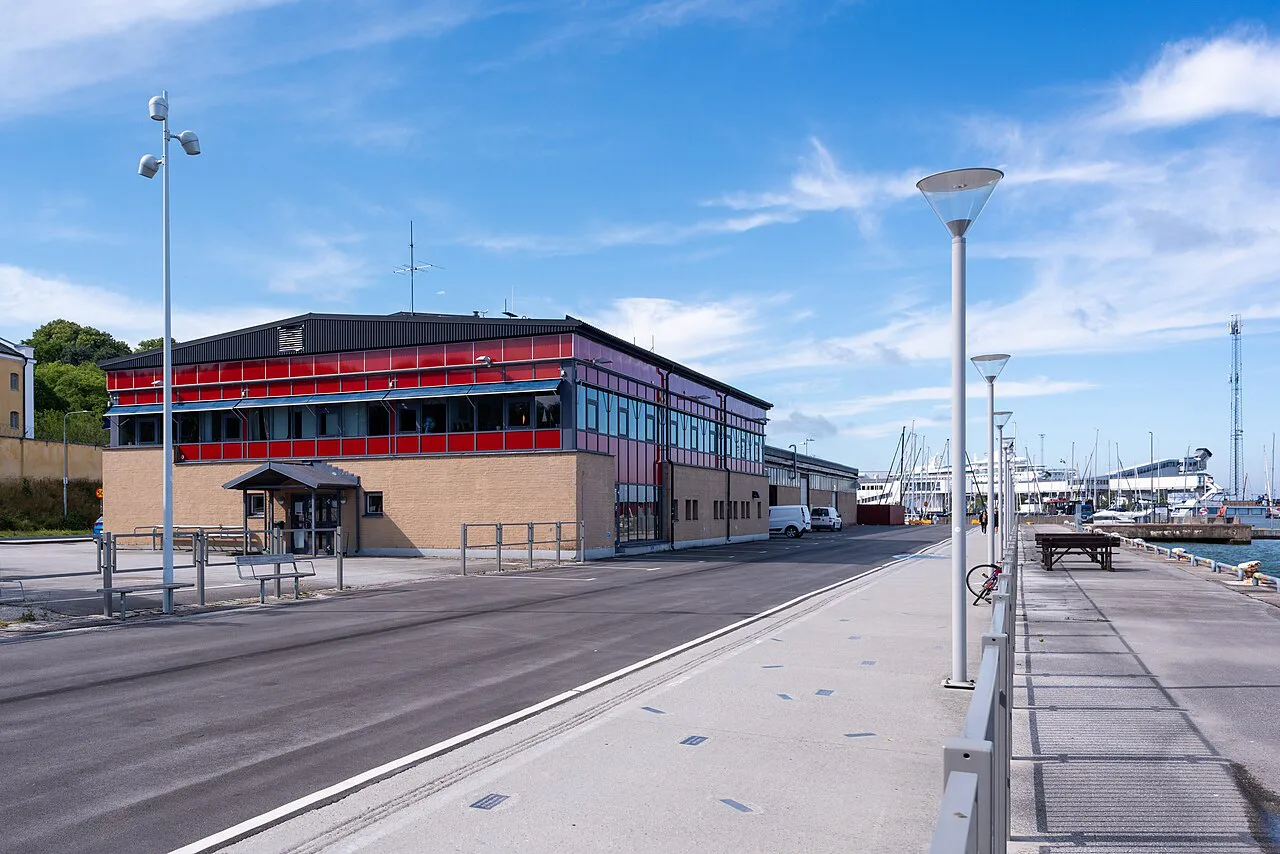
From the cruise quay, head south along the waterfront and you will pick up the line of the town wall. The route is flat until you reach the northern gateways, where the ground rises into the old town. There is no single signed trail, but the wall and the church towers give you a clear bearing the whole way.
The first thing you meet is the water side of Almedalen, the long park that buffers the town from the harbour. Cross it and you are at the foot of the wall, with Kruttornet close by. From there, any of the lanes running uphill will bring you into the shopping streets and eventually to Stora Torget, the main square.
Almedalen: the park that was the harbour
Almedalen has long been a meeting place in Visby, and it once served as the city's port. Today the lush park is a relaxed spot to sit, with lawns running down towards the water and the wall rising behind. It is the clearest place to picture how the medieval harbour worked, with ships moored where grass now grows.
The park is open to all comers, which makes it a sensible first stop if you are killing time before a museum opens. In summer it fills with people and events; in quieter months it is simply a green ribbon between the water and the town.
Kruttornet and the medieval harbour
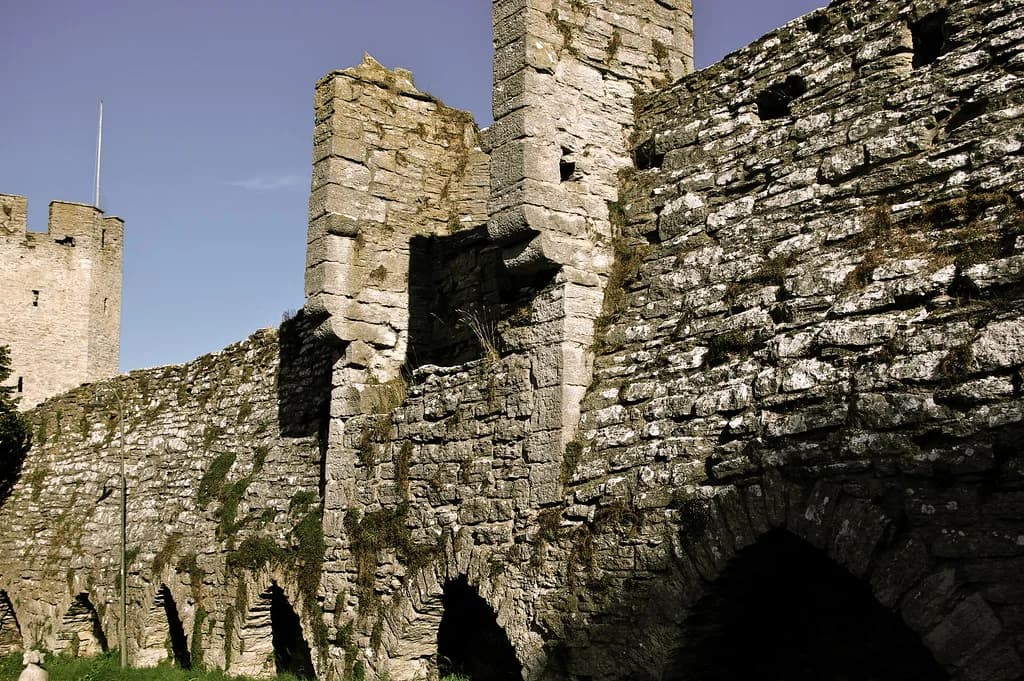
Kruttornet, the Powder Tower, is the oldest tower in the city wall, built in the 1100s to protect the harbour when Almedalen was still a working port. It gained its gunpowder name in the 18th century, when the Swedish state stored explosives inside. Standing at its base, with the park on one side and the wall running away on the other, you can see exactly what it was guarding.
The tower is a quick stop rather than a long visit, and pairs naturally with the walk along the wall. If you want to climb a tower of the wall for the view, Väktargången, the reconstructed rampart walk, lets you do that. Both are outdoor sights, so plan them for daylight rather than saving them for the end of the day.
The town wall that still wraps the old town
Visby's ringmur is about 3.5 km long, roughly 11 metres high and was completed in 1288, making it the best-preserved town wall in northern Europe. It was built in stages, which is why its towers and parapets vary as you follow it. For a harbour visitor, the northern stretch is the relevant one, since it is the section you meet first when walking in from the berth.
Following the wall for even a few hundred metres gives you the best sense of how the town was defended from the sea. The full circuit takes well over an hour and pulls you away from the harbour-side sights, so most short-stay visitors are better off walking a section and heading into the lanes.
Kyrkberget and Klinten: the harbour view
For the classic view over the town and the Baltic Sea, take the steps next to Sankta Maria cathedral up to Kyrkberget. From the top you look back down over rooftops to the water and the harbour beyond. It is a short climb and one of the best vantage points in Visby.
Just below sits Klinten, the cliff area where small cottages were built for poorer residents in the late 1700s and which is now protected as a heritage area. Wandering its lanes adds texture to the view you have just seen. Sankta Maria cathedral itself, begun in the late 12th century with funding from fees paid by German ships using the port, is worth a look on the way down.
What to see within a short walk
Strandgatan, which dates to the Viking Age and was medieval Visby's main street, runs below the cathedral with merchants' warehouses still lining it; the Old Pharmacy is a well-preserved example. From there, Fiskargränd, the famous rose-hung alley, is a couple of minutes away and is among the most photographed corners of town. Stora Torget, the main square, anchors the whole network of lanes.
Two church ruins sit close by: St. Karin, founded by the Franciscans in 1233, with its tall arches, and St. Nicolai, burnt in 1525 during a German attack on the city. Together with the cathedral they give the old town its jagged skyline. All of these can be strung together in an hour or so on foot.
If you want one indoor stop, Gotlands Museum and Fornsalen holds the island's picture stones, gold and silver treasures and medieval interiors, covering 8,000 years of Gotland's history. A couple of hours there is time well spent if the weather turns.
Two other collections are close at hand if you have longer: the Gotland Art Museum and the botanical garden, founded in 1855 and free to enter. Neither is essential on a short call, but both suit a slower day in town.
How much time to allow
A brisk loop from the berth, through Almedalen, past Kruttornet and the wall, up to Kyrkberget and back down via Strandgatan and Stora Torget, fits comfortably into around three hours at an easy pace. Add two hours if you want Gotlands Museum and a coffee. That structure works whether you are ashore from a cruise ship or staying overnight in town.
If your time is tighter, the official four-hour route through Visby covers Almedalen, Strandgatan, the museum, Kruttornet, Fiskargränd and the wall in one continuous walk, which is a useful template even if you trim it. The trade-off is depth: four hours gets you the headline sights but little lingering.
Visitor information at Donnerska huset
The tourist office sits in Donnerska huset on Donners plats in Visby, and its published hours differ by day: Monday to Friday 9am to 5pm, Saturday 10am to 4pm and Sunday 10am to 2pm. Confirm the current hours with the office before you rely on them, particularly outside summer.
Donners plats is also handy for food, with most of the town's restaurants clustered around Donners Plats, Strandgatan, Hästgatan, Wallérs Plats and Stora Torget. A saffron pancake with whipped cream and dewberry jam is the local dessert to look out for.
Harbour or old town first?
Start at the water. Walk in from the berth, cross Almedalen, touch the wall at Kruttornet and climb to Kyrkberget before the day's crowds build. Only then drop into the lanes for Strandgatan, Fiskargränd and the squares, finishing at Stora Torget or the museum.
That order gives the harbour its due as the reason Visby exists, rather than treating it as somewhere you simply pass through. For more on the town's sights, see Visby Attractions: 6 Visitor Guides.
Explore more Visby guides
Frequently Asked Questions
Is Visby worth visiting from a cruise ship?
Yes, if you like medieval streets and walkable towns. The old town, its wall and the harbour-side park are all within walking distance of the berth, so a port call gives you enough time to see the main sights without transport.
Can you walk from the Visby cruise berth into the old town?
Yes. The berth sits north of the walls and the route follows the waterfront into Almedalen and then through the town gates. Allow plenty of time if you stop to look at the wall and the towers along the way.
What should you see first in Visby?
Walk through Almedalen to Kruttornet and the town wall, then climb the steps by Sankta Maria cathedral to Kyrkberget for the view. Save Strandgatan, Fiskargränd and Stora Torget for the walk back down.