
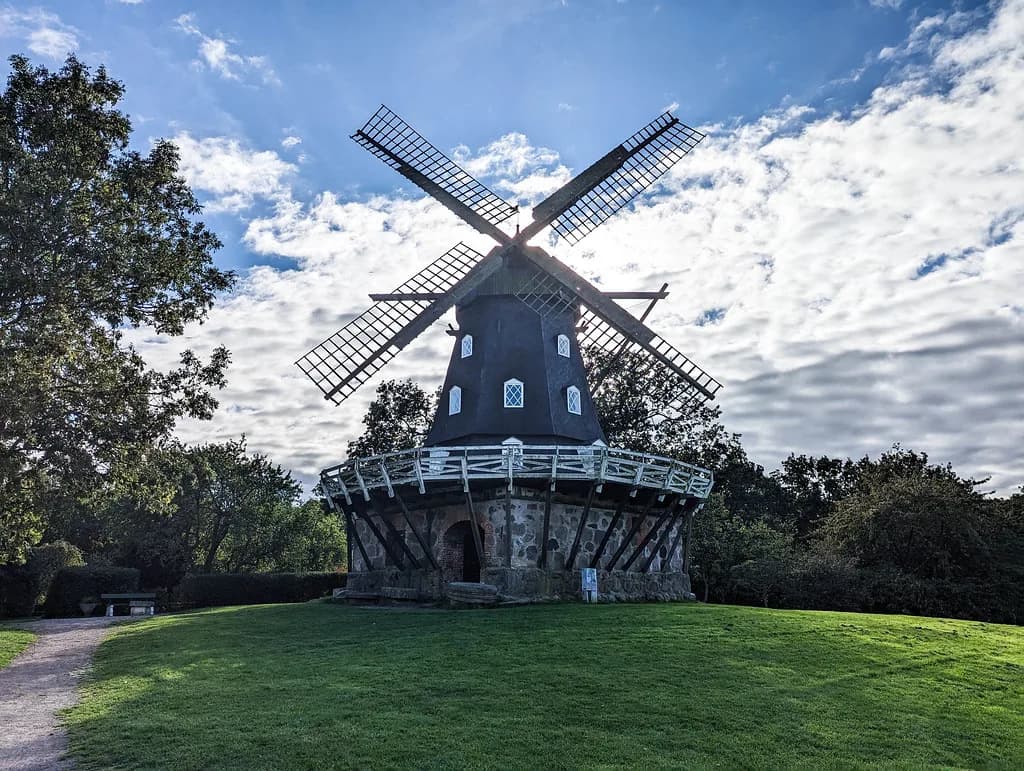
Gamla Staden, Malmö: a guide to the old town
Gamla Staden is Malmö's old town, and half a day on foot covers its squares, shopping street and surviving old houses before you finish at Kungsparken and Malmöhus Slott. The district sits inside a canal on three sides, with Kungsparken and Slottsgatan closing it off to the west. This guide covers its two distinct halves, the buildings worth stopping for and a workable route through them.
What Gamla Staden is and where it sits
Gamla Staden forms the heart of Malmö, bounded on three sides by an old canal and on the west by Kungsparken and Slottsgatan. That canal edge makes the district easy to read on a map: once you cross the water, you are inside it. It is the natural first stop on a short break and sits within easy walking distance of the rest of central Malmö.
Everything inside the ring is compact. Stortorget, Lilla Torg, Gustav Adolfs Torg and Södergatan all sit within a few hundred metres of one another, so you can move between them without planning transport. Treat the district as a walking zone and leave buses and trains for getting in from your accommodation.

Two halves: Gamla Väster and the rebuilt east
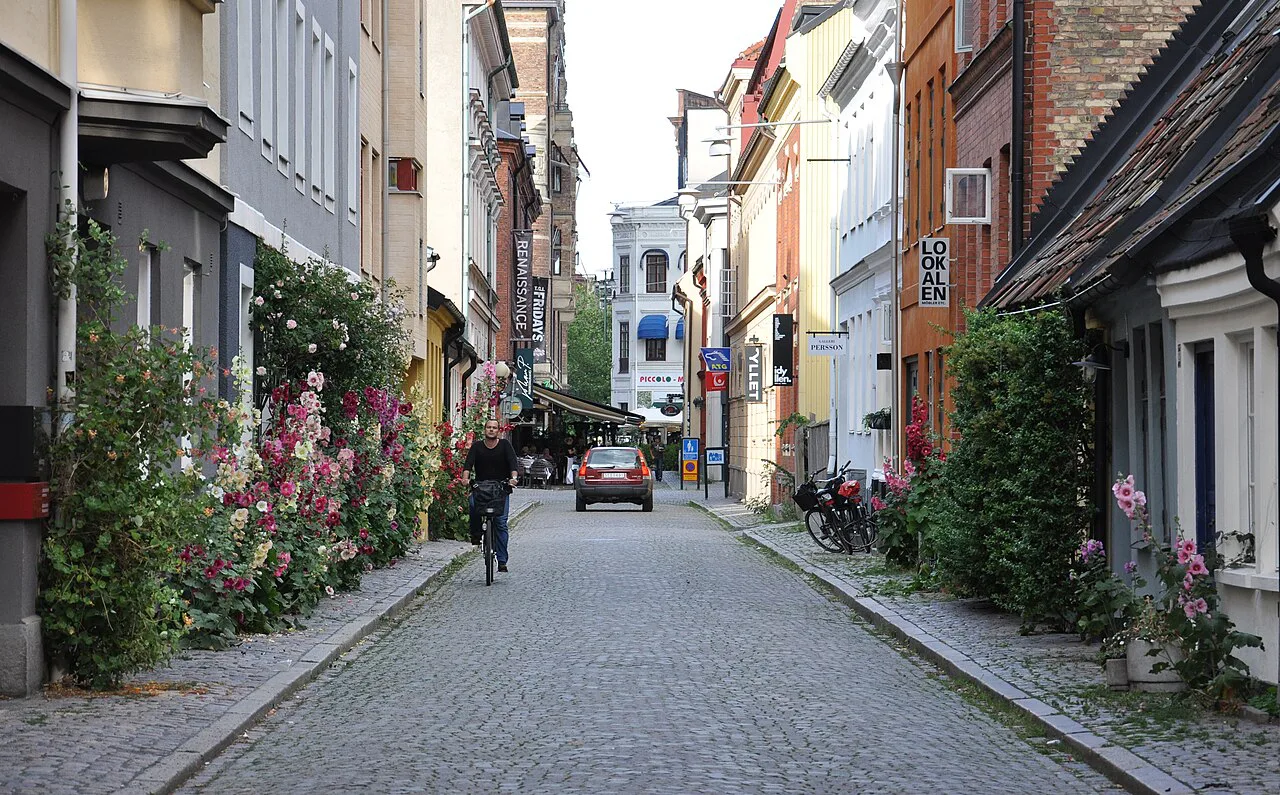
Gamla Staden is really two halves, and they feel different underfoot. The western part, Gamla Väster, holds the largest concentration of historic buildings; the eastern part was renewed during urban planning rehabilitation work in the 1960s. Knowing this keeps expectations honest: the eastern quarter is modern fabric, not medieval lanes.
Spend your time accordingly. Gamla Väster rewards slow wandering past old facades, while the eastern side is better for shopping and getting your bearings. If you only have an hour, head west first and loop back through the squares. The contrast between the halves is itself part of the district's character, showing how Malmö rebuilt rather than preserved wholesale.

Stortorget: the big square and the old town hall
Stortorget is the largest square in Malmö, laid out in 1540. Malmö Rådhus, the old town hall, was built between 1544 and 1547 on its east side, and a large equestrian statue of King Karl X Gustav stands in the centre. It is the natural place to start, giving you a wide view before the streets narrow.
Use the square as an orientation point rather than a destination in itself. The town hall and statue take a few minutes to look at, and then the interesting streets run off in every direction, with Lilla Torg just steps away. Building interiors are not part of this walk, so plan on admiring the square from outside.
Lilla Torg, a few steps from Stortorget
Lilla Torg sits a short walk from Stortorget, framed by old buildings on all sides. It is the more intimate of the two squares and the one most people remember, because the enclosed shape keeps your eye at street level. Pair the two in a single stop: Stortorget for the scale, Lilla Torg for the detail.
The proximity matters for route planning. You do not need to allocate separate time slots; walk from one to the other and let the district unfold. That short hop sets the pace for the rest of Gamla Staden, where the main sights cluster tightly together.
Södergatan and the shopping heart
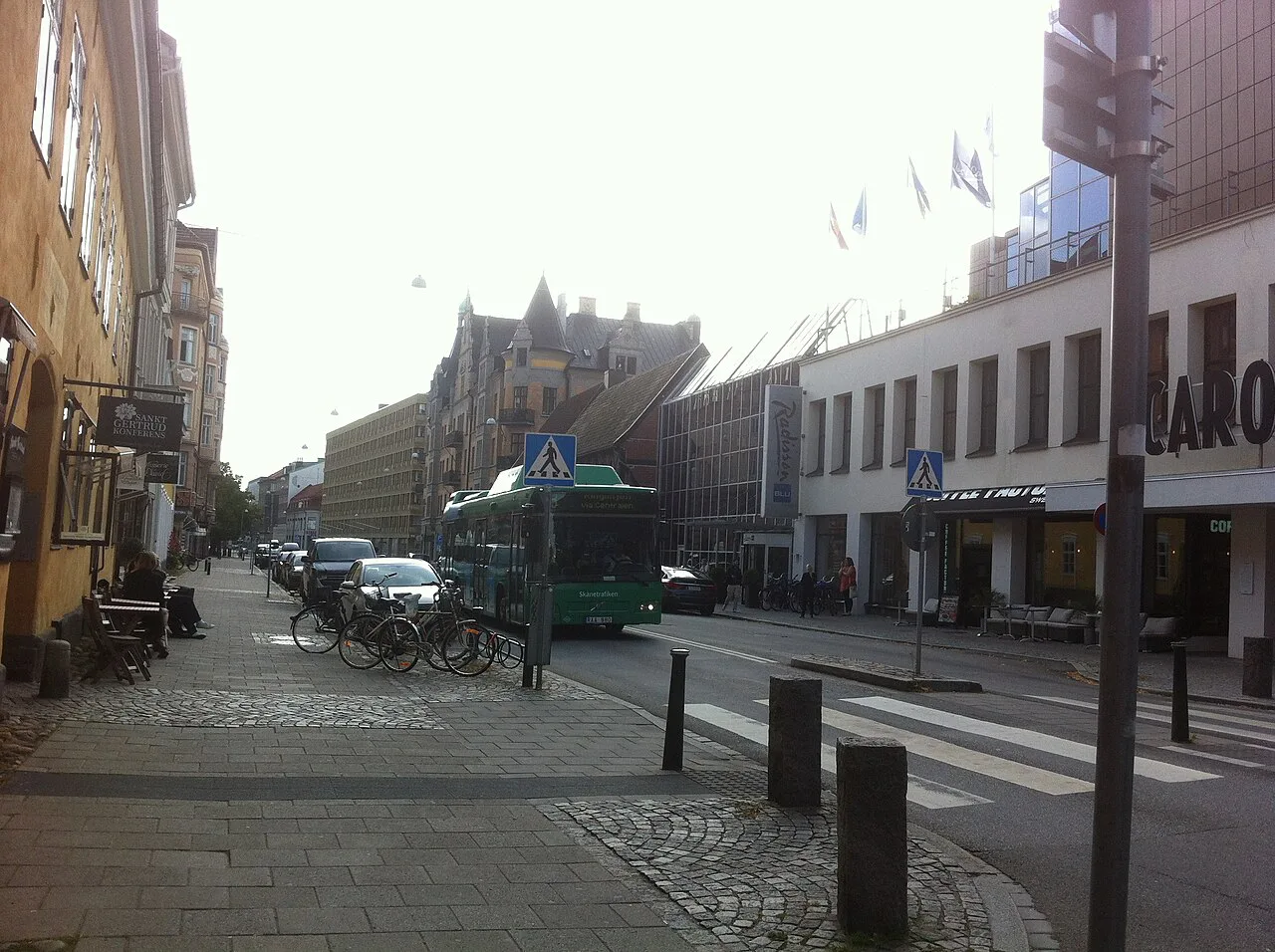
Södergatan connects Stortorget and Gustav Adolfs Torg and serves as Malmö's main shopping street, lined with shops, boutiques and department stores. Two shopping centres sit within the old town as well. If you want a break from sightseeing, this is the street that delivers it.
Shop hours vary by business and season, so check before making one shop the reason for a detour. The street itself is worth walking simply as the spine of the district, linking the northern squares to the southern edge at Gustav Adolfs Torg.
The historic houses: Tunneln, Thottska, Diedenska, Kockska
The old buildings are the reason to slow down in Gamla Väster. Tunneln on Adelsgatan, about 100 metres north of Stortorget, is the oldest surviving building in Malmö, with cross-vaulted cellars dating to the late 13th century. A few hundred metres east stands Thottska huset, the city's oldest half-timbered house, built in 1558, with the neighbouring Diedenska huset dating from 1620.
The most impressive medieval building is Kockska huset, built in 1522–1524 for the Danish mint master and later mayor Jörgen Kock. It occupies the northwest corner of Stortorget and consists of three buildings. Look at it from the square before walking into Gamla Väster, so you can see how the town houses sit against the open space.
These are facades and exteriors on a walking route, so budget minutes rather than hours for each. Distances are short, and the dates give you something concrete to look for as you pass: a half-timbered front, a vaulted cellar entrance, a corner palace.
Gustav Adolfs Torg and the walk to Kungsparken
Gustav Adolfs Torg marks the southern end of the old town and is its second-largest square, named after King Gustav IV Adolf, who stayed in Malmö in 1806–07. From here the old cemetery sits at the edge of Kungsparken, the long park that leads on to Malmöhus Slott. It is the natural exit from the district.
Ending the walk here makes sense because it takes you out of the shopping streets and into open ground. Walk south through Gustav Adolfs Torg, skirt the cemetery and follow the park towards the castle. Treat the castle as a visual full stop rather than a booked stop unless you check museum entry and opening times ahead.
How long you need and a half-day route
Allow three to four hours for a comfortable half-day. Start at Stortorget, look at the town hall and the Karl X Gustav statue, then step to Lilla Torg. Walk north to Adelsgatan for Tunneln, circle back east for Thottska and Diedenska huset, and finish at Kockska huset on the corner of the square.
From the square, take Södergatan south to Gustav Adolfs Torg, then walk on through Kungsparken towards Malmöhus Slott. If you are short of time, cut the shops and the eastern quarter and keep to Gamla Väster and the two main squares. A longer stay can add a second pass at a slower pace or another district entirely.
To see how Gamla Staden compares with Malmö's other areas, the waterfront at Västra Hamnen and the market quarter around Möllevången offer a sharp contrast, and both are covered in their own guides. For the full set, Malmö Neighborhoods: 5 Area Guides covers the city's districts side by side.
Getting there and getting around on foot
Gamla Staden is compact enough to cover entirely on foot, and the canal ring makes it hard to get truly lost. Enter from the west past Kungsparken or from the north and east across the canal bridges, then orient yourself by Stortorget and Gustav Adolfs Torg, which anchor the north and south ends of Södergatan.
Do not plan on moving between sights by vehicle; the distances are too short to justify it. Wear shoes you can walk in and carry a small bag rather than anything wheeled, since the old streets and squares are uneven in places. For the rest of Malmö, the neighbourhood guides help you decide what comes next.
Who Gamla Staden suits, and who should go elsewhere
Gamla Staden suits first-time visitors who want a compact walk through squares, old facades and shops in a single afternoon. It also works for anyone with limited time, since the main sights sit close together and the route is short. History-minded travellers get the specific build dates of Tunneln, Thottska huset and Kockska huset in a small area.
It suits less well if you want a full day of major attractions or a neighbourhood with a strong local food scene, since the district is more about architecture and shopping than cuisine. Those travellers should look at Möllevången, while anyone after modern waterfront architecture and the Turning Torso should head to Västra Hamnen.
Weighing the city's museums, parks and landmarks against a walk like this one helps you slot Gamla Staden into a longer trip; the Malmö Attractions guide sets out the alternatives.
Should Gamla Staden be your first stop in Malmö?
Yes, if you want an easy introduction to the city. Gamla Staden delivers the big squares, the old houses and the shopping street in a three- to four-hour walk that ends at Kungsparken and the castle. Start at Stortorget, drop into Lilla Torg and head west into Gamla Väster for the buildings that survive.
Book it for your first morning, then use what you have learned to choose your next area: Västra Hamnen for the waterfront, Möllevången for a different side of the city. Shop hours vary by store, so check any specific shop before you make it the reason for a detour.
Explore more Malmö guides
Frequently Asked Questions
What is the oldest building in Malmö?
Tunneln on Adelsgatan, about 100 metres north of Stortorget, is the oldest surviving building in Malmö; its cross-vaulted cellars date to the late 13th century. Nearby, Thottska huset is the oldest half-timbered house in the city, built in 1558.
Is Gamla Staden the same as Gamla Stan in Stockholm?
No. Gamla Staden is Malmö's old town, ringed by a canal on three sides and bordered by Kungsparken and Slottsgatan on the west. Gamla Stan is Stockholm's old town and a separate district entirely.
Can you walk all of Gamla Staden in an afternoon?
Yes. Stortorget, Lilla Torg, Södergatan, Gustav Adolfs Torg and the historic houses all sit within a few hundred metres of one another, so a three- to four-hour walk covers the district comfortably and leaves time to continue to Kungsparken and Malmöhus Slott.