
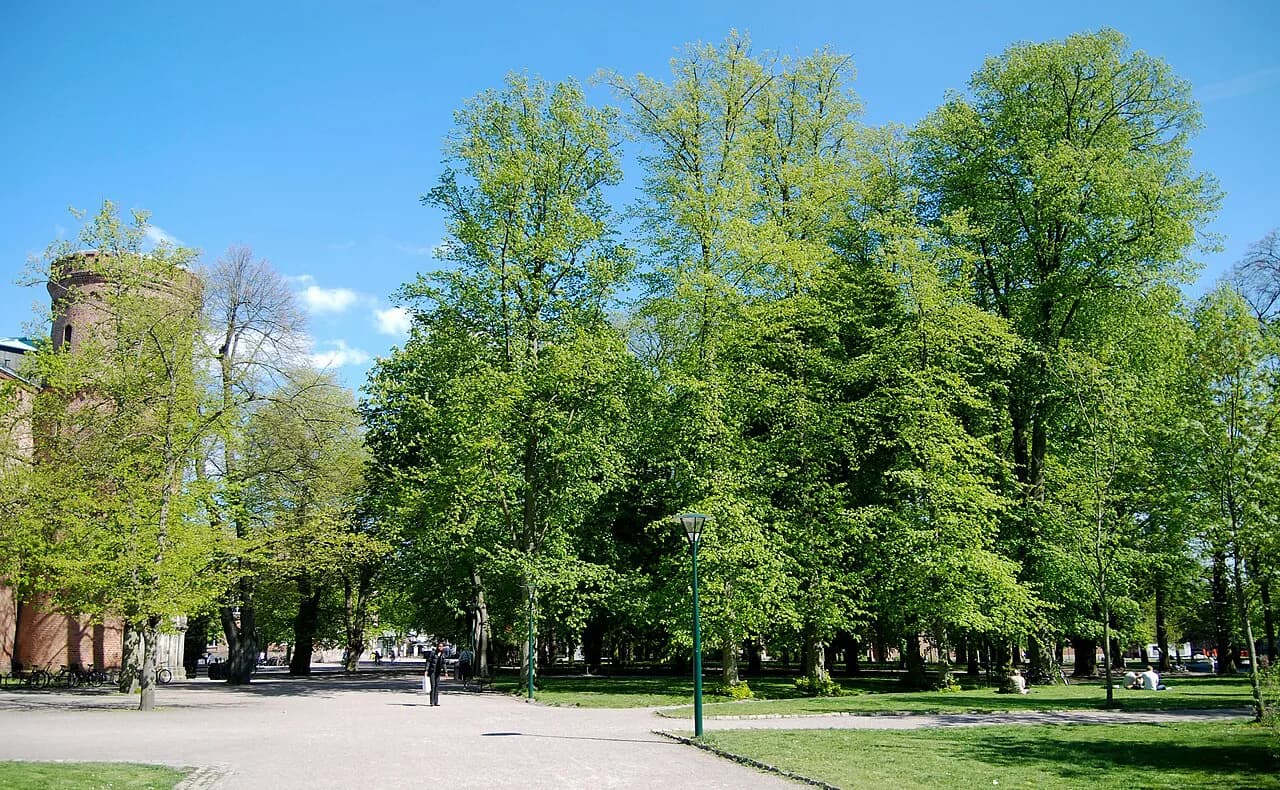
Lundagård: Lund's oldest park beside the Domkyrka

Lundagård is best treated as a short stop, not an afternoon. It is Lund's oldest park, a compact green square wedged between the Domkyrka to the south and Kungshuset to the north, and it works best as the opening move of a walk through the historic centre rather than a destination in its own right. This guide covers where the park sits, how to walk to it from Lund C, what to look at inside, and which sights are close enough to combine with it.
What Lundagård is and where it sits in central Lund
The park occupies the block immediately north of the Domkyrka, with Kungshuset closing the view at its northern end. It is the oldest park in Lund, and the city describes it as a place where students, locals and visitors pass through daily. Treat it as the hinge between the cathedral quarter and the university buildings rather than a separate excursion.
One name trap is worth clearing up before you search for directions. Lundagård the park is not the same thing as Lundagard.se, the student newspaper that carries university and student-life reporting. If a search result looks like news coverage rather than a green space, you have found the paper.
How to get to Lundagård from Lund Central
From Lund C the park is about a five-minute walk, and the nearest bus stop is Lund Lundagård, with Lund Domkyrkan also nearby if you would rather ride. Both the walk time and the stop names come from the city's own page on the park, so you can plan the approach before you arrive without guessing at street names.
Arriving on foot from the station puts you in the middle of the shopping streets, and the last stretch brings the cathedral spire into view before the park itself. Because the park is open city ground you can approach it from any side, which makes it easy to slot into a route between Stortorget and the university quarter.

The fountain, flowerbeds and benches
The centrepiece is a large fountain ringed by the brightest flowerbeds in the park, with benches set back from it for a short sit. The city's description singles out the fountain and its flowers as the reason to pause here rather than walk straight through. Bring a coffee from a nearby street and use the benches as your rest stop before the cathedral.
Chestnut trees shade much of the space, and cyclists park under them, so the park feels lived-in rather than manicured. That is part of its character: it is a working university green, crossed by students between lectures. If you want a quieter, more deliberately landscaped garden in Lund, this is not it, and the city's larger parks suit a longer wander better.
The rune-stone mound and the monuments
The oddest and most rewarding detail is a small mound encircled by six rune stones brought from southern Skåne, which commemorate Vikings who died in various parts of northern Europe. The city presents them as a set of monuments worth reading up on, and they reward a slow circuit rather than a glance. Sculptures and memorials are scattered through the rest of the park as well.
For a small park, the density of stone and bronze is high, and the rune-stone mound is the one thing here you will not find in an ordinary Swedish town square. Allow a few minutes for the monuments if you like reading inscriptions.
Kungshuset, the Domkyrka and the university buildings around the park
Kungshuset anchors the north end of the park, and the Domkyrka sits directly to the south, so both are effectively part of the same visit. The cathedral is the obvious next stop, and the walk between the two takes under a minute.
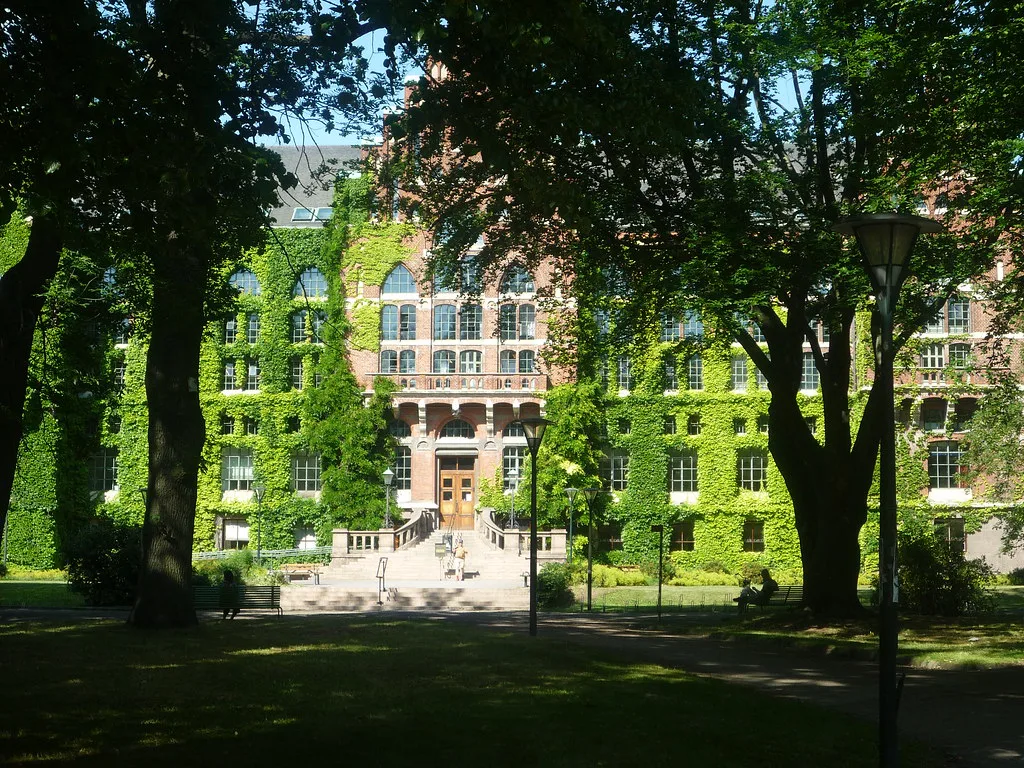
The park is framed by university buildings, and the surrounding streets are thick with university architecture. That concentration is why the park reads as a campus green even though it is open city ground. If architectural history is your reason for coming to Lund, budget more time for the streets around the park than for the park itself, and the university's main building is a natural next stop.
Stortorget and the city hall are a short walk away, which makes a natural loop of the cathedral, the park, the square and back. The square is the better place for a proper look at civic Lund, while the park gives you the university side of the same story.
Lund's oldest park: from bishop's seat to university green
The name comes from the medieval residence of the bishop of Lund, and after the Reformation in the early sixteenth century the king's governor lived in the newly built Lundagårdshuset. That house was later handed to the university, which was founded in 1666. The park's origins are therefore administrative and ecclesiastical rather than ornamental.
In the 1730s a plan was drawn up for a park across the area north and south of Lundagårdshuset, originally linked to a riding house for young noble students. In the 1920s the worst-damaged trees were filled with concrete, a detail that says a lot about how old some of this planting is. The park you walk through today is the product of that long, piecemeal evolution.
In the 1960s, with traffic cutting through the area, a professor named Per Friberg proposed a continuous green corridor from the Domkyrka north to the new university departments. Sandgatan was closed to cars as a result. That decision is why the park now connects to the wider campus on foot instead of sitting on a traffic island.
Lundakarnevalen and student life in the park
Lundakarnevalen is held in the park every four years, and the city also notes that spring is sung in here. Ordinary days are quieter, with students crossing between lectures and the benches occupied at lunchtime. If your visit coincides with the carnival, expect the park to be transformed and crowded rather than restful.
The student presence is not decorative: the park sits between the cathedral and the university's teaching buildings and is crossed by students daily. Reading the student paper before you go gives a sense of what is happening on campus during your dates, though it is journalism rather than a visitor listing.
How long to allow and what's nearby
Cover the fountain, the rune stones and a lap of the perimeter in a short stop. Add the Domkyrka and you have half a morning; add Kulturen, the open-air museum just behind the park, and you can fill most of a day in this one quarter of Lund. The park is the connector between them, not a sight with its own queue.
Skissernas Museum, Sweden's museum of public art and sculpture, is a short walk north of the park and pairs well with the monuments here. For a greener, longer walk, the botanical garden lies a little further out and suits an afternoon rather than a quick stop. Lunds Konsthall is another option if the weather turns.
Who manages the park and what to check before you go
Lundagård is not a municipal park in the ordinary sense. It is cared for jointly by Statens Fastighetsverk, Lunds kommun, Lunds domkyrka and AF Borgen AB, and the city directs readers to the property agency for information on the park and its buildings. That matters if you need current details on access or works.
No opening hours are published for the park as a green space, so plan around daylight and check the property agency's page for the buildings and any works before a special trip. The cathedral and Kulturen next door keep their own arrangements.
Is Lundagård worth a stop?
Yes, if you are already going to the Domkyrka. The park adds the rune stones, the fountain and a clear view of the university quarter's architecture for the cost of a short detour, and it puts Kulturen and Skissernas within easy walking distance. It does not justify a journey to Lund on its own.
Build it into a loop from Lund C: station, Stortorget, the park, the cathedral, then Kulturen if you have the time. That order keeps you walking in one direction and puts the benches where you will actually want them, roughly an hour into your day.