Malmö Walking Tour: A Self-Guided Route Through the City
Plan your own Malmö walking tour: a route through the old town, parks and harbour, with the sights at each stop and how long to allow.
On this page
A Malmö walking tour is a half-day walk of roughly six to eight kilometres, because the centre is compact and almost everything worth seeing sits within a couple of kilometres of the old town. You can cover St Peter's Church, Lilla Torg, Malmö Castle, Kungsparken and the Western Harbour on foot in about four hours at an easy pace, or spread it over a full day with museum stops. This route sets the stops in a workable order, explains what to look at in each place and shows where to shorten the walk when your legs or your timetable run out.
What a Malmö walking tour covers: compact centre, old town to Western Harbour
Malmö's sightseeing core runs from the medieval streets around St Peter's Church north-east to the castle and park belt, then west along the waterfront to the Western Harbour. That shape suits a single linear walk rather than a series of separate outings, because you never double back on the same street for long. The old town streets, the squares and the castle grounds sit close enough together that the first half of the route feels like one continuous neighbourhood.
The harbour half is a different city: wide boardwalks, new apartment blocks and open water where the old shipyards once stood. Treat the route as two chapters, old town first and waterfront second, and you get a natural place to pause for fika or to bail out if time runs short. For a wider list of city sights to slot around this walk, see Things to Do in Malmö.
The route at a glance: stops in order, distance and time
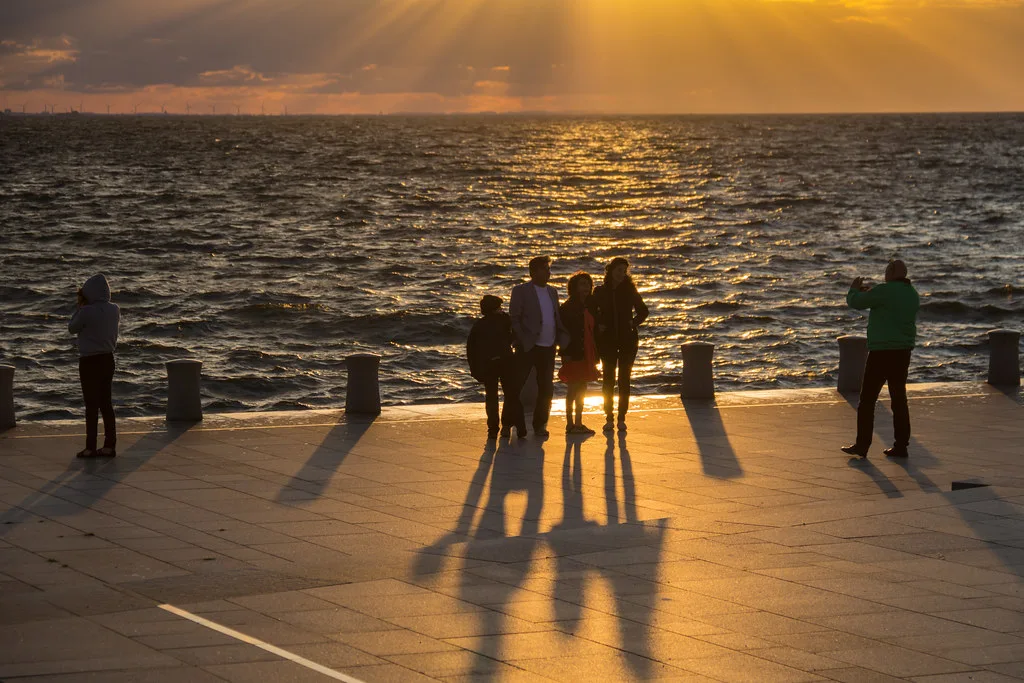
Follow the stops in this order: St Peter's Church, the surrounding old town streets, Lilla Torg, Malmö Castle and Kungsparken, the Slottstappan and Slottsmöllan viewpoints, the old town's waterfront edge, then the Turning Torso and the Western Harbour. It is a one-way walk of roughly six to eight kilometres depending on detours, taking about four hours of walking and looking, or six with a museum and a proper lunch stop.
Allow more than four hours only if you plan to go inside museums, and budget your energy rather than your distance. The route is flat, which makes the walking easier than the kilometre count suggests, but the harbour section is exposed when the wind comes off the water. A practical pace is to reach the castle by mid-morning, eat near the park, and walk out to the Turning Torso in the afternoon.
Stop 1: St Peter's Church and the old town streets around it
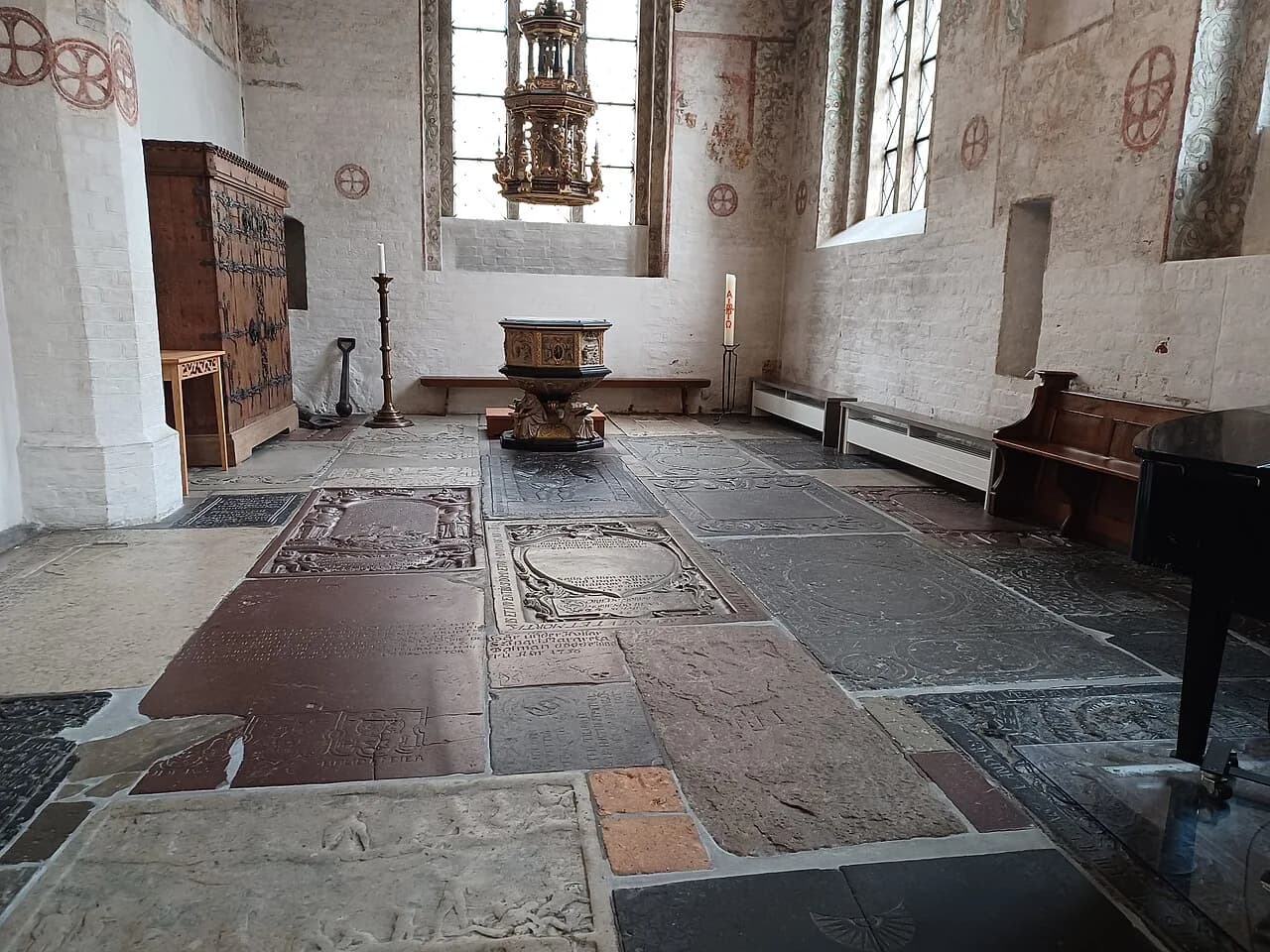
Start at St Peter's Church, described as the oldest building in the city and a Gothic landmark whose brick tower gives you an instant orientation point. The streets immediately around it are the densest part of the walk, so give yourself time to wander rather than marching to the next stop. This is where the route feels most like a medieval town, and it is also where an early start pays off with quieter lanes.
If the old town is your main interest, Malmö Old Town deserves a walk of its own in the morning, and you can pick up the castle and harbour later. Otherwise, use the church as your anchor, loop two or three surrounding streets, and head south-east towards Lilla Torg.
Stop 2: Lilla Torg and the square's surroundings
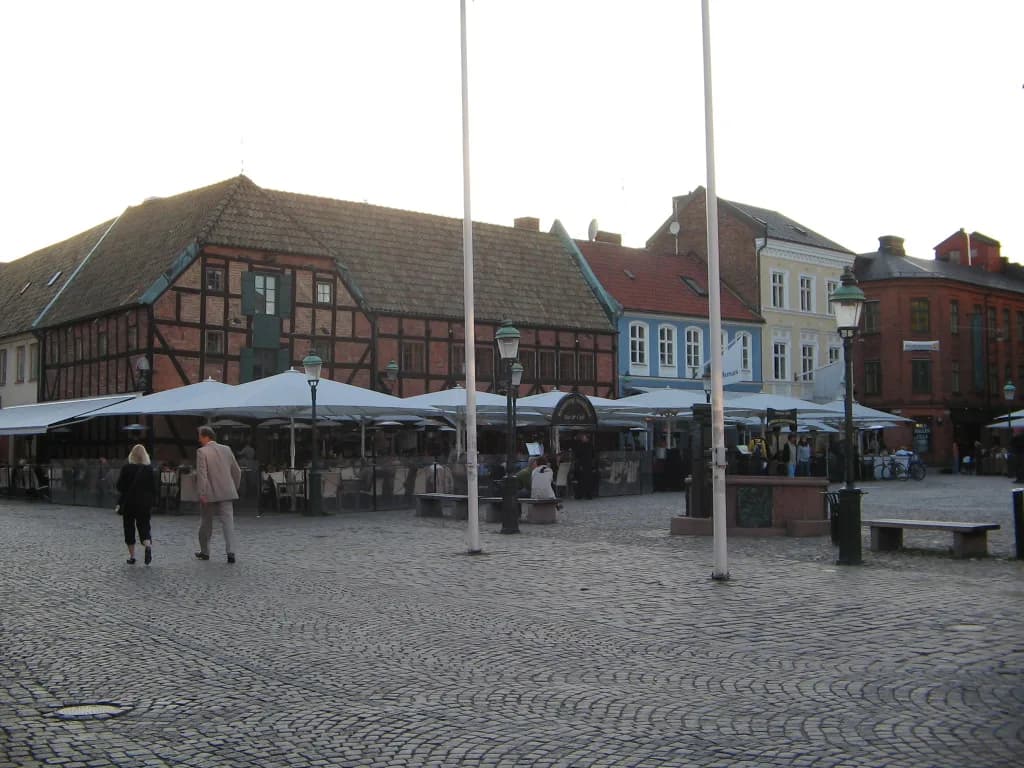
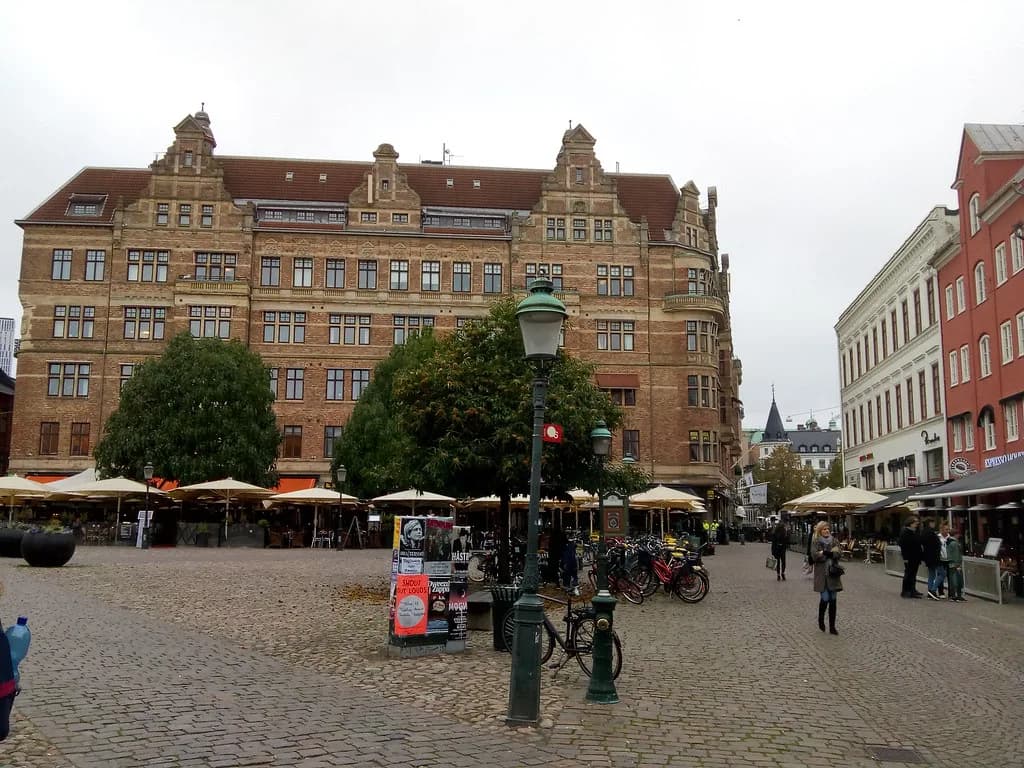
Lilla Torg is the small cobbled square lined with half-timbered and low brick buildings, and it works as the social heart of this stretch of the route. It is the obvious place for a coffee and a cinnamon bun, which is the cheapest way to slow the walk down without losing an hour. The square is small, so ten minutes of looking plus a fika stop is usually enough before you move on.
From Lilla Torg the walk turns west towards the castle, passing the edge of the main shopping streets. If retail rather than architecture is your priority, this is the point to break off and spend the afternoon browsing.
Stop 3: Malmö Castle and Kungsparken
Malmö Castle is the 16th-century fortress that anchors the western end of the old centre, and its grounds are free to walk through even when you skip the museum inside. Pair it with Kungsparken, the city's oldest public park, which sits directly alongside and gives you a green corridor towards the next stop. The park has monuments and sculptures scattered through it, so a slow loop is more rewarding than cutting straight through.
Decide here whether you are a museum person today. If you are, the castle interior can easily absorb an hour or more; if not, the combination of fortress walls and park is a decent substitute, and the walk stays on schedule.
Stop 4: Slottstappan and Slottsmöllan hill
Slottstappan and the Slottsmöllan hill give you the route's best elevated view back over the castle, the park and the rooftops towards the old town. It is a short climb, worth it mainly for the perspective it gives you on how small the historic centre actually is. Photographers should come here in the afternoon light rather than at midday.
This is also a good decision point. From the hill you can see the waterfront and the harbour beyond it, which helps you judge whether the Western Harbour leg is realistic on the day. If the wind is up or the light is going, cut the walk here and finish in the park.
Stop 5: Gamla Staden to the waterfront
The old town district meets the water along a stretch of quays and bridges that takes you from the historic streets towards the modern harbour. The Öresund Bridge linking Malmö to Copenhagen is visible from this side of the city, and it is the landmark that makes the geography click. Walk the waterfront edge slowly, because this is where the transition from old Malmö to new Malmö is most obvious.
If you want the full picture of the old town district before leaving it behind, work the square and church stops into your morning and treat the quays as the handover to the second half. The walk from the castle area to the harbour mouth is short and flat, so it costs you little time even with detours.
Stop 6: Turning Torso and the Western Harbour
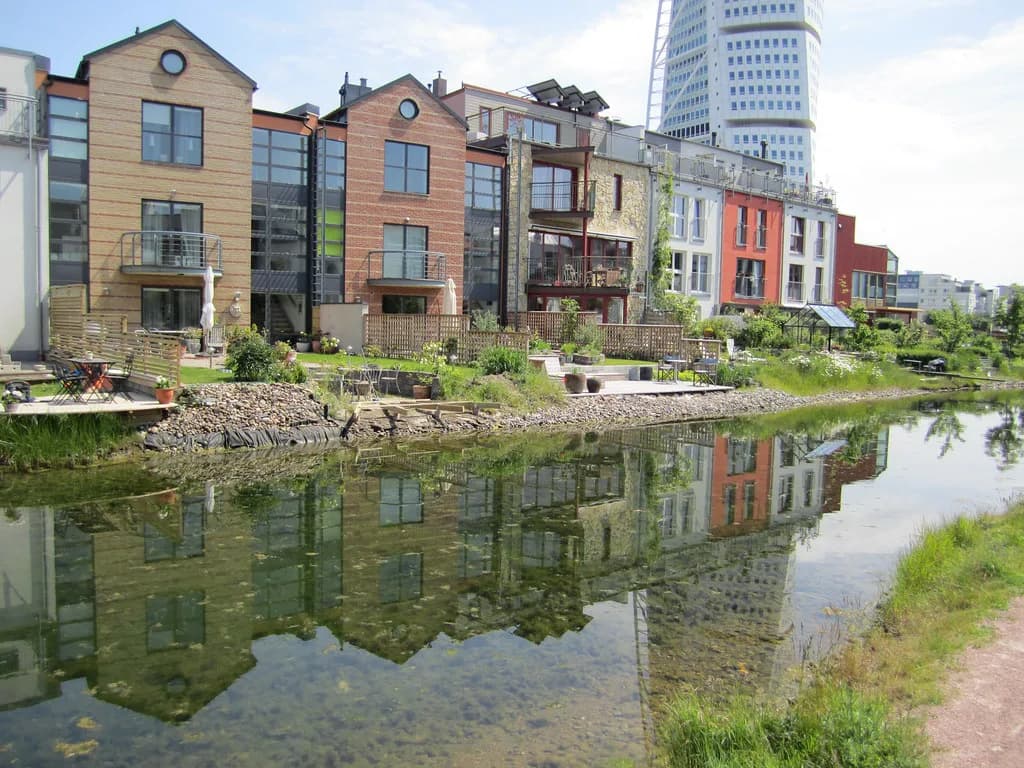
The Turning Torso is the twisting skyscraper that has become the symbol of modern Malmö, and the Western Harbour around it is the district built on former industrial land. The area has been recognised internationally for its sustainability, which is why some guided tours use it to explain how the city reinvented itself. Walk the boardwalks and look back at the skyline rather than trying to get inside any building.
This is the farthest point of the route and the natural place to end the walking section. From here you can loop back towards the centre on a different street, or stop for a long break before retracing your steps. If you are interested in the city's newer architecture as a subject in its own right, the Malmö Architecture guide will give the harbour buildings more context.
Extending the walk: Ribersborg and Pildammsparken
Two green spaces extend the route without adding much complexity: Ribersborg along the coast and Pildammsparken inland, both named among the city's larger parks and gardens. Ribersborg is the seaside option, with space for swimming and sunbathing in season, while Pildammsparken has gardens and a lake that suit a gentler afternoon. Choose one rather than both unless you have a full day to spare.
If parks are the theme of your trip rather than an add-on, these two fit naturally into a shorter, greener version of the same walk.
How a guided free walking tour compares with doing it yourself
Free walking tours in Malmö run on a tip basis rather than a set ticket price, so the guides rely on what participants choose to give at the end. That makes them cheap to join and easy to book online, with meeting point details sent after you reserve. The trade-off is that you walk at the group's pace and follow the guide's interests, not yours.
Guided options include an essential city tour through the main landmarks, a street art tour focused on murals and graffiti, and a sustainability-themed tour that visits the Western Harbour. Reported lengths vary between operators, from around two hours to about three, so treat any duration as an indication rather than a promise and confirm when you book. Some listings describe a shorter walk of roughly 60 minutes as well.
Doing it yourself wins on flexibility and cost, and you can stop for as long as you like at the castle or the harbour. A guided tour wins on context, especially for street art and the harbour's redevelopment story, which is hard to read from the buildings alone. If you have only one day in the city and no background, take a tour in the morning and walk the waterfront yourself afterwards.
Those who prefer two wheels to two feet have an obvious alternative along the same flat waterfront, following the Cycling in Malmö guide.
Where to start, how to finish and how much time to allow
Start at St Peter's Church in the morning, finish at the Turning Torso or double back to the old town for lunch, and plan on four hours for the walk itself. If you want a museum, add an hour; if you want the parks extension, add another. The route is flat throughout, which is why a six to eight kilometre day feels easier here than in hillier cities.
Check what is open before you set out, since a closed museum changes the shape of the day. Beyond that, the walk needs no bookings, no tickets and no timetable, which is exactly why it works well as a first-day orientation.
Should you walk Malmö or join a free tour?
Walk it yourself if you want the castle, the park and the harbour at your own pace and want to keep costs to a coffee and a bun. Join a tip-based free tour if you want the street art and the Western Harbour explained, and accept the group pace as the price of that context. Either way, the old town to harbour route is the spine of a good day in Malmö.
Explore more Malmö guides
Sources
Notes for your next Swedish city break
Optional updates to our Sweden guides.
You might also like
Continue reading
More guides you'll find useful