Malmö Architecture: The Buildings and Streets That Define the City
Malmö's architecture runs from Sankt Petri Kyrka to the Turning Torso. See which buildings and streets to walk, in what order and how to link them on foot.
On this page
Malmö architecture is best read as two cities in one: a compact old town of brick church, merchant squares and narrow lanes, set against a former shipyard waterfront rebuilt around the twisting Turning Torso. The contrast is sharp because the two sit within walking distance, and you can cover the historic half comfortably in a morning. This guide orders the walk by district and period, names the streets and squares that matter, and is honest about what fits into half a day and what does not.
What defines Malmö's architecture
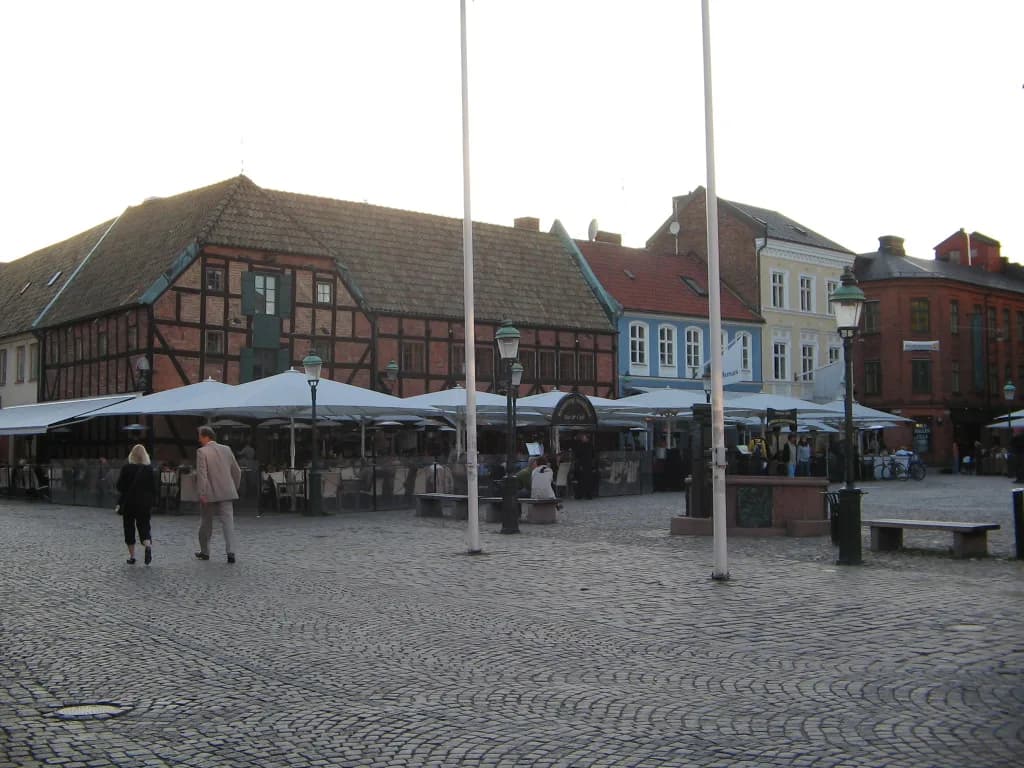
The city's architectural signature is the collision of centuries rather than any single landmark. In the old town you get 19th-century and older low-rise buildings mixed with grander civic frontages, and in places one-storey houses sit alongside them so the streetscape feels like a major European city and a forgotten small town at once. That layering is the thing to look for as you walk, not a checklist of individual buildings.
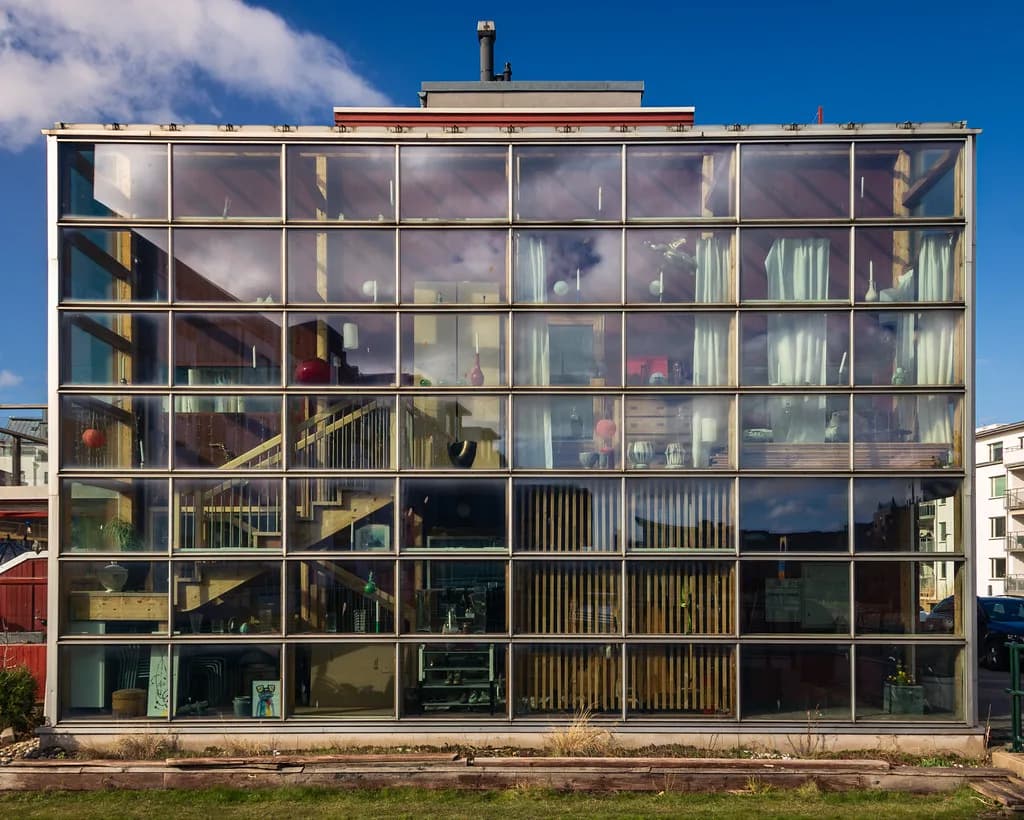
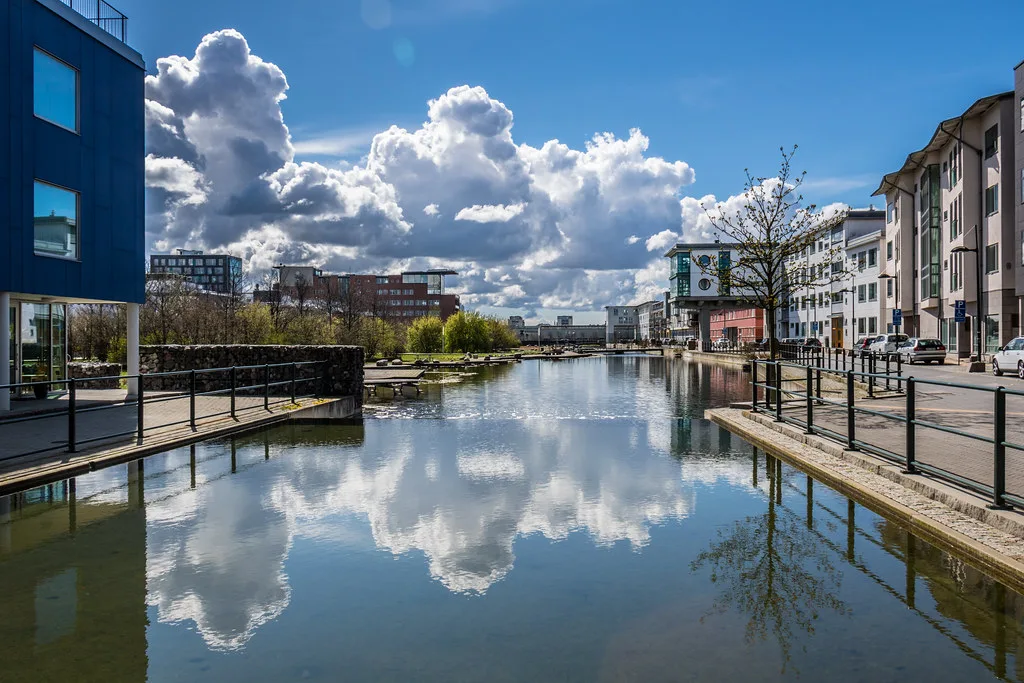
On the waterfront side, the story is reuse. Västra Hamnen was a decaying shipyard district that has been remade into a sustainable residential quarter, with the Turning Torso as its centrepiece and the Öresund Bridge on the horizon. The tower twists 90 degrees from base to tip, which is why it reads so strongly from the water's edge.
Where to start: Stortorget, Lilla Torg and Jakob Nilsgatan
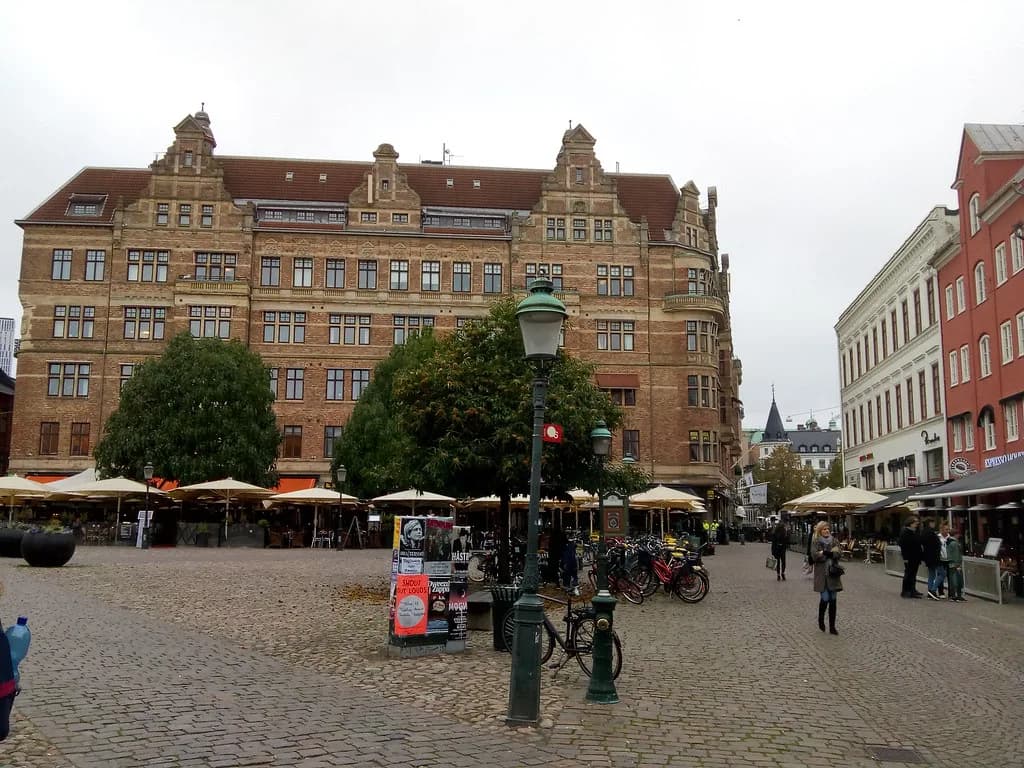
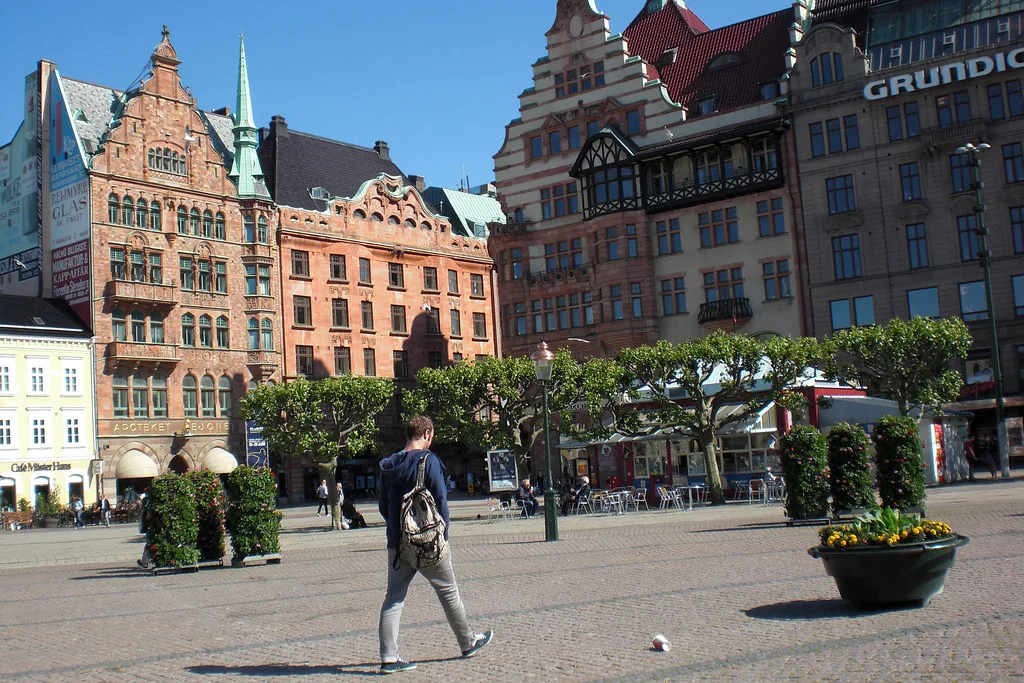
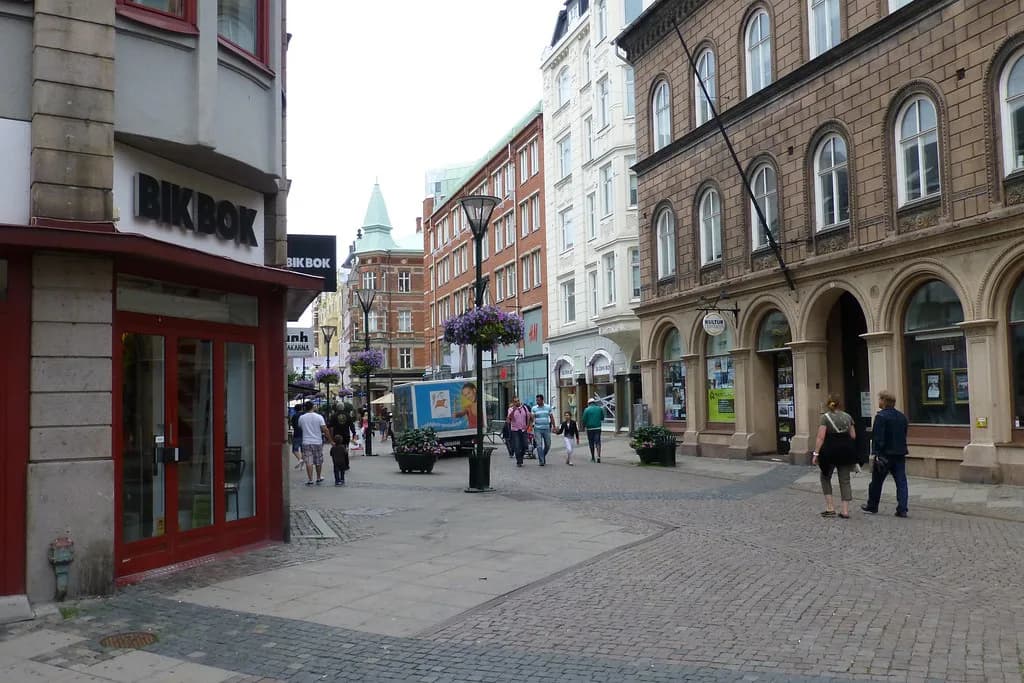
Begin at the central station and cross the canal in front of it; the old town, Gamla Staden, starts just behind the first line of buildings. Three addresses give you the range of the district in under an hour: Stortorget for the civic scale, Lilla Torg for the smaller square lined with older frontages, and Jakob Nilsgatan for the street-level mix of styles. If you want the wider list of things to do, Malmö Old Town is the natural companion for this stretch.
Nothing about this first stretch requires a plan beyond following the lanes between the squares. Arriving from Copenhagen, the architectural jump is part of the appeal.
Sankt Petri Kyrka: the brick church near the station
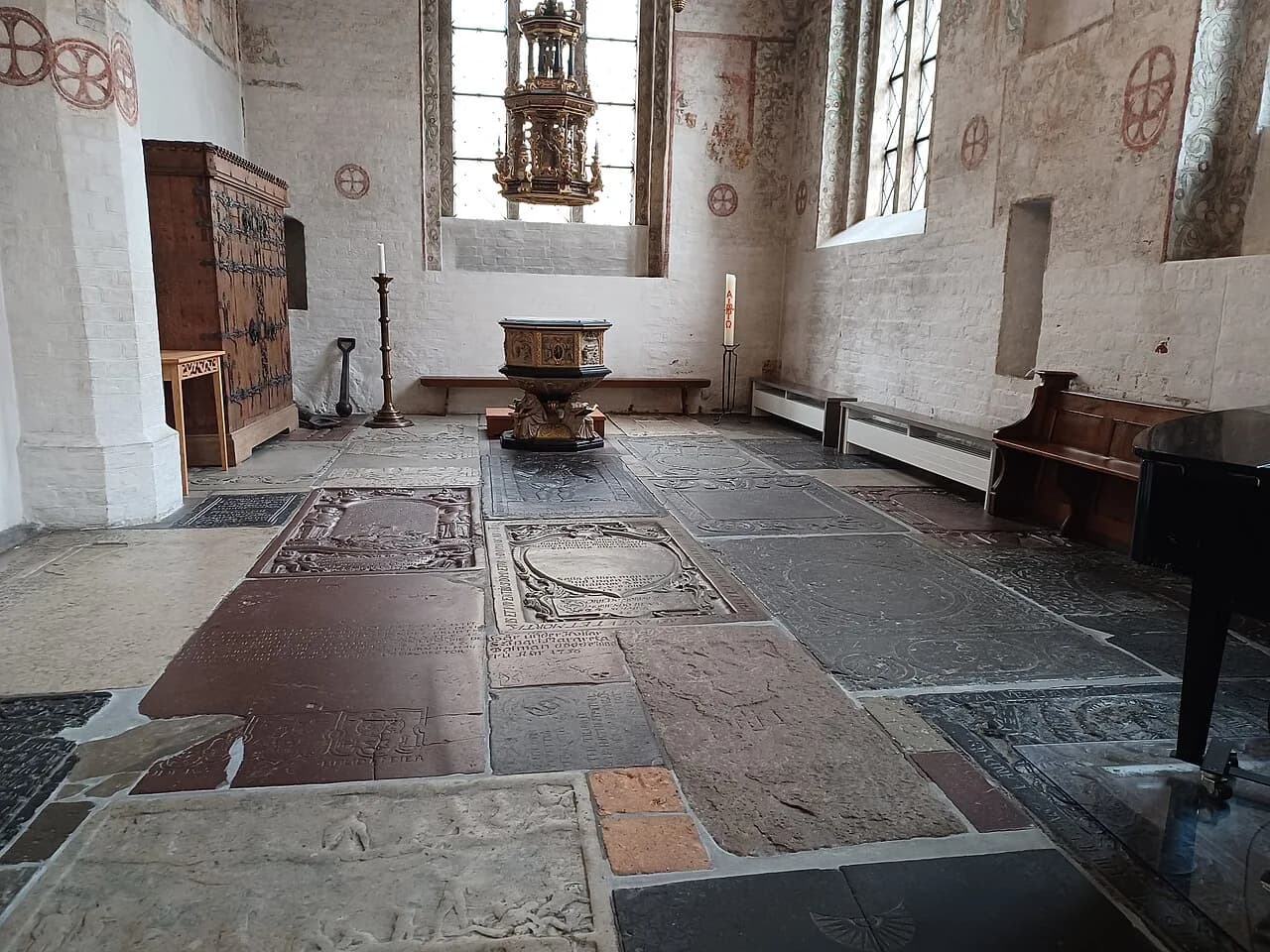
Sankt Petri Kyrka sits two blocks from the central station, which makes it the logical first interior of the day on the walk from the station into the old town. Its surprise is the contrast inside: plain white walls that read as unmistakably Protestant, set against heavily gilded baroque altar carving that could pass for Catholic work. The two registers coexist rather than clash, and it is the single most rewarding interior in the historic centre for visitors interested in how Swedish church building absorbed outside styles; it functions as a working parish church, so call in around services rather than treating it as a museum.
The streets that mix centuries in one block
Walk south from the squares towards Triangeln, the southern end of the historic old town and another stop on the Copenhagen line, and you get the best of the mixed fabric. Architectural centuries sit side by side here, with majestic 19th and 20th-century buildings alongside far older low-rise houses, and the whole thing knits into a coherent street pattern rather than a museum piece. Keep to the pedestrian streets and look up at the rooflines, where the changes in date are easiest to read.
If you want to slow the pace, the old town is small enough to loop twice and cycling is a practical way to cover the lanes without missing the detail.
Crossing the canal to Slottsparken and the windmill
Cross the southern canal and the city changes tempo: Slottsparken is one of the largest green spaces in central Malmö and sits directly on the far side of the old town. The paths take you past water, mature trees and a renovated windmill, and the park is also where you get your first clear look at the Turning Torso rising over the rooftops. Malmö Museum is in the park as well, so a half-day here is easy to fill if the weather turns.
The garden section beyond the main lawns, with its many small planted settings, is worth a detour before you head north again.
Västra Hamnen and the Turning Torso
From the park, continue north-west to Västra Hamnen, the Western Harbour, where the shipyard past is still legible under the new district. The Turning Torso is a neo-futuristic residential tower and the district's unmistakable landmark, but the area around it is the real draw: wooden piers where locals sunbathe, seaside paths, boutique cafés and a well-used skate park. Come for the sunset and the view across to the Öresund Bridge.
This is the stretch to protect time for. The walk out is the point, so treat the tower as a landmark to circle rather than a single stop.
Malmö Live and the station area
Back beside the station, Malmö Live is the modern counterpoint to the old town: a concert hall, congress centre and hotel in one building, credited with revitalising the area around the station. The main hall's acoustics are its calling card, and even without a ticket the building is worth a look for how it handles the transition between the historic centre and the newer city. The top-floor sky bar gives panoramic views over the city and the sea, though its opening depends on the hotel, so check before you build an evening around it.
Pair it with a look at the central station itself, a civic building worth a moment before you leave the area.
Moderna Museet Malmö and Möllevångstorget
For a different register entirely, head east: Moderna Museet Malmö is the city's contemporary art museum, and the surrounding streets have a looser, more everyday feel than the old town. Möllevångstorget is the square to aim for, a working market area that shows how Malmö actually lives rather than how it presents itself to visitors. Folkets Park continues the same thread, with its own open-air character and a role as a public gathering place.
This is where the city's creative energy is most visible, and it rounds out the picture after a morning of brick and cobbles.
Linking the old town, the park and the harbour on foot
The practical order is station, Sankt Petri, Stortorget, Lilla Torg, Jakob Nilsgatan, then south to Triangeln, across the canal into Slottsparken, and finally north-west to Västra Hamnen for sunset. All of it is walking, and the distances are short enough that the sequence matters more than the pace. If you want the full spread of the city beyond architecture, the wider list of Things to Do in Malmö slots into the same geography.
Malmö Saluhall, the restored warehouse food market, makes a sensible lunch stop between the old town and the harbour, with Skåne produce and modern stalls side by side. It is a food hall first, so treat the architecture as a bonus.
Honest trade-offs: what half a day actually gets you
With half a day, do the old town and Sankt Petri and stop there. The church, the two squares and one or two lanes give you the historic city in a compact loop, and you will not be rushing. Västra Hamnen is the part to drop: the walk out and back eats the time you would spend looking at buildings, and the tower is visible from the park anyway.
With a full day, the order above works without strain. Add Malmö Saluhall for lunch and finish at the harbour.
Adding the Öresund Bridge view and Emporia
If you want the wider picture, two additions stretch the day south and east. Emporia, the shopping centre in Hyllie, is the architectural curiosity of the southern edge, and the Öresund Bridge is best seen as a view rather than a destination. Both need local transport rather than walking, so build them in as a separate half-day rather than tacking them onto the old town loop.
For viewpoints closer to the centre, the best options are within the walkable core and do not need a detour.
Which Malmö walk suits your day
The honest answer is that Malmö rewards a single day spent on foot rather than a rushed checklist. Start at the station, take in Sankt Petri and the old town squares, cross the canal to Slottsparken and finish at Västra Hamnen, and you will have seen the city's two architectural arguments at their best. If you have only half a day, stay in the old town and leave the harbour for next time.
Explore more Malmö guides
Frequently Asked Questions
What is Malmö famous for architecturally?
Malmö is known for the contrast between its historic old town, with brick church and merchant squares, and the reworked shipyard district of Västra Hamnen, where the twisting Turning Torso dominates the skyline. The two are close enough to walk between in a single day.
How long does the architectural walk take?
The old town loop, including Sankt Petri Kyrka and the squares, fits comfortably into a morning. Adding Slottsparken and Västra Hamnen turns it into a full day on foot, and the distances are short enough that the order matters more than the pace.
Sources
Notes for your next Swedish city break
Optional updates to our Sweden guides.
You might also like
Continue reading
More guides you'll find useful