
Øresund Bridge: What to Know Before You Cross

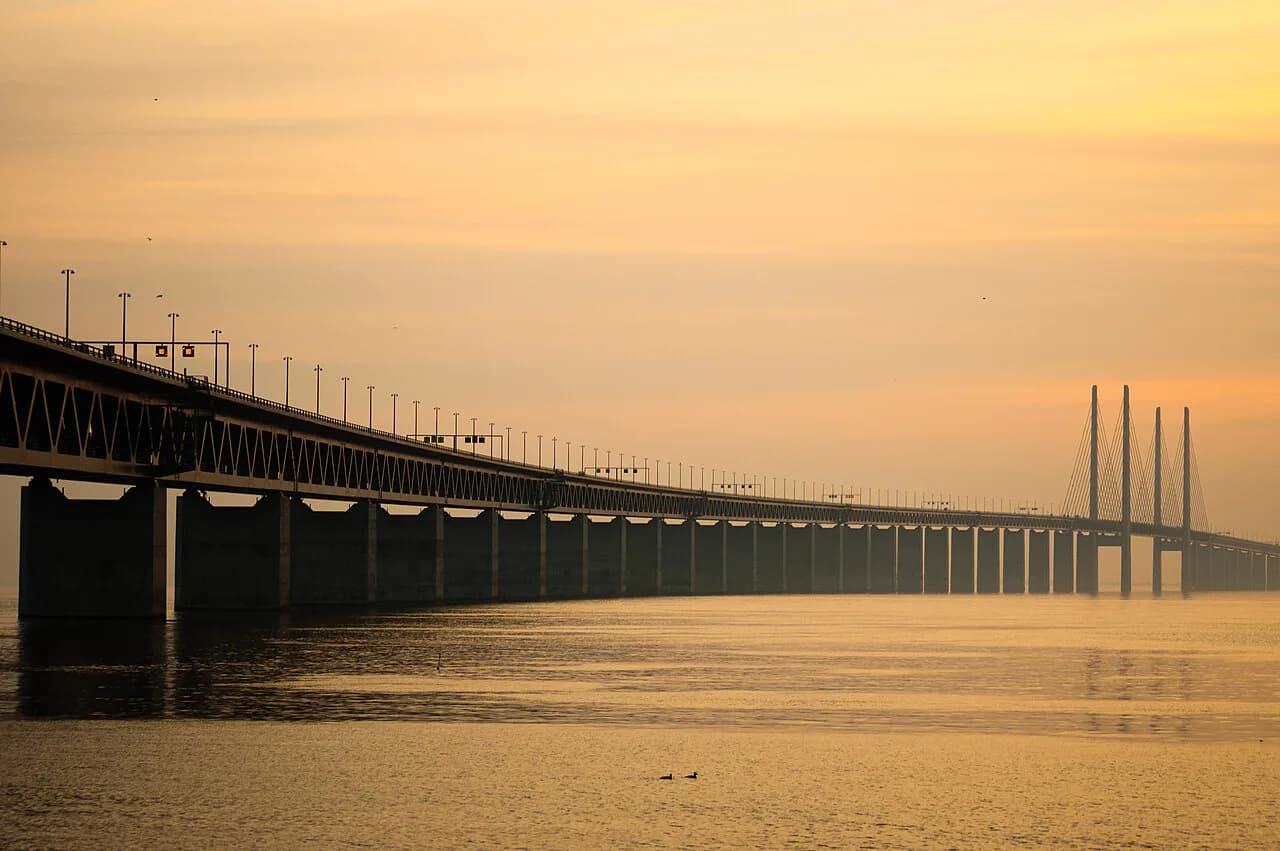
The Øresund Bridge is the road and rail link that connects Copenhagen in Denmark with Malmö in Sweden across the Øresund strait. It opened to traffic in 2000 and, with the tunnel and the artificial island of Peberholm counted in, runs to a total length of 15.9 km. This guide covers how the crossing is put together, how to cross by train or car, what driving costs, and what is worth doing when you land in Malmö.
What the Øresund Bridge connects
The link joins Copenhagen, on the Danish side, with Malmö, on the Swedish side, crossing the Øresund strait. If you are planning a city break based in Malmö, the bridge makes the Danish capital a straightforward add-on rather than a separate trip. The toll booths sit on the Swedish part of the crossing, so the payment point comes at the end of the drive from Denmark, not the start.
The crossing is also the reason Malmö's waterfront feels so tied to Copenhagen: the two cities sit on opposite sides of the same sound. For travellers arriving by air in Copenhagen, the bridge is often the most practical way to reach Malmö without a second flight.

Bridge, tunnel and Peberholm: how the crossing is put together
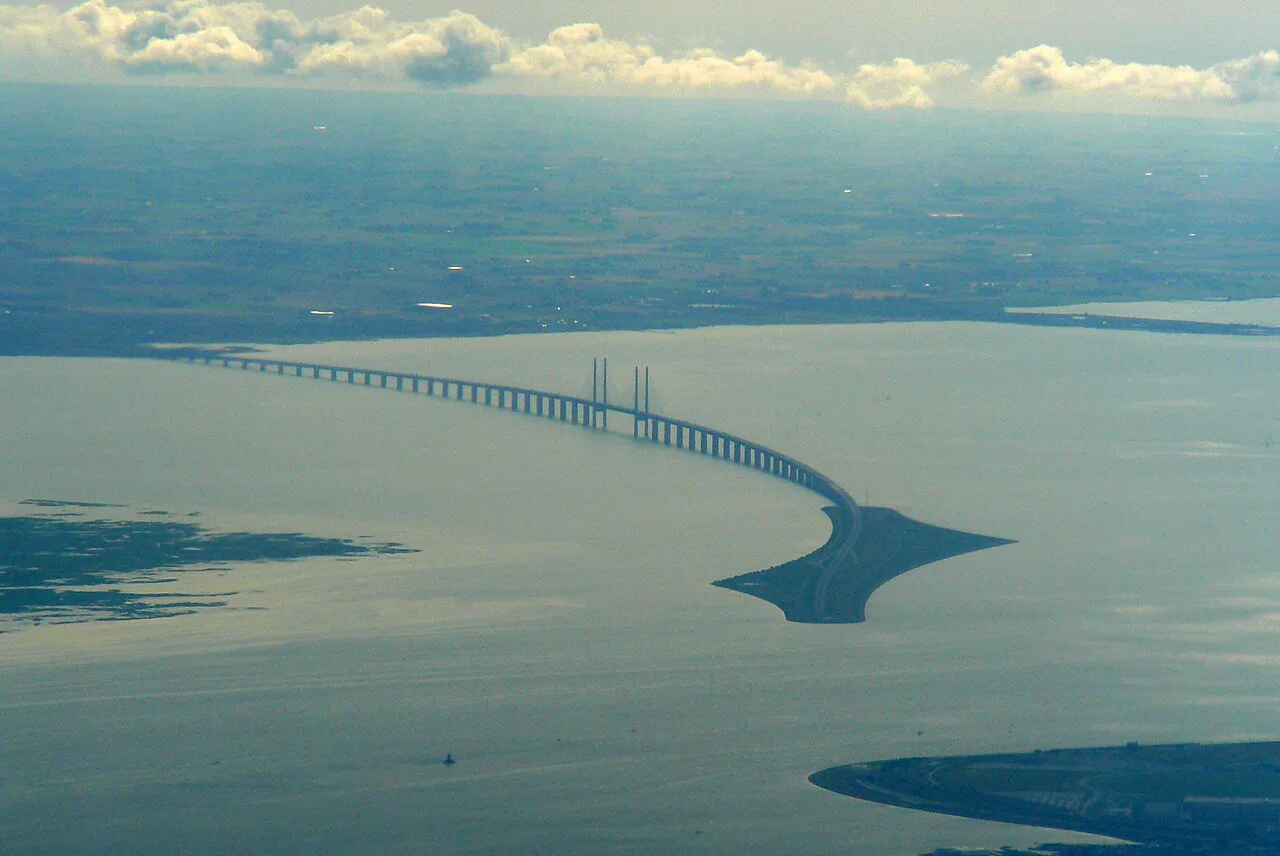
The crossing is not one structure but a sequence. From the Swedish coast, the bridge element runs 7,845 metres to the artificial island of Peberholm, making it the second longest bridge in Europe. From Peberholm, a tunnel of 4,050 metres carries the road and railway to the Danish coast.
The tunnel exists for two practical reasons: it lets large vessels pass through the strait, and it keeps the road and rail alignment clear of the approach to nearby Copenhagen Airport. Most of the tunnel, 3,510 metres, was built from precast concrete sections sunk into a trench on the seabed, with the access sections bored as true tunnel.
On the bridge, the railway runs at a lower level with the roadway on top. Inside the tunnel there are five separate passages alongside each other: two for road, two for rail, and one for emergency shelter and evacuation. The main architect is Georg K.S. Rotne.
The international boundary falls in the bridge section, which is the detail that opens the Nordic thriller series The Bridge, with a body found lying across the border. Knowing the order of bridge, island and tunnel makes the crossing far easier to follow on a map, and it explains why the Danish half of the journey is underground.
Crossing by train versus by car
For a city break, the train is usually the simpler choice: you board in Copenhagen, stay seated through the tunnel, and arrive in central Malmö without dealing with tolls or parking. The drive suits travellers arriving by car from Denmark, or anyone continuing beyond Malmö. The toll applies to vehicles, so the train spares you that cost.
If you do drive, the crossing is quick and uncomplicated once you have paid. Until you reach the toll station, follow the signs for Malmö rather than Copenhagen Airport, which sits close to the Danish tunnel portal and can catch drivers out.
What you pay to drive across, and how ØresundGO works
The toll is published on the Øresund Bridge's price list and varies by vehicle type; the figures here are for a passenger car up to 6 metres. The regular one-way price for that car is 470 DKK or 690 SEK. Treat these as the published rates and confirm them before you travel.
The ØresundGO agreement cuts the one-way price to 182 DKK or 268 SEK, a saving of 288 DKK or 422 SEK per crossing. It costs 370 DKK or 545 SEK per year in annual fee, and the bridge's own arithmetic is that you earn the fee back on your first return trip. That makes it worthwhile for frequent crossers and pointless for a single one-way drive.
ØresundGO is a rolling agreement that was previously called BroPass; it was renamed in 2023 to reflect its link to the bridge and the Øresund region. Members get a smooth pass through the toll station without stopping, and up to five vehicles can be linked to one agreement in a calendar year. Drivers who only cross once can buy an online single ticket instead.


How long the crossing takes
Allowing for the bridge, Peberholm and the tunnel, the road journey from coast to coast covers 15.9 km, which at motorway speed is a matter of minutes. The rail crossing uses the same corridor, so the tunnel section passes in a few minutes of darkness before Malmö comes into view.
Build the crossing into your day rather than treating it as the day. A morning train from Copenhagen leaves you a full afternoon in Malmö, and the same works in reverse if you are staying in Sweden.
What you see from the train as you cross
Leaving Copenhagen, the line runs through the tunnel before emerging onto Peberholm, a low, flat island with little more than the road and rail alignment on it. Then comes the long bridge section, with open water on both sides and the Swedish coast growing closer. On the bridge the railway sits below the roadway, so your window view is dominated by the sea rather than traffic.
The approach into Malmö brings the harbour and the Turning Torso tower into view on the skyline, which makes a useful landmark for orienting yourself once you are through the station and out in the city.
Nearby on the Malmö side: what to do once you arrive
Central Malmö is compact enough to walk from the station. Start with the old squares and brick-built streets around Lilla Torg, which works well as a first orientation point before you branch out.
If you want one big sight to anchor the day, the Turning Torso is the city's signature building, designed by Santiago Calatrava and visible from much of the waterfront. It sits in the Västra Hamnen district, a short walk or bus ride from the centre.
For a fuller plan, our Malmö attractions guide covers 17 visitor guides across the city, from museums to parks, so you can match a shortlist to the hours you actually have. One day is enough for the centre; two lets you add a museum or a park without rushing.
Train or car over the Øresund Bridge?
For a short Malmö city break, take the train: no toll, no parking, and you arrive in the middle of town. Drive only if you are bringing a car across anyway, and check the current toll for your vehicle type before setting off.
Explore more Malmö guides
Frequently Asked Questions
What bridge connects Copenhagen to Malmö?
The Øresund Bridge, also written Öresund Bridge, is the combined road and rail link across the Øresund strait between Copenhagen in Denmark and Malmö in Sweden. It opened in 2000 and, with the tunnel and the artificial island of Peberholm included, measures 15.9 km.
What is the difference between the bridge and the tunnel?
Only the Swedish half is a bridge: 7,845 metres from the coast to Peberholm. From that artificial island, a 4,050-metre tunnel carries road and rail under the water to the Danish side near Copenhagen Airport.