
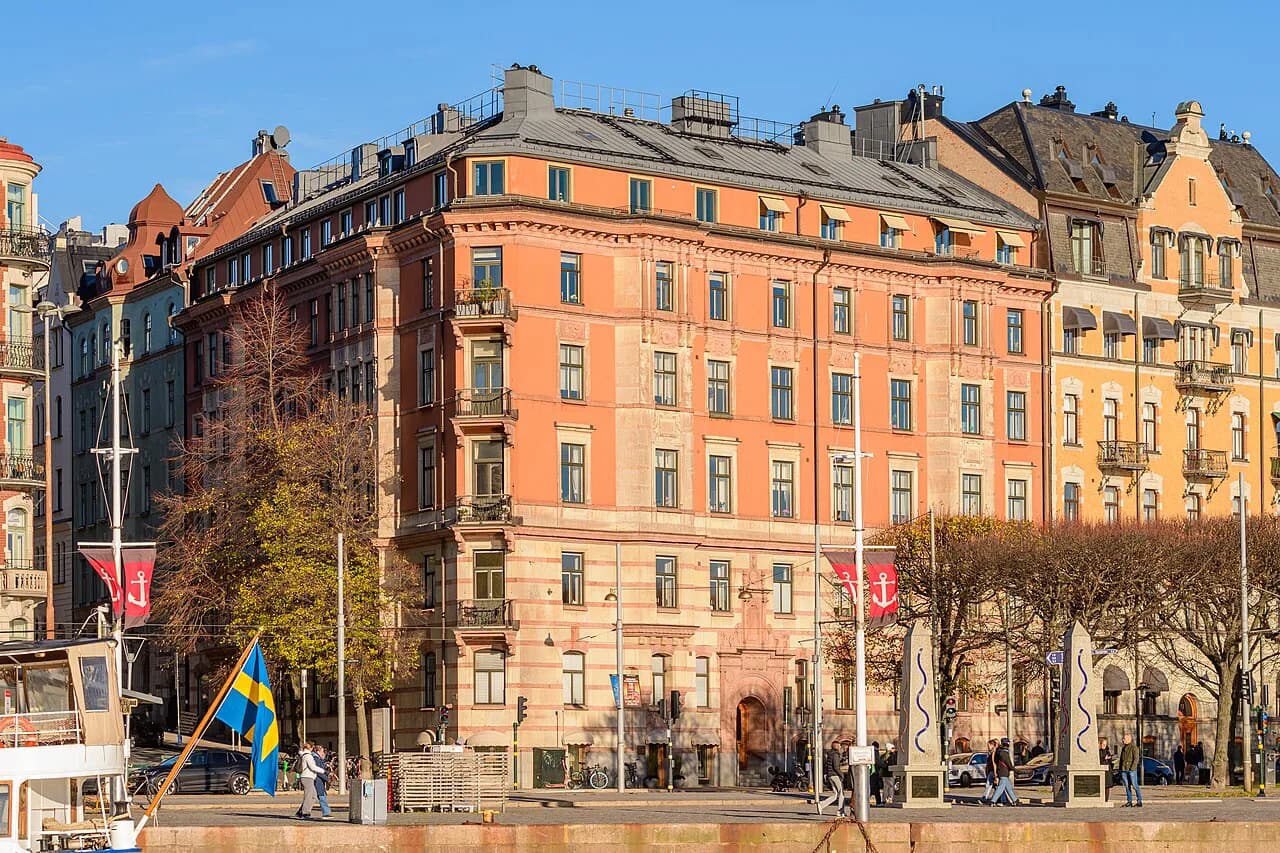
Strandvägen: Stockholm's Östermalm Waterfront Boulevard

Strandvägen is Stockholm's showpiece waterfront boulevard, running roughly 1,200 metres through Östermalm from the Nybroplan area towards Djurgårdsbron, the bridge over to Djurgården. It is a street to walk rather than a ticketed sight: there is no entrance fee and no opening time, just a broad quay, a tree-lined central walk and a long terrace of grand late-19th-century façades.
This guide covers where the boulevard sits, how to reach it on foot from the city centre, which side to walk for the water views, how much time to give it and which museums and islands make the natural continuation. It stays on this one street; for the wider picture, the Stockholm Attractions: 29 Visitor Guides collection maps out the rest of the city.
What Strandvägen is and where it sits in Östermalm
Strandvägen is a boulevard-like ceremonial street in the Östermalm district, built as a proud address facing the water along Stockholm's central waterfront. Its full width, quay included, comes to about 35 metres, which is why it feels more like a promenade than a traffic artery. The result is a street where the walk itself is the attraction.
The boulevard belongs to Östermalm, the district that Visit Stockholm describes alongside Södermalm and Norrmalm as one of the seven central districts, each with its own character. That places Strandvägen within easy walking range of the city core rather than out in the suburbs.

The boulevard's layout: 1,200 metres from Nybroplan to Djurgårdsbron
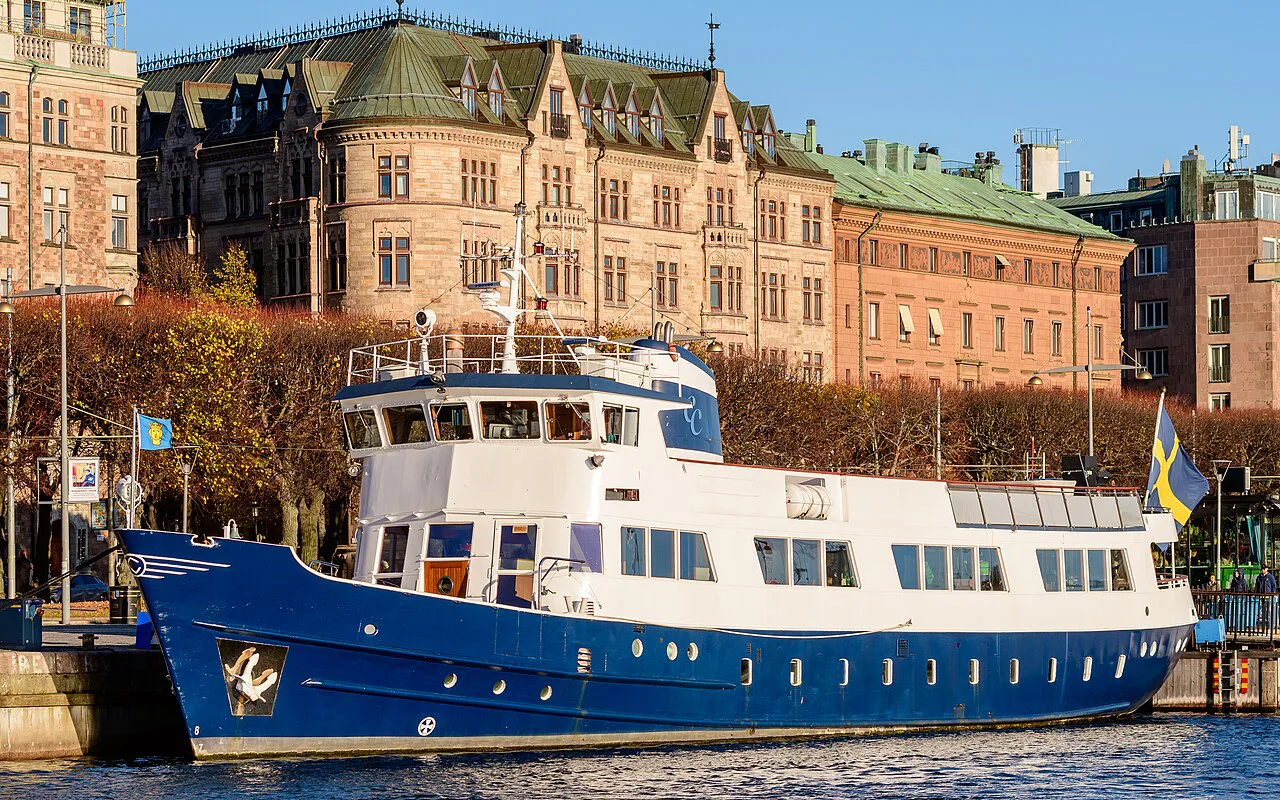
Think of Strandvägen as a single line with three parallel strips: the water and its quay on one side, a central allée of trees, and the carriageway with the building frontages on the other. The quay edge is where the boats tie up and where the unobstructed views open out. The inner pavement is the better side for looking up at façades and doorways.
The street begins near Nybroplan, where the city centre, Kungsträdgården and the harbour meet, and continues east to Djurgårdsbron, the bridge that carries you across to Djurgården. That gives you a clear, linear route with a beginning, an end and a reward at each terminus.

How to reach Strandvägen on foot from Nybroplan and the city centre
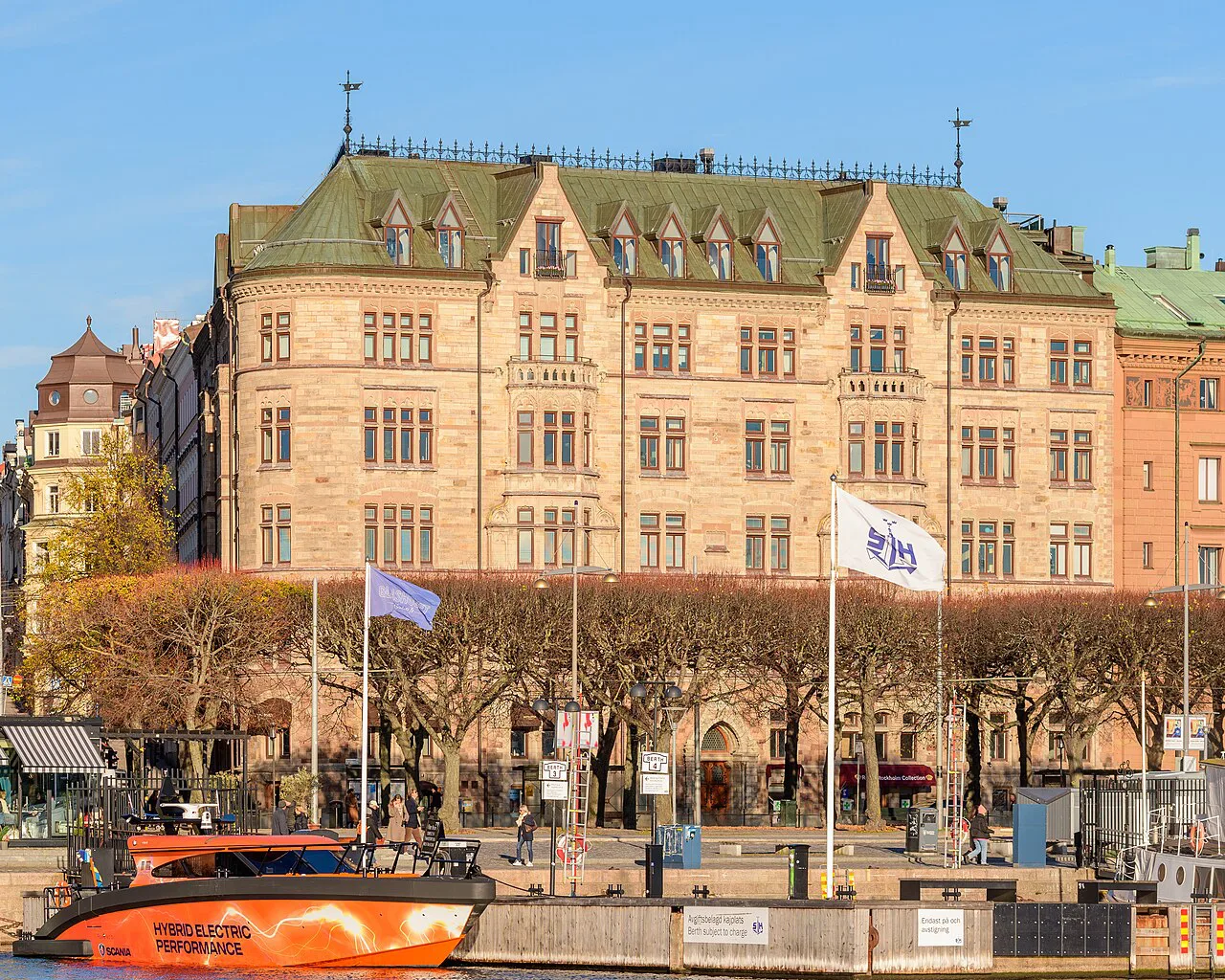
The easiest approach is on foot from Nybroplan: from the harbour front by Kungsträdgården, follow the water east and you are on Strandvägen within minutes. Coming from Gamla Stan, cross the water via the bridge at Strömbron or take the short waterfront route past the Nationalmuseum building on Södra Blasieholmshamnen, then continue east to Nybroplan and pick up the boulevard.
Because it is a public street, there are no tickets, gates or opening hours to plan around. Treat it as an outdoor walk that fits between indoor stops, and save the museum visits for the parts of the day when you want to be inside.
Walking the quay: the waterfront side, the boulevard and the architecture
Start on the water side. Walking east along the quay gives you the open channel, the boat traffic and the low skyline of Skeppsholmen and Djurgården across the water, and it keeps the sun on your face on a clear morning. Then cross to the inner pavement for the return leg if you want to read the architecture properly.
The building frontages are the other half of the experience: a continuous terrace of grand residential blocks with generous windows and decorative detail, best appreciated by looking up rather than straight ahead. The central trees soften the middle of the street and give shade on warm days. The walk is level throughout, which makes it one of the least demanding stretches of sightseeing in central Stockholm.
A detour worth building in is Hedvig Eleonora Church in Stockholm, which sits just inland from the boulevard in Östermalm and breaks up the waterfront with a bit of church architecture. It is a short block or two off the quay, so it fits naturally into a loop rather than a straight out-and-back.
How long to allow and where to stop for the best views across the water
Budget about half an hour to walk the 1,200 metres at a steady pace, and closer to an hour if you stop for photographs and read the architecture on the way back. With a coffee stop or a detour into Östermalm's side streets, allow two hours and treat it as a proper morning or late-afternoon outing.
The strongest views come from the eastern end, where the channel widens and Djurgårdsbron frames the green of Djurgården ahead of you. The stretch opposite Skeppsholmen is the other good pause point, with the island's low profile and its museum buildings across the water. Sit on the quay edge only where it is clearly meant for it, and keep clear of the mooring points.
Late afternoon light coming from the west flatters the façades on the way out and the water on the way back, so an early-evening walk gets you both directions at their best. In summer the long daylight means you can start after dinner and still finish in good light.
Nearby: Djurgården and its museums, and Skeppsholmen
At the eastern end, Djurgårdsbron takes you straight onto Djurgården, the green island that holds several of Stockholm's best-known museums. Among them are Liljevalchs Konsthall with its annex Liljevalchs+, the former princely home at Waldemarsudde and the Thiel Gallery, whose Edvard Munch holdings are described as among the largest in the world. ABBA The Museum is on the same island, so a single crossing can fill an afternoon.
Nationalmuseum is the closest major museum to Strandvägen, sitting at Södra Blasieholmshamnen just west of Nybroplan with Swedish art and design across a huge collection. Its regular opening hours are listed on its own site, and it also publishes a calendar of guided tours and events, so check those two pages before you build a day around it.
Skeppsholmen, reached on foot from the Nybroplan area, is home to Moderna Museet and to several sculptures and installations in the museum's surroundings. The museum's own page describes it as holding one of northern Europe's largest collections of modern and contemporary art, with works by Derkert, Dalí, Christo and Rauschenberg. Pairing Skeppsholmen with Strandvägen makes a compact half-day loop.
West of Nybroplan, the adjoining islands hold the older sights: Gamla Stan with the Stockholm Palace and Riddarholmen Church. Both make a sensible morning before an afternoon on the boulevard, and both are close enough to walk to rather than needing transport.
Practical points: what to expect on the day
Strandvägen needs no booking and no ticket, so the only logistics are your own timing and the weather. Museums along the route and on Djurgården and Skeppsholmen have their own separate admission, and you should check each one's page for current prices in Swedish kronor rather than assuming a figure.
Some venues keep different hours at different points in the year: Carl Eldh's Studio Museum, for example, is open April to October for regular visitors and November to March for pre-booked visits only. That pattern is not universal, so confirm hours for whichever museum you plan to enter rather than assuming summer hours apply in other seasons.
The walk is exposed, with little shelter along the quay, so wind and rain change the experience more than they would in a museum quarter. If the weather turns, cut the stroll short and move indoors to Nationalmuseum, Moderna Museet or the Djurgården museums.
Is Strandvägen worth building into your Stockholm days?
Yes, as a half-day rather than a headline sight. It gives you the grandest street front in Stockholm and a free, level walk between Nybroplan and Djurgårdsbron, with Nationalmuseum and Skeppsholmen at one end and Djurgården's museums at the other.
The sensible plan is to walk it once in each direction, water side out and façade side back, then commit the rest of the day to one museum rather than trying to tick off several. If your trip runs longer, keep Strandvägen as the connecting thread between the city centre and Djurgården rather than a destination in itself.
Explore more Stockholm guides
Frequently Asked Questions
How long does it take to walk Strandvägen?
The boulevard is about 1,200 metres end to end, so a steady walk takes roughly half an hour. Allow an hour if you stop for photographs and look at the buildings on the way back, and two hours if you add a detour into Östermalm or a museum at either end.
Do you need a ticket to visit Strandvägen?
No. Strandvägen is a public street and quay in Östermalm, open at all hours with no admission charge. The museums at either end, including Nationalmuseum and those on Djurgården and Skeppsholmen, are separate ticketed venues with their own admission and hours.
Which side of Strandvägen has the best views?
The water side. Walking east along the quay keeps the channel, the boats and the islands in front of you, and the widest views open up near Djurgårdsbron. The inner pavement is better for the architecture, so walk out on one side and back on the other.