
Kungsträdgården: Stockholm's King's Garden in Norrmalm

Kungsträdgården is Stockholm's central park in Norrmalm, free to enter and roughly a 15-minute walk from Stockholm Central Station. It works best as a short stop of about 30 to 45 minutes rather than a half-day outing, unless an event is on. This guide covers where the park sits, how to reach it, what to look for inside and which sights are within a few hundred metres.
Where Kungsträdgården sits in Norrmalm
The park lies in Norrmalm, the district immediately north of Gamla Stan, and runs south towards the water and the Royal Opera. It is signed as Jussi Björlings allé, 111 47 Stockholm. Together with Humlegården in Östermalm it ranks among the city's oldest public parks, and its central position makes it a natural meeting point rather than a destination you travel across town for.
Think of it as a long, narrow green room between the shopping streets and the waterfront rather than a sprawling park. That shape is what makes it useful on a city break: you can cut through it on the way between Central Station, the NK department store area and the palace end of town, and still see the main features in a few minutes.

How to get to Kungsträdgården
On foot, the park is under 15 minutes from Stockholm Central Station, which makes it an easy first stop after arriving. Metro, bus and tram stops sit close by, so any route that brings you into the Norrmalm core will put you within a couple of minutes of the lawns.
Arriving from the metro, bus or tram, you come into the southern part of the park near the Royal Opera, close to the Charles XIII statue and the fountain rather than at the northern pond end, so agree on a meeting point if you are joining someone at a specific feature.

What to see inside the park
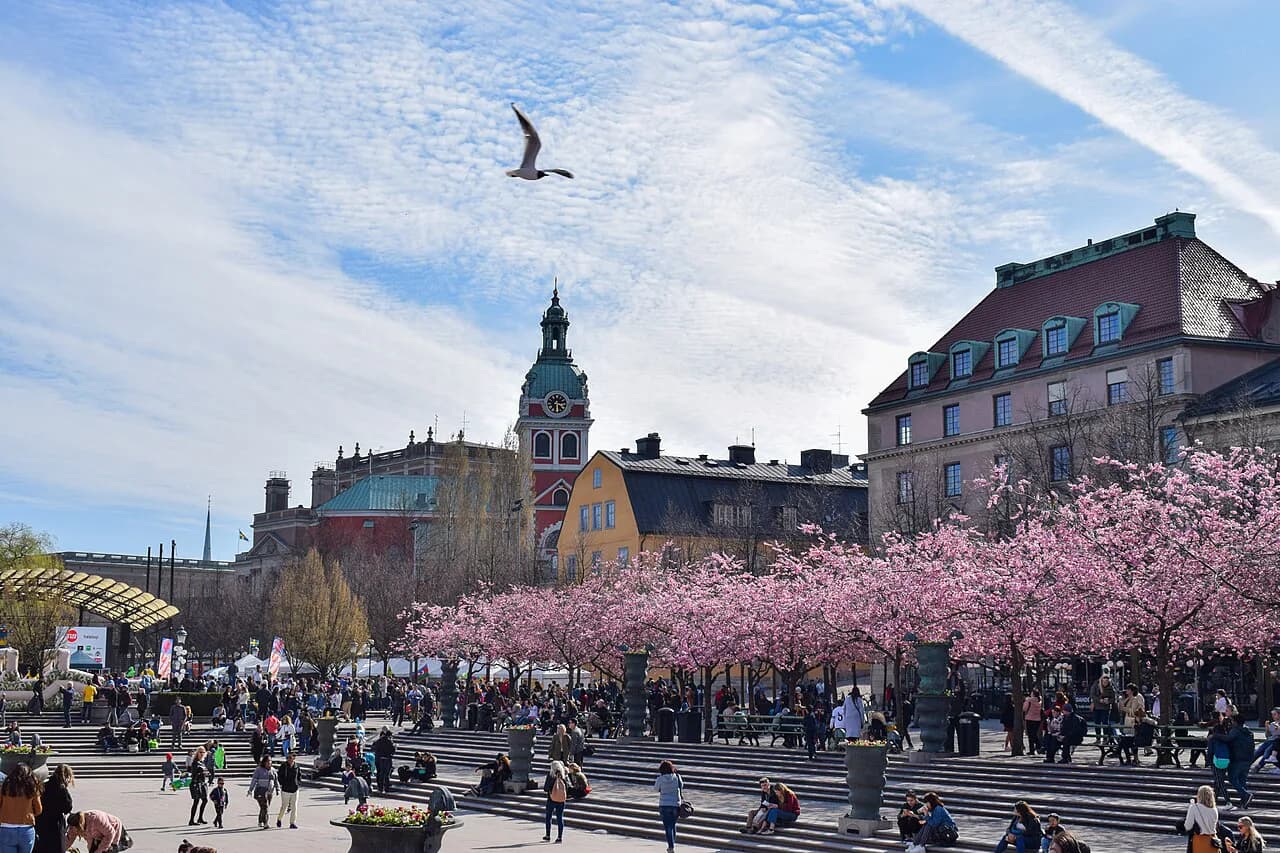
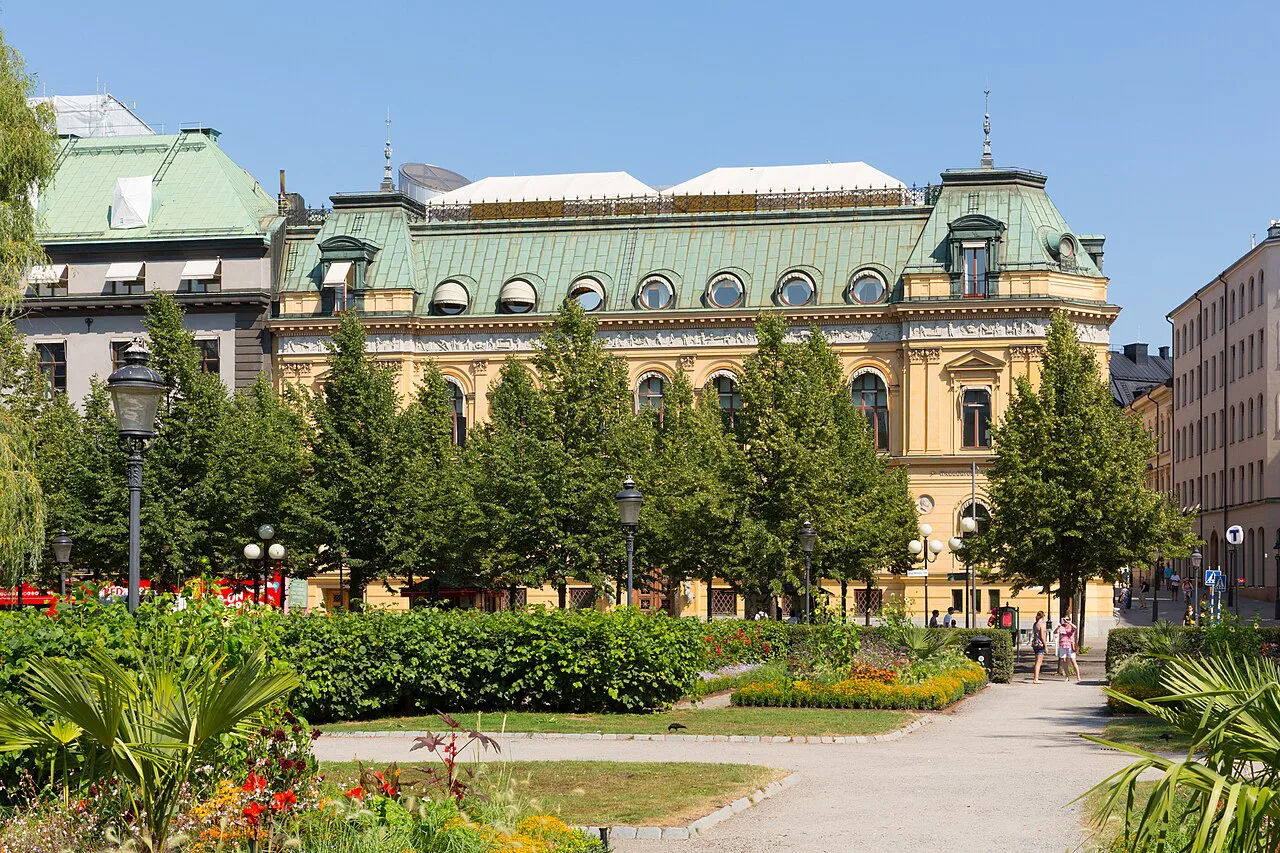
Kungsträdgården is divided into sections rather than laid out as one open lawn. In the northern part you find wooden benches and step seating around the Forum Pond (Forumdammen), where artworks reflect in the water; the fountain area is the quieter spot, with seating under the trees.
Sculpture is part of the furniture here. The park holds statues of the Swedish kings Charles XII and Charles XIII, and Molin's Fountain, which is ringed by six swans and figures from Norse mythology. The elm trees are worth a look too: they were the subject of a much-publicised public protest in 1971.
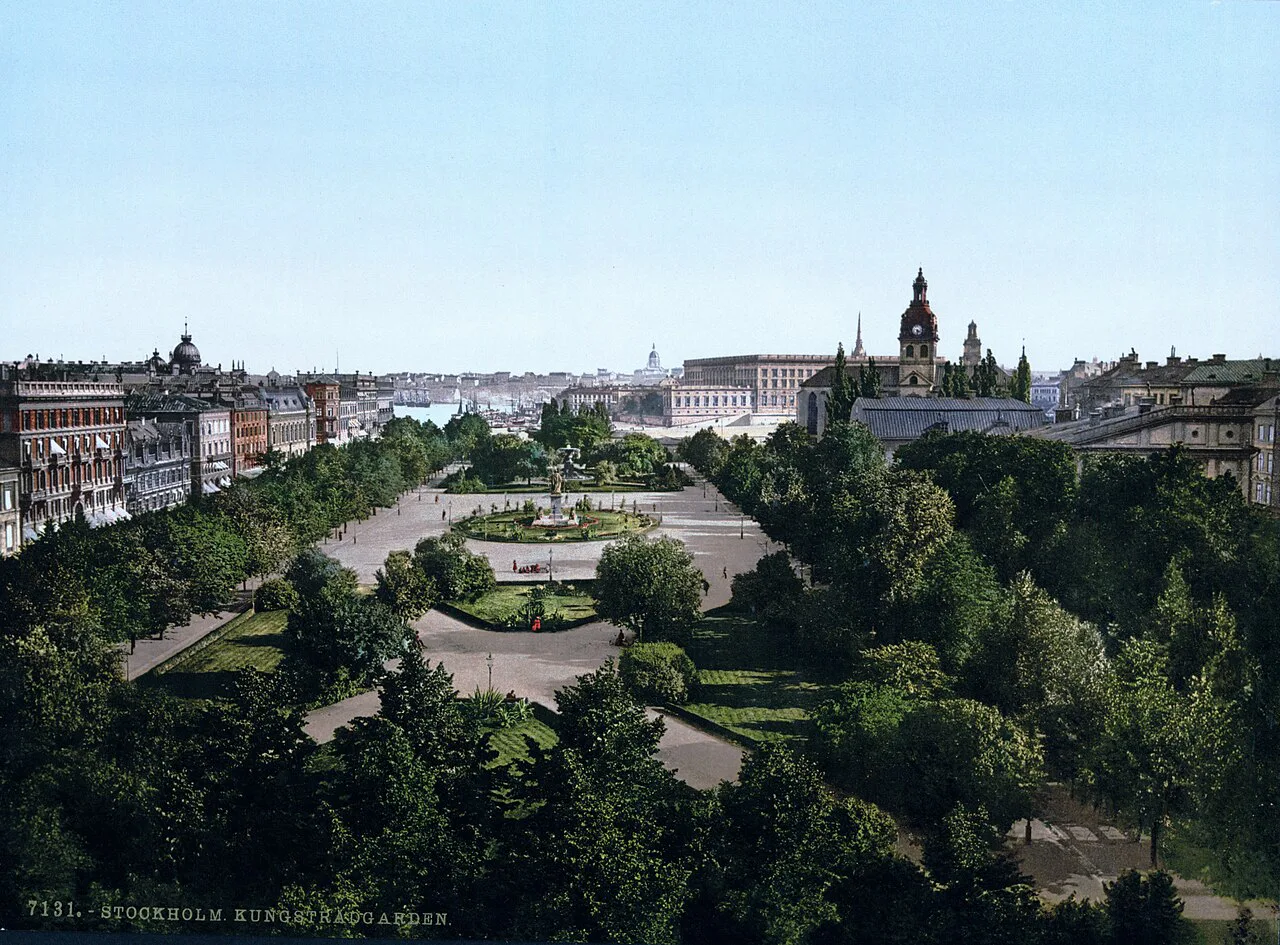
The park's history runs back to the 15th century, when it was known as Eric of Pomerania's cabbage garden, and Gustav Vasa later moved the royal herb garden here. In the 17th century Queen Christina established a palace in the grounds; it was later used as a granary, arsenal and armoury before burning down in 1825. After the palace was built the park was redesigned by a French garden designer as a Nordic baroque garden, and it was opened to the public at the end of the 18th century in an English style of lawns and natural shrubbery.
The Pavilion and Tehuset café
Beside the pond stands the glass-clad Pavilion (Paviljongen), which runs workshops, children's activities, dances and exercise classes through the year. It is a programme venue rather than a sight in its own right, so it is worth a glance if something is on and easy to walk past if not.
Tehuset is the park's café, positioned so you look out over the palace and the waterway leading towards Nationalmuseum. It is a sensible place to sit down if you want a coffee or a spot of lunch without leaving the centre.
Cherry blossom in spring and the ice rink in winter
The park's seasons are its main draw. It is especially popular in spring, when visitors come to see the blossoming cherry trees, and in summer the trees give shade while the events programme is at its busiest. In winter a large ice rink takes over the space under a display of Christmas lights, and skating there is free of charge; check the rink's opening times beforehand.
How long to allow and when it is busiest
Give Kungsträdgården 30 to 45 minutes if you want to walk the length of it, look at the fountain and statues and sit by the pond. It shrinks to a ten-minute cut-through if you are simply moving between Norrmalm and the waterfront.
The park is at its liveliest in summer, when concerts, festivals and exhibitions fill the programme, and it stays busy through the cherry blossom weeks. If you want quiet, aim for a weekday morning outside those windows; if you want atmosphere, come when something is scheduled.
What's nearby: Sankt Jacobs kyrka, the Royal Opera and Gamla Stan
Several named sights sit within a few hundred metres, so the park slots neatly into a walking loop. Sankt Jacobs kyrka and the Karl XII and Karl XIII statues are effectively neighbours, the Royal Opera is about 160 metres away, and Gamla Stan begins just across the water.
Cross into Gamla Stan and Riddarholmen Church is a short walk beyond the palace, which makes the park a natural start to a half-day on the old town streets. If you would rather stay on the museum side, Nationalmuseum Stockholm is a few minutes south along the water.
Is Kungsträdgården free, and are events ticketed?
Entry to the park costs nothing, and some events may charge an admission fee. That is the trade-off to plan around: the grounds are free to walk into, but a concert or festival inside them can carry a ticket.
The park can also be hired for private events, so a section may occasionally be fenced off. Confirm the current schedule through the park's own channels and the Pavilion's programme before you build a day around a specific happening.
Practical points for a visit
Bring a card or phone for any café stop or event ticket, as Sweden is largely cashless, and note that the park's compact, level layout makes it easy to fit between other stops in Norrmalm.
Event dates and ice rink opening times change from year to year, so check the park's own listings before you build a day around a specific happening. For the wider set of city sights within walking distance, browse the Stockholm Attractions: 29 Visitor Guides.
Is Kungsträdgården worth the stop?
Yes, if you are already in central Stockholm: it is free, flat and central, and the pond seating, fountain and statues fill a pleasant half-hour between Central Station and Gamla Stan. Do not cross town for it alone unless a concert, the cherry blossom or the winter rink is the reason.
Build it into a walk that takes in Sankt Jacobs kyrka, the Royal Opera and the old town rather than treating the park as the day's main event. Pair it with the waterfront museums, such as Nationalmuseum Stockholm, if you want a fuller afternoon.
Explore more Stockholm guides
- Adolf Fredriks Kyrka
- Artipelag
- Drottningholm Palace
- Gustaf Vasa kyrka
- Hedvig Eleonora Church in Stockholm
- Katarina Kyrka
- Rosendal Garden
- Royal Swedish Opera (Kungliga Operan), Stockholm
- S:t Johannes kyrka, Stockholm: what to see at St John's Church
- Sergels Torg
- Skansen: a visitor's guide to Stockholm's open-air museum and zoo
- SkyView Stockholm
Frequently Asked Questions
Is Kungsträdgården free to enter?
Yes. Walking into the park costs nothing, and the winter ice rink is also free to use. Individual concerts, festivals and exhibitions staged in the park may charge admission, and some sections can be closed for private hire on a given day.
How long does it take to walk from Stockholm Central Station to Kungsträdgården?
Under 15 minutes on foot, with metro, bus and tram stops close by. The southern end, near the Royal Opera, holds the Charles XIII statue and the fountain.
When is the best time to see the cherry blossom in Kungsträdgården?
The park is at its most popular in spring, when the cherry trees come into blossom. The exact timing shifts each year, so check the park's own channels shortly before you travel.