Gotland: A Practical Guide to Sweden's Baltic Island
Plan a Gotland trip around Visby's medieval walls, the rauks at Langhammars, Stora Karlsö and the island's 92 medieval churches, with honest trade-offs.
On this page
Gotland is Sweden's largest island, sitting in the Baltic Sea east of the mainland, and Visby is its walled medieval capital. Most short trips work around Visby and one or two outlying sights, because the island's spread rather than a shortage of attractions is what squeezes a two-day visit. This guide separates the town from the coast and helps you pick a route that fits your time.
The numbers that shape a plan are simple: 92 medieval churches across the island, a half-hour boat out to Stora Karlsö, and sea stacks on Fårö that stand almost 10m tall. Use those as fixed points and build the rest of the day around them.
Where Gotland sits and how big it is
Gotland lies about 56 miles east of the Swedish mainland and covers roughly 1,229 square miles, which makes it a county, a municipality and an island all at once. Around half of its population lives in Visby, so the rest of the island is farmland, coast and small settlements rather than continuous town.
The island's limestone bedrock is why you see rauks, the weathered limestone sea stacks, along the coast, and why the landscape reads as flat plateau rather than mountain. Fårö, Gotska Sandön and Karlsöarna are counted among the smaller islands that belong to the wider Gotland province.
How the island is laid out
Think of Gotland in three pieces: Visby on the west coast, Fårö off the north, and the long southern coast running down to Hoburgen. Distances between them are the reason a single day cannot cover both Fårö and the south comfortably, so choose one direction and do it properly.
Visby is the natural base because it holds the World Heritage core and the island's main museum, and roads radiate from it. Fårö needs its own half-day or more once you add the crossings, and the southern loop rewards anyone willing to drive further for cliffs and bird reserves.
Visby first: the walled Hanseatic town
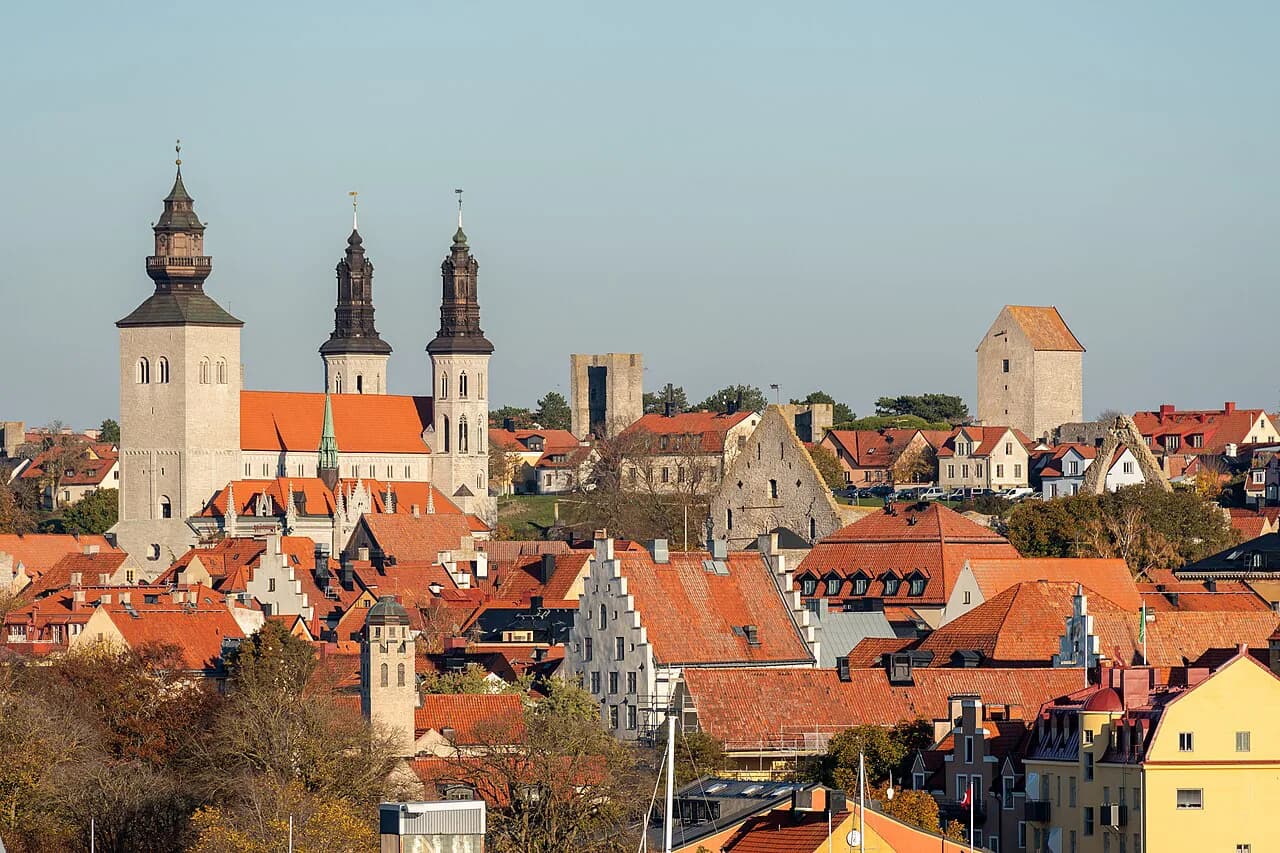
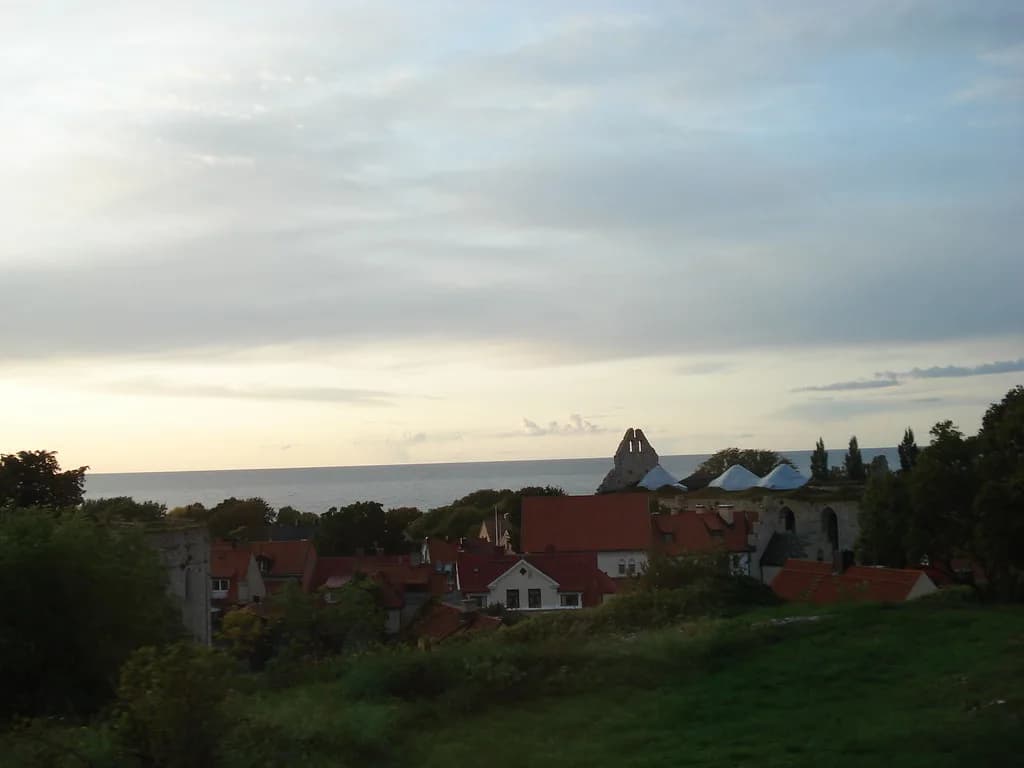
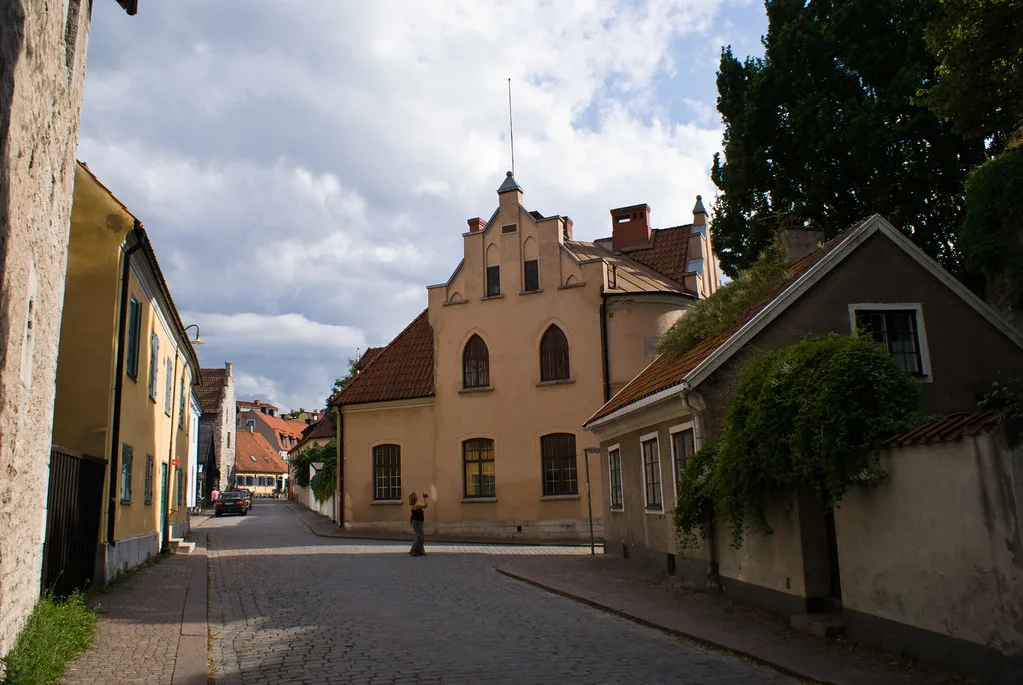
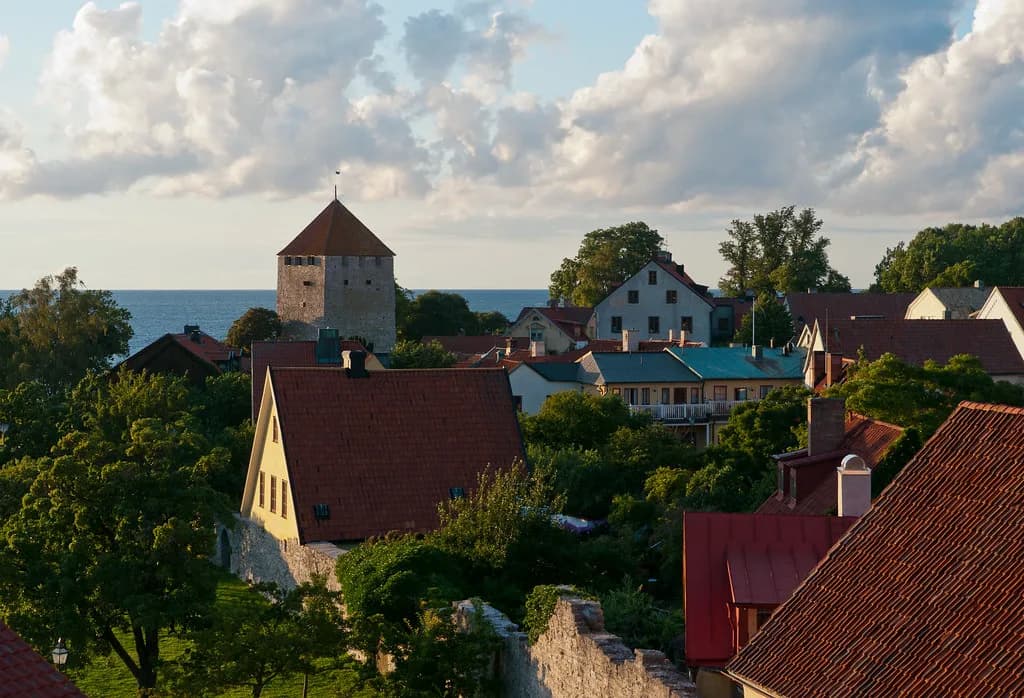
Visby was the leading Hanseatic League centre in the Baltic from the 12th to the 14th century, and the old town was inscribed on the UNESCO World Heritage List in 1995 for preserving a medieval walled trading town with unusual completeness. The practical effect for a visitor is that the historic core is compact and walkable, with ruins, church shells and merchant houses packed inside the circuit.
Start with the circuit of the wall and the lanes inside it, then add sights as you pass rather than treating the town as a checklist. For a focused route, our guide to things to do in Visby lines up the wall, the cathedral and the harbour front in a sensible order.
If you only have an afternoon, give it to the old town rather than a drive. The walled centre gives you more per hour than any single outlying sight, and it is where the island's history is easiest to read on foot.
A self-guided walk is a good way to cover the core, and a Visby walking tour structure helps you avoid doubling back through the same lanes. Build in time to sit in a square rather than racing between churches.
Gotland Museum: picture stones, silver and gold
Gotland Museum holds the island's picture stones, gold and silver treasures and authentic medieval interiors, covering 8,000 years from the Stone Age through the Viking Age and Middle Ages to the present. It is the one indoor stop worth protecting time for, particularly if the weather turns.
The picture stones are the reason to come: they are unique to the island and give context to the ruins you see outside. Pair the museum with the town rather than treating it as a separate outing, and check current opening days before you travel.
If museums are your priority, our Visby museums round-up compares what each one covers so you can pick two rather than trying to see them all.
The 92 medieval churches
Gotland has 92 medieval churches, and seeing at least one is a reason to travel rather than a footnote on the way to somewhere else. Many stand alone in fields with their original stonework and wall paintings intact, so a single stop gives you the island's medieval wealth without a detour.
Pick a church on your route rather than crossing the island for one, and treat it as a twenty-minute stop that breaks up a drive. In Visby itself, Visby cathedral, Sankta Maria Domkyrka, is the obvious one to see if your time on the island is short.
Lummelunda Cave
Lummelunda Cave has stalactites, stalagmites and fossils, and visitors can take the tourist route or join a longer trip into the inner passages. It suits a wet morning or a family stop, and it sits north of Visby on the road towards Fårö.
The adventure route is a different commitment from the show cave, so decide which you want before you set out. Ticket prices and tour times change with the season, so confirm them with the cave directly before relying on a plan.
Fårö: Langhammars and Sudersand
Fårö, north of Gotland, is where you find Langhammars, the famous sea stacks that appear on postcards, standing almost 10m tall above a pebble beach and a bare landscape. The same island holds Sudersand, one of Gotland's longest beaches, with soft white sand and shallow water.
Choose Fårö for a full day and combine the stacks with the beach rather than attempting both Fårö and the south coast. The drive and the ferry crossing eat into the day, so an early start matters more here than anywhere else on the island.
The south: Närsholmen, Ekstakusten and Hoburgen
Närsholmen is a peninsula with an open landscape of juniper and pines that supports rare plants and a variety of birds. Further south, the Ekstakusten nature reserve runs from Djupvik to Hammarudden and takes in two fishing villages, Djupvik and Kronvall.
At Hoburgen the road ends at the island's southern tip, where the Husrygg and Hoburgen nature reserve includes the Hoburgsgubben rock formation and a wide view over the Baltic. It is the far end of a long drive, so treat it as the goal of a southern day rather than a quick add-on.
Stora Karlsö: the boat from Klintehamn
Stora Karlsö is reached by a gentle half-hour boat trip from Klintehamn, and the ticket includes a guided tour of the island and entry to its museum. Thousands of seabirds nest there, and the island also has a lighthouse from 1887, fossils, orchid meadows and prehistoric remains.
This is a half-day or full-day commitment rather than a quick stop, because the boat times govern your visit and you join the guided tour on arrival. Book ahead in high season and confirm departure times with the operator before you build a day around it.
How many days Gotland needs
One full day gives you Visby: the wall, the lanes, the cathedral and Gotland Museum, with time for a slow lunch. Two days adds either Fårö or the southern coast, not both, and three days lets you add Stora Karlsö or a second loop without rushing.
A Visby-only stop suits a city break tacked onto Stockholm, while a full-island loop needs a car and at least three days to feel unhurried. If you are weighing up the town on its own, is Visby worth visiting sets out what a short stay actually delivers.
Getting to Gotland
Gotland is reached by ferry or by air, and the crossing is the part that needs planning because sailings and timings change with the season. Book a crossing with the operator running the route and work your island days around the times you are given rather than the other way round.
If you are travelling from the capital first, our Stockholm to Visby guide covers the mainland leg and the options for reaching the island. Once you are in Visby, the ferry timetable is the fixed point that determines how much of the island you can realistically see.
When to go and what to expect
Gotland has a semi-continental marine climate with larger seasonal swings than a typical coastal spot, which means warm, light summers and cold winters rather than mild weather all year. Plan a summer visit if you want long days for driving between sights and time on the coast.
Summer is when the island's outdoor sights make most sense, and it is also the busiest period for boats and caves, so book the fixed-time elements first. Outside summer, check what is running before you commit to an outlying sight.
Trade-offs: compact town versus spread-out island
The honest trade-off is that Visby rewards a short visit and the rest of Gotland punishes one. A walled town you can cross in twenty minutes sits on an island where the best coastlines are an hour or more apart, so the more you try to see, the more of your trip you spend in the car.
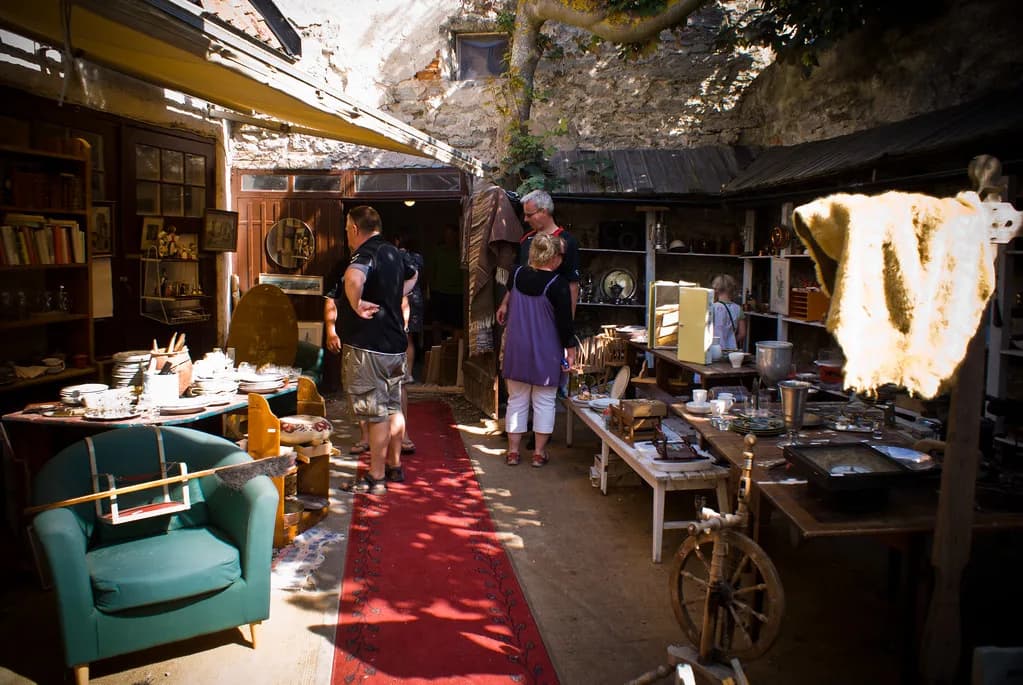
If your time is tight, choose one direction out of Visby and do it well rather than sampling both. Visiting in summer also opens up the market side of town, and Visby Markets and Shops is worth a look if you want to time a visit around it.
Which Gotland day out to choose
Pick Visby if you have a day, Fårö if you have two and want the postcard scenery, or the southern coast if cliffs and bird reserves appeal more than sea stacks. Stora Karlsö is the one to add when you have a third day and want a boat trip with a guided tour built in.
Whichever you choose, fix your ferry first, book any boat trip or cave tour second, and leave the rest loose enough to absorb a slow lunch in the old town. Check the current opening days and prices for museums, the cave and Stora Karlsö before you travel.
Explore more Visby guides
Frequently Asked Questions
How is Gotland pronounced?
In Swedish the stress falls on the first syllable, roughly GOT-land, with a short open vowel in the first part. English speakers who say it as GOT-lund are close enough to be understood.
How long is the ferry from Stockholm to Gotland?
The crossing runs from the mainland to Visby, but timings vary by route, season and operator, so check the sailing schedule when you book. Treat the crossing time as the fixed point your island days are built around.
Sources
Notes for your next Swedish city break
Optional updates to our Sweden guides.
You might also like
Continue reading
More guides you'll find useful