Visby Old Town: What to See Inside the Medieval Walls
Plan a walk through Visby's old town, from the 13th-century ring wall and church ruins to the Botanical Garden, Almedalen and the harbour.
On this page
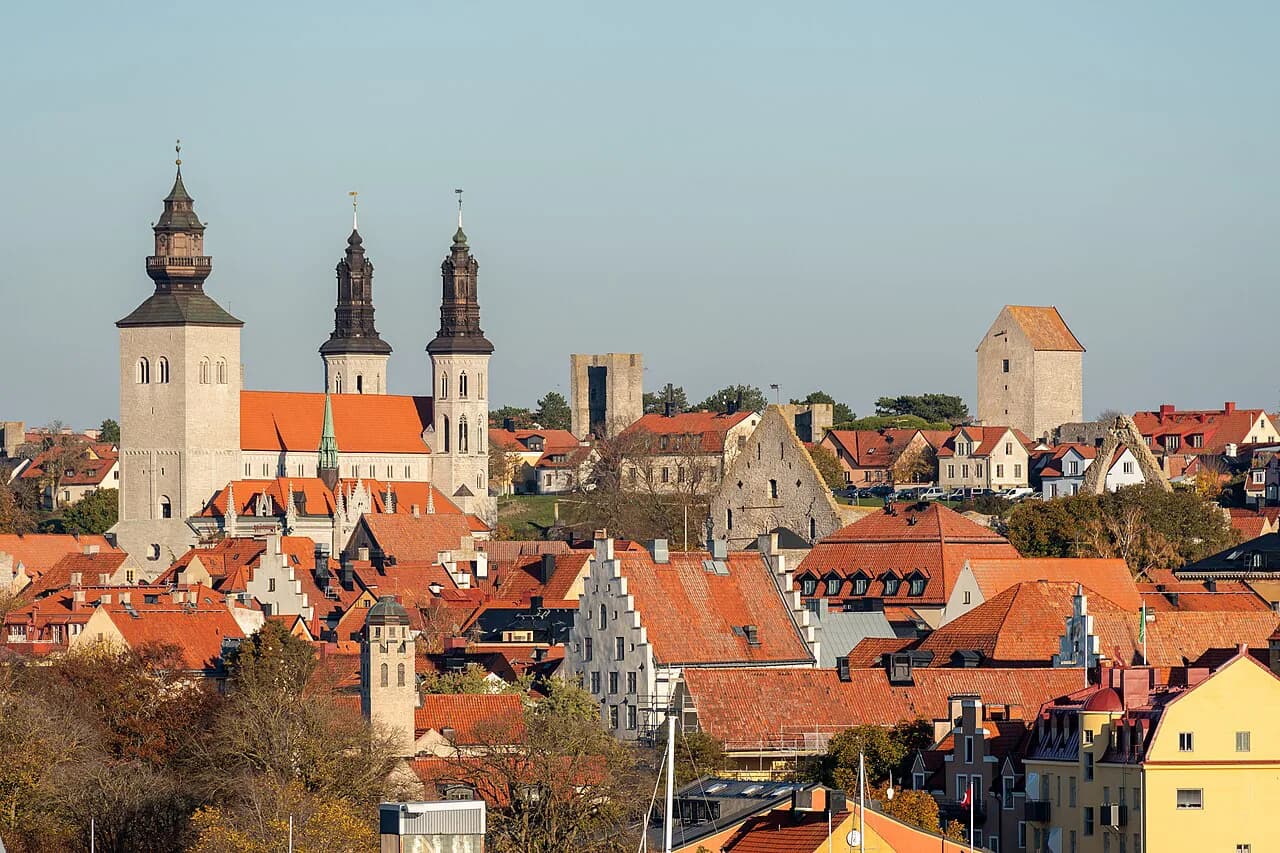
Visby old town is worth a half day on foot, not a quick photo stop: Scandinavia's best-preserved medieval town packs a 3.4 km ring wall, ruined churches, a museum and a botanical garden into a compact grid of cobbled lanes above the harbour. Everything below sits inside or immediately beside the wall, so you can link it into one continuous walk. This guide covers how the old town is laid out, which stops to prioritise, and the order that keeps your legs fresh. For a stop-by-stop plan, see Things to Do in Visby, and for a guided route, the Visby Walking Tour.
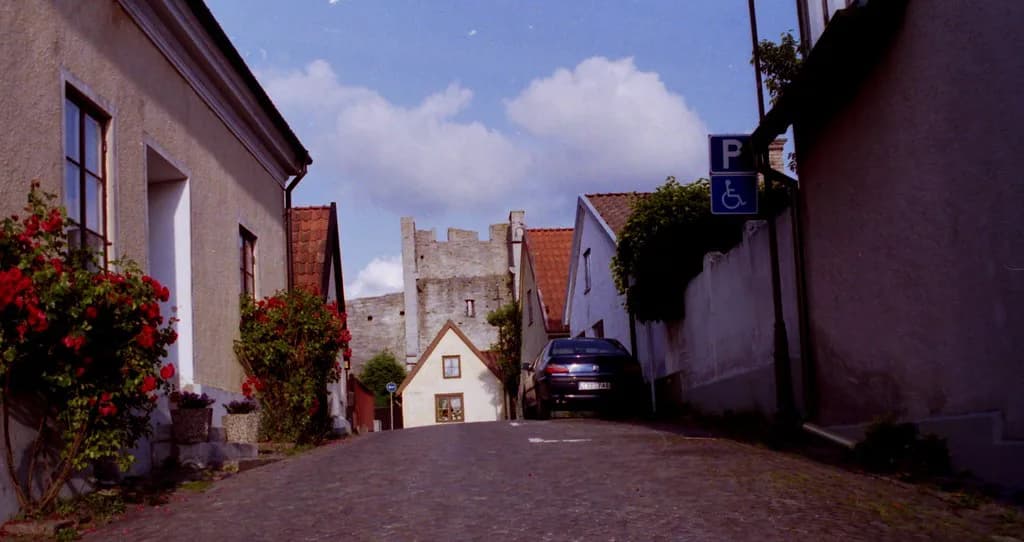
The old town is the walled Hanseatic core of Visby on Gotland's west coast, and UNESCO lists it as a World Heritage Site for its medieval architecture, cobblestone streets and historic churches. Expect stone underfoot, roses in summer and a sea view whenever the lanes open towards the Baltic.
What the old town is and why UNESCO listed it
Visby grew rich as a stop on the Baltic trading route and joined the Hanseatic League in 1280, which is when the town's churches, warehouses and defences took the shape you still walk through. The ring wall and many of the church ruins date from the 13th and 14th centuries, and the street plan inside has barely changed since.
The walled city is small enough to cross in twenty minutes, but dense enough that you will keep stopping: gates with their own names, vaulted cellars, a medieval execution site on the hill to the north and the ruin of a house that predates the wall itself, opposite St Michael's Church. Treat the old town as a single district to wander rather than a list of separate sights.
How the old town is laid out
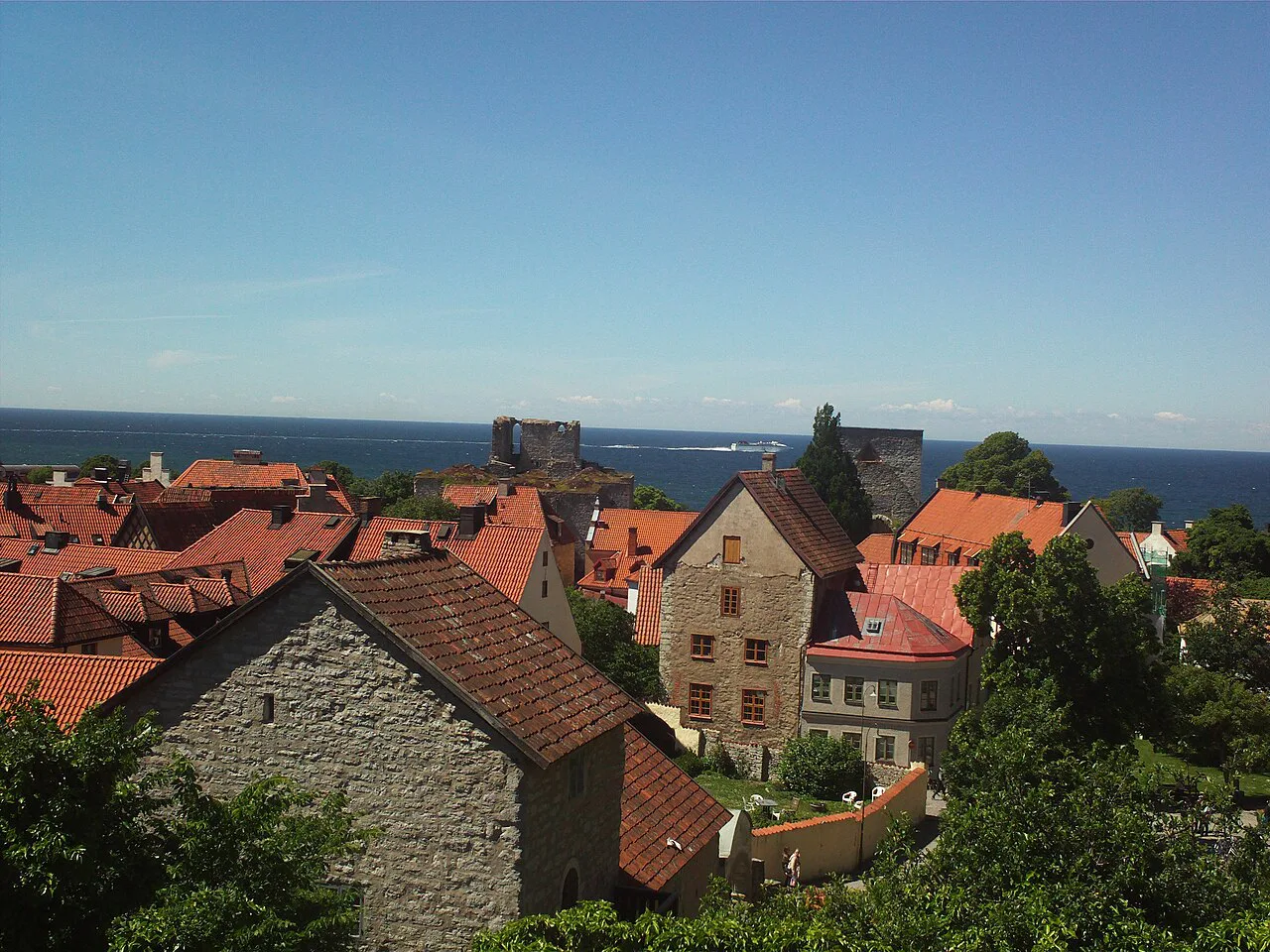
Picture a rough oval of wall with the harbour on its east side, the Baltic beyond, and the land rising gently westwards to the Botanical Garden and the cliff edge at Södra hällarna. Strandgatan runs along the waterfront inside the wall, Stora Torget sits in the middle, and Almedalen is the green park between the town and the inner harbour.
Almost every lane inside the ring leads eventually to either Stora Torget or the water, so getting lost costs you very little. The practical rule is to walk the circumference first, then cut through the middle, then finish downhill at the harbour so you are not climbing at the end of the day. If you want a tested route rather than improvising, the Visby Walking Tour sets one out.
Where to start and how long to allow
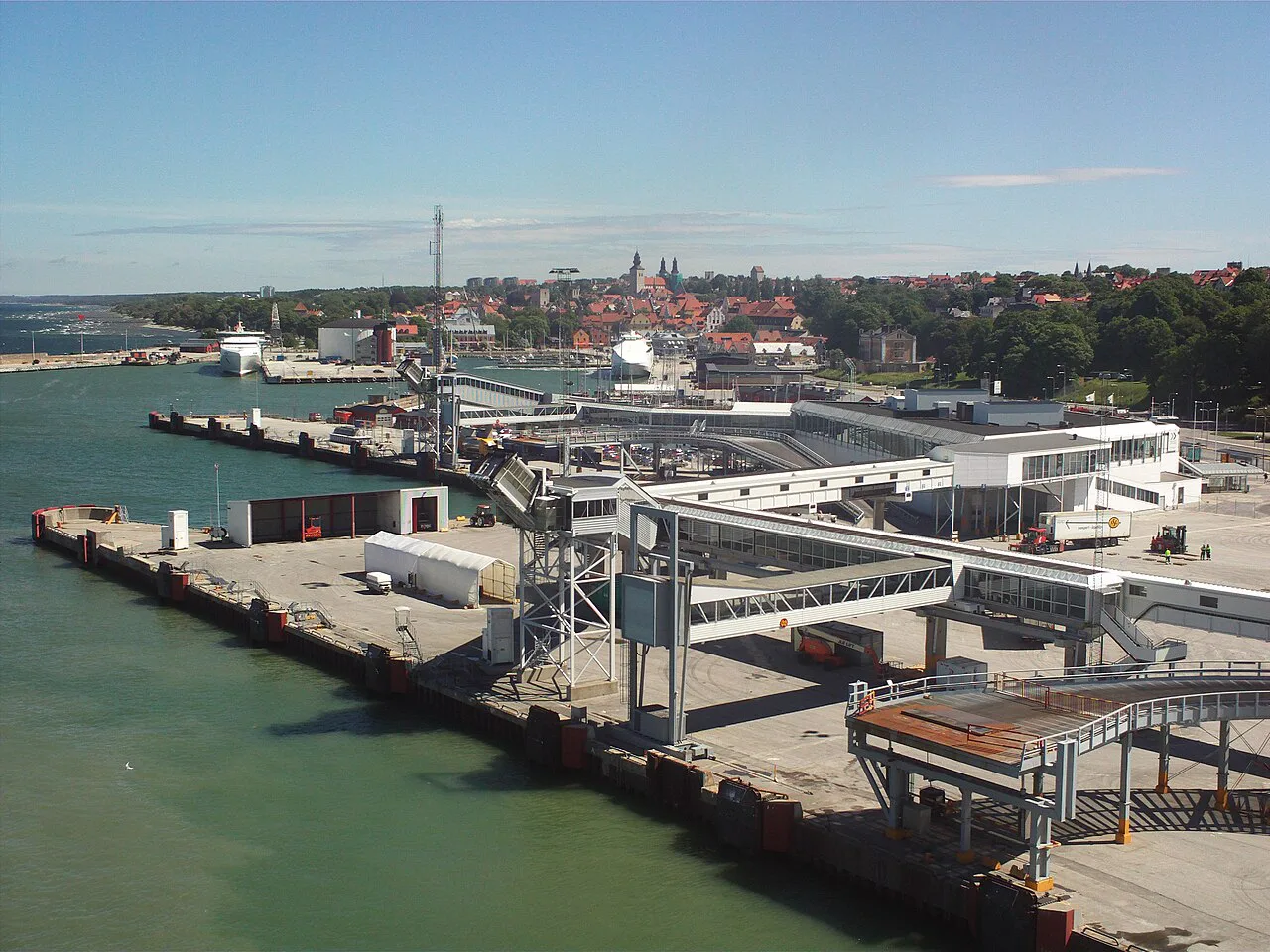
Start at the harbour or the ferry terminal side and enter through one of the wall gates, and you are inside the medieval street pattern within a couple of minutes. A comfortable circuit of wall, ruins, museum and garden takes about half a day on foot with a pause for coffee; compress it to two or three hours if you skip the museum.
Allow more time than the distances suggest. The cobbles are uneven, some lanes are steep, and the ruins and garden reward lingering far more than a checklist pace. If you only have one day in Visby, give the old town the morning and leave the afternoon for the coast or Galgberget.
The city wall and the Gunpowder Tower
Visby's ring wall runs about 3.4 km around the old town, and its oldest component is the Gunpowder Tower, built in 1150 as a standalone defensive tower before the rest of the fortification followed in the mid 13th to 14th centuries. Each gate looks different and has its own name, which makes following the outside of the wall a sequence of small landmarks rather than a featureless circuit.
Be clear about one thing before you arrive: you cannot walk along the top of the wall as you can in some European cities, so this is a walk beside and through the fortifications, not a rampart promenade. The towers are not reliably open either. Plan the wall as a slow loop on foot or by bike, and save your climbing for the grassy hill at Galgberget.
The medieval church ruins inside the walls
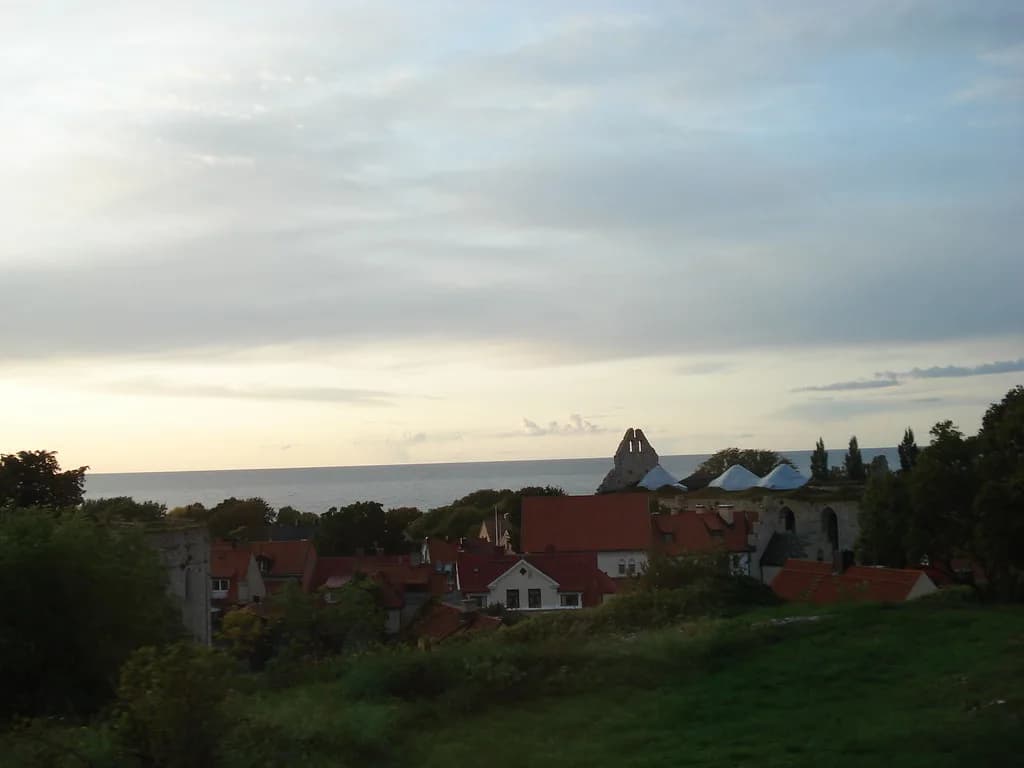
The church ruins are the old town's most atmospheric stop: St Karin and St Nicolai stand as roofless shells, dramatic against the sky, and St Michael's Church survives essentially as a wall opposite the ancient house ruin. Walk in through the open arches if the gates are open, and look up at the stonework that has stood through centuries of Baltic weather.
Visby Cathedral, Sankta Maria Domkyrka, is the exception: it is still an active parish church rather than a ruin, and it anchors the town's religious architecture. Pair the ruins with the cathedral on the same loop so you see both how the medieval town worshipped and what happened to the buildings it lost.
Gotlands Museum and the island's story
Gotlands Museum is the one indoor stop to build in properly. It holds picture stones and runestones from the island, finds that trace Gotland's inhabitation across thousands of years, and material from the medieval period which was the island's heyday. It gives the rest of your walk a timeline, so it works best early rather than as an afterthought.
The wider history you will meet outside is the Battle of Visby in 1361, when a Danish army defeated the island's peasant forces just outside the walls; Korsbetningen now marks the site within modern housing. Reckon on a modest entry fee and check the museum's own pages for current opening days, since these vary by season.
Stora Torget, Almedalen and the waterfront
Stora Torget is the natural midpoint of any walk, ringed by cafés and shops, and a good place to sit with a coffee and watch the town go about its business. From there it is a short drop east to Almedalen, the park beside the inner harbour where the sea opens out and the light changes completely.
Strandgatan follows the waterfront inside the wall, with gabled warehouses and the marina on the harbour side, and it is the easiest stretch to walk when your legs are tired. The inner harbour is also where you feel the town's trading past most directly: boats in, goods out, the sea as the reason Visby exists.
The Botanical Garden and its surprising plants
The Botanical Garden sits in the heart of the old town, and the shelter of the limestone walls and a mild maritime microclimate let it grow plants you would not expect at this latitude, including fig, mulberry and walnut trees alongside the town's famous roses. It is a green, tended and living contrast to the ruins on the same stone.
When the old town fills up: Medieval Week and summer
Visby has around 25,000 residents, yet transforms in the summer months when visitors arrive by ferry and plane. The annual Medieval Week brings costumes and festivities into the streets and turns the walled town into a stage, which is wonderful if you want atmosphere and crowded if you want empty cobbles. For dates and programme, see Events in Visby and the Things to Do in Visby guide.
August is the warmest month, averaging about 18.1°C with highs near 20.7°C, and July and August each bring roughly 11 wet days, so pack a light waterproof alongside the sunglasses. Weekday mornings are the quietest time to photograph the lanes before the day-trippers arrive.
A suggested half-day route on foot
Begin at the harbour and walk the outside of the ring wall anticlockwise, passing the Gunpowder Tower and Galgberget for the sea view, then enter through a gate near St Michael's Church and pick up the ruins of St Karin and St Nicolai. From there take the cathedral and Stora Torget, drop into Gotlands Museum early enough to have time, and finish through the Botanical Garden down to Almedalen and Strandgatan. The Visby City Wall guide covers the fortifications in more detail.
If you would rather move faster, cycle the outer circuit instead of walking it and save your feet for the lanes inside; the distances are modest but the cobbles add up. Either way, end at the harbour so the last stretch is flat and the sea is in front of you.
Arriving from a cruise ship
Cruise passengers disembark close to the inner harbour, which puts you within a few minutes' walk of a wall gate and the start of the Strandgatan waterfront. With a port call of a few hours, do the wall loop and the church ruins first, add Stora Torget and Almedalen, and treat Gotlands Museum as the swap if time runs short.
Keep an eye on your all-aboard time rather than the town's opening hours, and note that the walk back from the far side of the wall is only twenty minutes at an easy pace. Everything in this guide is inside that radius.
Which half of Visby old town to give your time
If you have half a day, spend the first part on the wall, ruins and museum, and the second on the Botanical Garden, Almedalen and the harbour. The contrast between stone ruins and growing plants is what makes the old town more than a pretty backdrop, and walking it in that order keeps the downhill stretches for when you need them.
With less time, cut the museum rather than the wall: the fortifications and ruined churches are the reason the town is a World Heritage Site, and they are also the part you cannot see anywhere else in Scandinavia.
Explore more Visby guides
Frequently Asked Questions
Can you walk on top of Visby's city wall?
No. The wall is a fortification to walk beside and through rather than along the top, and the towers are not reliably open. Plan a route around the outside and through the gates instead.
How long does it take to see Visby old town?
About half a day on foot at an easy pace, including the wall, the church ruins, Stora Torget, Almedalen and the Botanical Garden. Allow two to three hours if you skip Gotlands Museum.
Is Visby old town free to explore?
Walking the streets, the wall, Almedalen and the Botanical Garden costs nothing. Gotlands Museum charges an entry fee, and any charges for the church ruins are set locally, so check current details before you go.
Is Gotland Danish or Swedish?
Gotland is Swedish today. It was semi-independent before the Danish king took Visby in 1361, and the island later returned to Swedish rule.
What is the best time of day to walk the old town?
Weekday mornings are quietest, before day-trippers and summer visitors fill the lanes. August is the warmest month, and July and August each bring roughly eleven wet days, so carry a light waterproof.
Sources
Notes for your next Swedish city break
Optional updates to our Sweden guides.
You might also like
Continue reading
More guides you'll find useful