
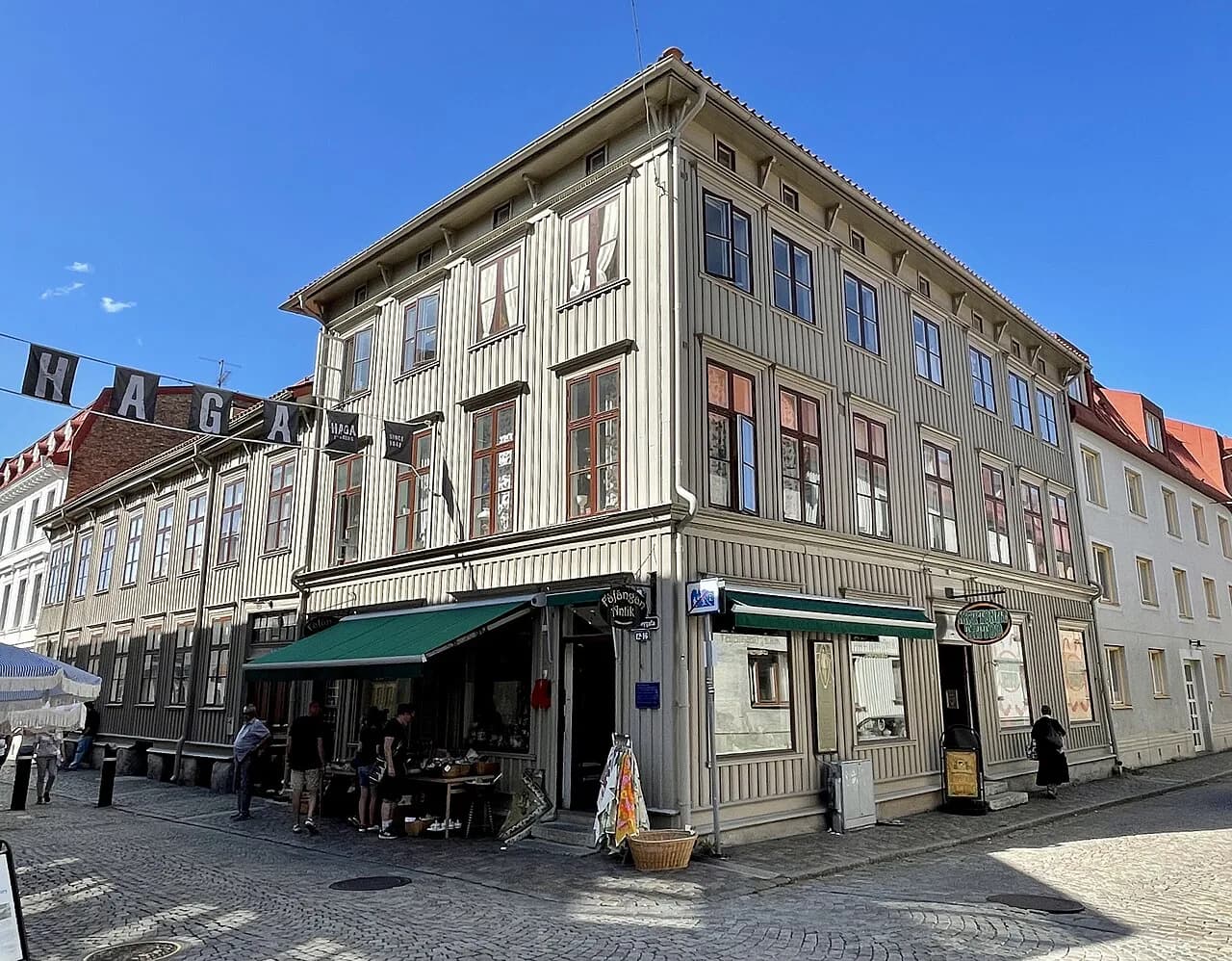
Haga, Gothenburg: a Neighbourhood Guide to the Cobbled Quarter

Haga is worth a half-day, and a fika stop alone is worth the walk. Gothenburg's first suburb outside the city walls sits south-west of the Vallgraven moat, a compact grid of cobbled streets and low wooden-and-brick houses just beyond the water that once defended the centre. The neighbourhood is small enough to cross on foot in twenty minutes but dense enough to fill an afternoon of shops, cafés and one good viewpoint.
This guide covers what Haga is, who it suits, Haga Nygata and its shops, the landshövdingehus buildings that give the district its look, the cafés and restaurants the city tourism board names, the Skansen Kronan climb and how to arrive on foot or by tram.
Where Haga is and how it is laid out
Haga begins just south-west of the Vallgraven, the moat that marked the edge of Gothenburg's original centre. The easiest approach on foot runs through the parks and green spaces along the moat, which brings you into the district from the north-east. Haga Nygata is the spine, with side streets branching off in a tight grid.
The city's official visitor guide describes Haga as one of Gothenburg's oldest quarters and notes that it was once the city's first suburb outside the walls. That geography matters for planning: you can walk here from the historic centre, look around, climb the hill and be back by the canal in a single afternoon.
Who Haga suits and who it does not
Haga suits shoppers, slow strollers and anyone who measures a city break in café stops. The shops trade in fashion, antiques, design and handicrafts, and there are enough fika options on and around Haga Nygata to break a morning twice over. If your priorities are big museums, waterfront architecture or late nights, plan those for another part of the trip.
The main shopping street is genuinely busy and unashamedly tourist-facing for shopping and cafés. The compensation is that wandering the side streets takes only a few minutes and quickly quietens down. Families with small children are well served by the toy store Liten Karin.
Haga Nygata: the main shopping street
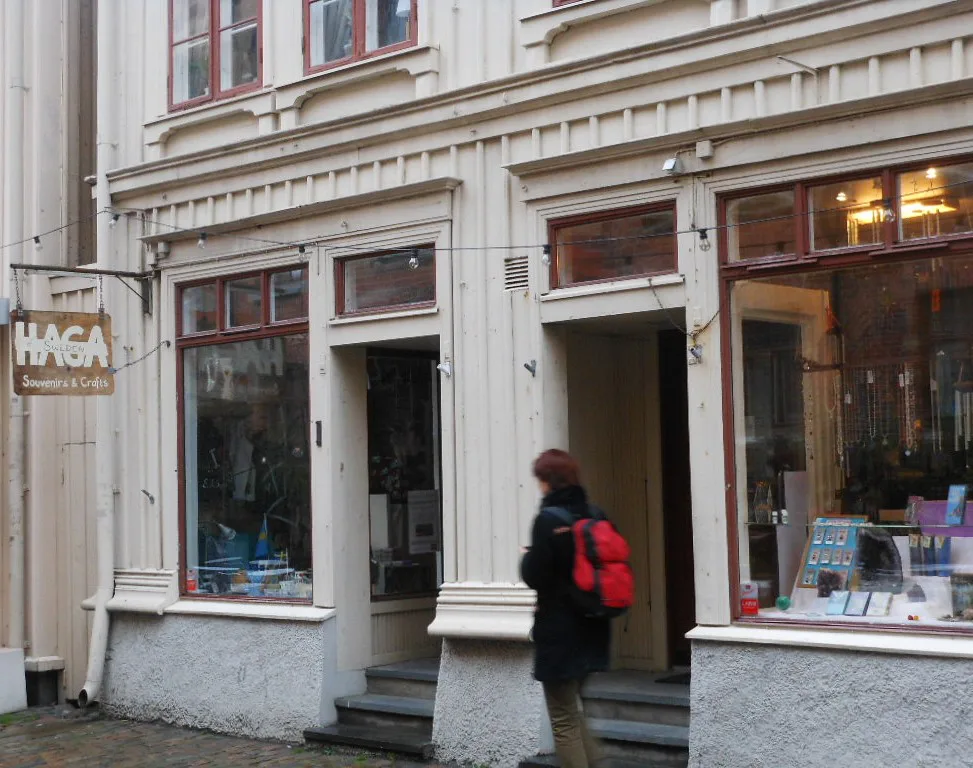
Most visitors start on Haga Nygata. Small fashion boutiques sit alongside shops selling antiques, design and handicrafts, and the city guide notes that most are unique and cannot be found elsewhere, which makes it decent ground for gifts.
A short list of shops worth seeking out includes Tvåla & Tvaga for organic soap, Öjbro Vantfabrik for knitted goods and Haga Trätoffelfabrik for traditional handicrafts from wooden clogs to accessories. Fåfängans Antik covers antiques and vintage costume jewellery, while Haga Interiör and Haga ETT handle home décor.
For Swedish design, Småskaligt of Göteborg stocks small-scale art and design from Swedish makers, and Villervalla sells children's clothing. Book browsing sits at Regnbågens böcker och smycken if you want a quiet ten minutes away from the cobbles.
The landshövdingehus: why Haga looks different
Haga's low buildings are landshövdingehus, a Gothenburg type with a brick ground floor and two or three timber storeys above. The city guide describes Haga as a neighbourhood of distinctive landshövdingehus rather than uniform stone blocks. Once you know what to look for, the pattern repeats down every side street.
If the building style interests you, the same architecture defines other working-class quarters of the city. Majorna, south of Haga, is another district where these houses survive in numbers.
Fika in Haga: Hagabullar and other stops
Café Husaren is the name that comes up first. It is known for its oversized Hagabullar, a cinnamon bun large enough, per the city guide, to hide a child's face behind, and often claimed to be one of the biggest cinnamon buns in the world. Take that as a claim rather than a title.
Other cafés on and around Haga Nygata include Le Petit Café at the Järntorget end, Café Jacobs and Nöller espressobar, with Caféva offering a vegetarian alternative and its own herb rolls. Poptea serves bubble tea and Asian desserts if you want a break from coffee.
Haga's cobbles make either café seating or a walk-and-fika break equally easy, and the side streets are only a couple of minutes from the main street.
Lunch and dinner in Haga
For a sit-down meal, Sjöbaren is a classic Swedish seafood restaurant with a courtyard. On the vegetarian side, Restaurang Solrosen is Gothenburg's oldest entirely vegetarian restaurant, serving daily specials and vegan options, and En deli Haga does vegetarian and vegan food.
Hemma Hos is billed as a cosy neighbourhood restaurant. Haga works well for a lazy lunch between shops, though you may want variety elsewhere in the city for dinner.
Skansen Kronan: the hilltop viewpoint
Skansen Kronan sits on the hill above Haga and is listed by the city guide as a viewpoint over Gothenburg and Haga. The climb is the point: you feel the hill in your calves but are rewarded within a few minutes of leaving the shopping street.
Check current admission and opening details for Skansen Kronan before you plan the climb to the top. Flat shoes are the practical choice: the cobbles are uneven and the last stretch to the top is steep.
The side streets beyond Haga Nygata
Haga Nygata is the obvious draw, but the parallel and cross streets hold much of the district's character. The city guide recommends exploring the surrounding side streets, and that is where you find the quieter stretches and the best look at the façades. A loop of maybe twenty minutes covers it.
If you want a second district rather than a second lap, Linnéstaden and Majorna sit south of Haga and reward a similar slow stroll. Neither has the same concentration of shops, so pick according to whether you want shopping or a walk.
Getting to Haga
Walking from the centre is the most attractive option. The city guide recommends the route through the parks and green spaces along the moat, which takes you in from the historic core through open ground rather than traffic. Trams stop closest at Hagakyrkan and Järntorget; the city guide names these stops without listing routes or fares.
If you are coming in from elsewhere in Gothenburg, aim for Järntorget rather than navigating from a distant stop. The district's compact grid means once you are at the edge, the rest is on foot.
How long Haga needs
Allow two hours for a fika stop and a walk down Haga Nygata, side streets included. Allow half a day if you also want lunch and the climb to Skansen Kronan. Stretch it to a full day only by pairing Haga with somewhere nearby, such as the waterfront centre beyond the moat.
A realistic half day looks like this: arrive mid-morning, walk the main street and side streets, fika, climb the hill, then lunch. Push the shops to the end if you would rather not carry bags up the hill.
Safety and footwear in Haga
Haga's cobbles are uneven underfoot, so wear flat shoes if you plan to walk the side streets.
Costs and payment in Haga
Haga's shops and cafés vary between a quick fika stop and a sit-down seafood lunch, so check menus on the door before ordering if you are keeping to a budget.
Keep a payment card ready for small purchases at cafés and shops.
Is Haga worth the walk from the centre?
Yes, with the right expectations. Haga delivers a genuinely old-feeling neighbourhood and a strong cluster of shops and cafés within twenty minutes on foot from the centre, plus a viewpoint that rewards the climb. What it does not deliver is big museums or quiet streets on Haga Nygata itself.
Go for a fika, walk the side streets, climb Skansen Kronan and eat lunch, and you have used a half day well. If you want a comparable district with more working neighbourhood feel, widen the trip to Lundby or Majorna.
Explore more Gothenburg guides
Frequently Asked Questions
What country is Haga in?
Haga is a district in Gothenburg, Sweden, sitting south-west of the Vallgraven moat.
What does Haga mean?
The Göteborg & Co guide uses Haga as the name of the Gothenburg district covered here and gives no translation of the word.