Uppsala Castle: museums, roof walk and what to expect
Uppsala Castle holds three museums, a café and a rooftop walk, with the grounds open at any time. Here is what each part offers and how entry works.
On this page
Uppsala Castle is best treated as a hilltop complex rather than a single ticket: three museums, a rooftop walk and a café occupy the building, and each one runs its own opening times and admission. The castle grounds themselves are open to visitors at any time, so you can walk up to the pink facade and look out over the city even when nothing inside is open. This guide separates the different parts, explains what each one shows and pins down the history you walk through, from Gustav Vasa to Queen Christina.
Budget roughly a half day if you want the art museum plus one history exhibition, and book the roof walk ahead if it is the reason for your visit. If you are planning a wider sweep of the city's collections, our guide to museums in Uppsala shows how the castle fits alongside the rest.
What Uppsala Castle is and where it sits on Kasåsen hill
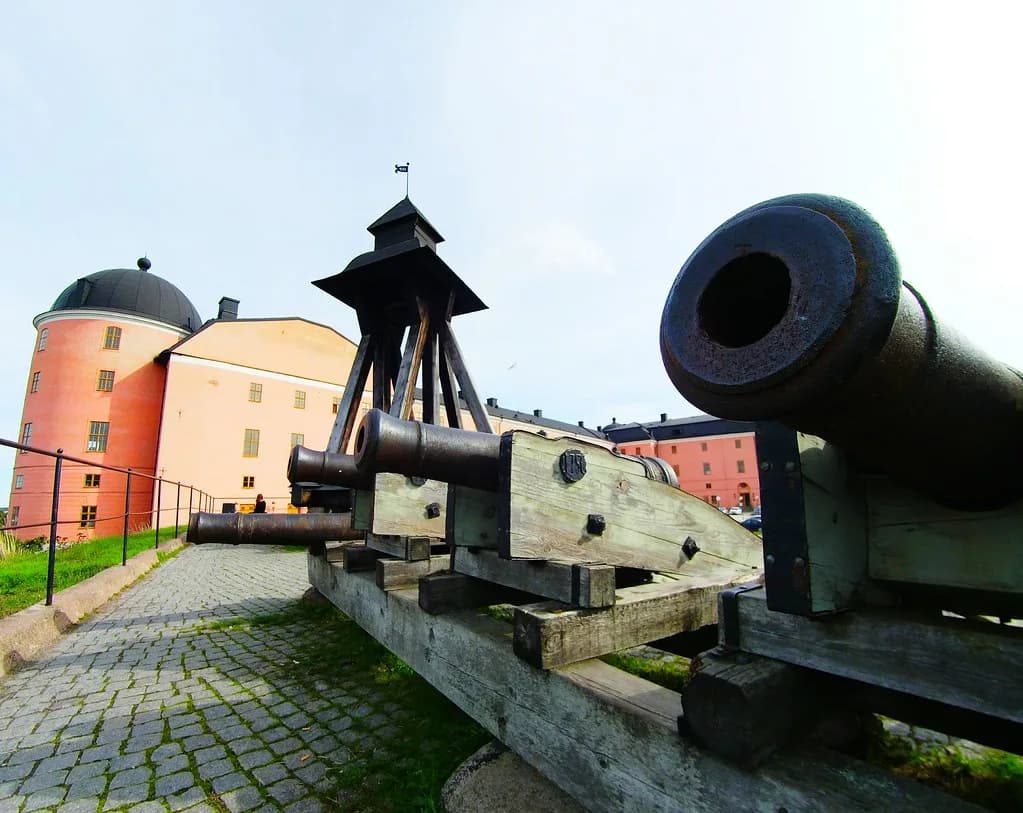
The castle stands on Kasåsen, the ridge that lifts it above the city centre, which is why the view is such a draw. Gustav Vasa began construction in 1549 as a defensive stronghold, and the building has been remodelled repeatedly since. It is managed by Statens fastighetsverk, the Swedish property board, and also houses the County Governor's residence, so parts of it remain working official space rather than museum floor.
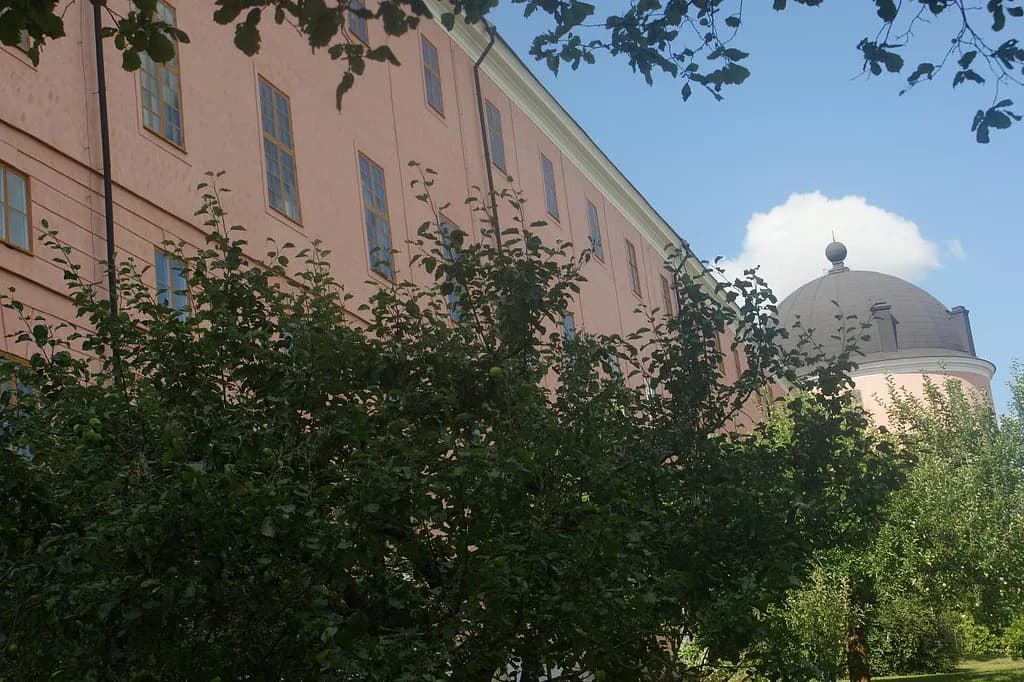
The pink exterior dates from the 2000s, when the facade was restored to its distinctive colour after a long stretch in plainer dress. The castle sits close enough to the centre that you can reach it on foot from the main streets and combine it with a walk through the older parts of Uppsala.
The grounds are open at any time, but each attraction keeps its own hours
This is the single most useful thing to know before you climb the hill: the castle grounds never close, but the museums, café and roof walk do. There is no overall administration for the visitor operations, and two of them are run by Uppsala kommun, so hours are not pooled into one noticeboard. Check each attraction's own page for opening times on the day you plan to visit.
Destination Uppsala lists three museums inside the castle and a rooftop walk, while the castle's own portal counts four public operations, with the café and roof walk making up the difference. The discrepancy is a question of what you count, not a contradiction, but it explains why a single castle-wide ticket or timetable does not exist.
Uppsala Art Museum: modern and contemporary art inside the castle
Uppsala konstmuseum occupies part of the castle and shows modern and contemporary work by Swedish and international artists, with a particular remit to cover art from the city and the surrounding region. Alongside temporary exhibitions it holds substantial collections, including ceramics and sculpture, so there is more than one gallery's worth to see.
If you are choosing between the castle's cultural offerings on a short break, this is the one to pick when you want art rather than dynastic history. Our Uppsala art museum and gallery guide covers the city's wider art scene if you want a second venue.
Uppsala Castle Museum: the castle's and the city's history told
Uppsala slottshistoriska is a storytelling museum aimed at all ages, taking the castle and the city's growth as its subject and putting visitors straight into the dramatic episodes played out inside these walls. It is the natural companion to the building itself: you get the narrative behind the rooms you have just walked through. Bring anyone who prefers narrative to display cases, because this is the most accessible of the history options.
Because the castle museums are separate operations, you can visit this one without committing to the art museum, or do both on the same day if the exhibitions are open.
Vasaborgen: the 16th-century ruins, open daily in summer with guided tours
Vasaborgen consists of the remains of the original castle begun by Gustav Vasa in 1549, preserved as ruins rather than restored rooms. In summer the site opens daily with guided tours; for the rest of the year visits are by pre-booked tour, so a spontaneous winter stop will not work. If the ruins are the reason for your visit, plan around the summer season or book ahead.
Walking through the exposed 16th-century fabric gives a sharper sense of the building's age than any reconstructed interior, and it is the part of the castle that most directly connects to the Vasa story.
The roof walk: the city's best view
The roof walk takes visitors out along the castle's roof ridges for what Destination Uppsala calls the city's best view, and it is run as its own operation with events and viewings also held in the dome of the north tower. It is the most memorable thing on the hill for many visitors, and worth booking before you travel since slots are limited.
If heights or weather rule it out, the free grounds still give you a wide outlook over Uppsala, which costs nothing and needs no planning.
Café and bar in the old vaults beneath the Art Museum
Beneath the art museum, in the castle's old vaults, a café and bar serves Swedish fika, ice cream, lunch, coffee, afternoon tea, soup, salad, wraps and pancakes, and the vaulted rooms double as a venue for weddings and receptions. It is the obvious stop between the museums, and the historic setting does most of the work.
Treat it as a break in the visit rather than a destination in itself: check the café's own opening times, since they follow the castle's separate operations rather than the always-open grounds.
The history you walk through: Gustav Vasa, the Sture murders, Queen Christina
The storyline runs from 1549, when Gustav Vasa began building, through the Sture murders of 1567 and Queen Christina's abdication in 1654, with several coronations along the way. A fire in 1702 left the castle in ruins for decades before it was rebuilt in the mid-18th century.
Knowing these four dates before you arrive makes the castle history museum far easier to follow, and gives the ruins and the restored upper floors a chronology. The cathedral and the city's other historic buildings sit within walking distance if you want to extend the story.
Practical points: Drottning Christinas väg and accessible parking
The address is Drottning Christinas väg 1, Uppsala, and the site has accessible parking available, the one practical facility the castle's visitor information confirms. The castle grounds are open at any time, but everything indoors follows its own schedule.
Combine the castle with the city's other headline sights on foot rather than driving between them, and keep the castle for the part of the day when the specific museum or roof walk you want is open.
Is the castle worth the climb?
Yes, but go for a named reason rather than the building alone: the art museum, the castle history museum, the Vasaborgen ruins or the roof walk each justify the walk up Kasåsen separately. The grounds are open at any time, so even a mistimed arrival gives you the view and the pink facade for nothing.
Match your day to what is actually open, pre-book the roof walk and, outside summer, the Vasaborgen tour, and treat the vaulted café as the pause between them.
Explore more Uppsala guides
Sources
Notes for your next Swedish city break
Optional updates to our Sweden guides.
You might also like

Continue reading
More guides you'll find useful