Uppsala History: Burial Mounds, Cathedral and 1477 University
Uppsala history for visitors: the burial mounds at Gamla Uppsala, the cathedral, the 1477 university and the fire of 1702, with places you can still see today.
On this page
Uppsala's history fits into a short break because three places carry most of it: the burial mounds at Gamla Uppsala, the cathedral, and the university quarter around Gustavianum. See those and you have the story that shaped the modern city, from a pagan royal centre to a rebuilt grid of streets. This guide explains what happened and where to look for it.
The city's past is unusually compressed. The mounds are a short trip north, while the cathedral, castle and university buildings sit within roughly ten minutes' walk of each other around the Fyrisån. That means you can spend a morning on the Iron Age and an afternoon on the medieval and early modern city without rushing.
Gamla Uppsala: the three burial mounds and the museum that explains them
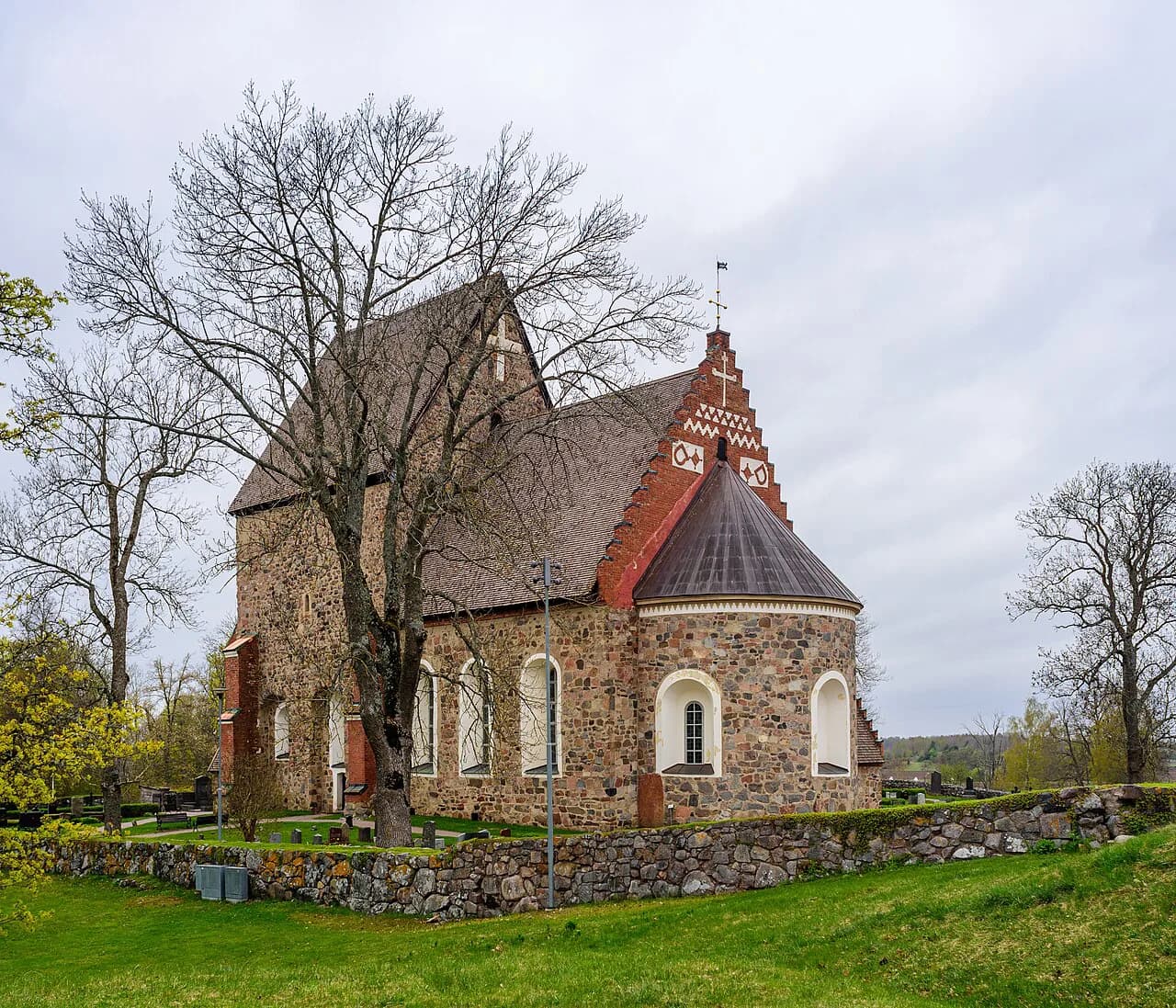
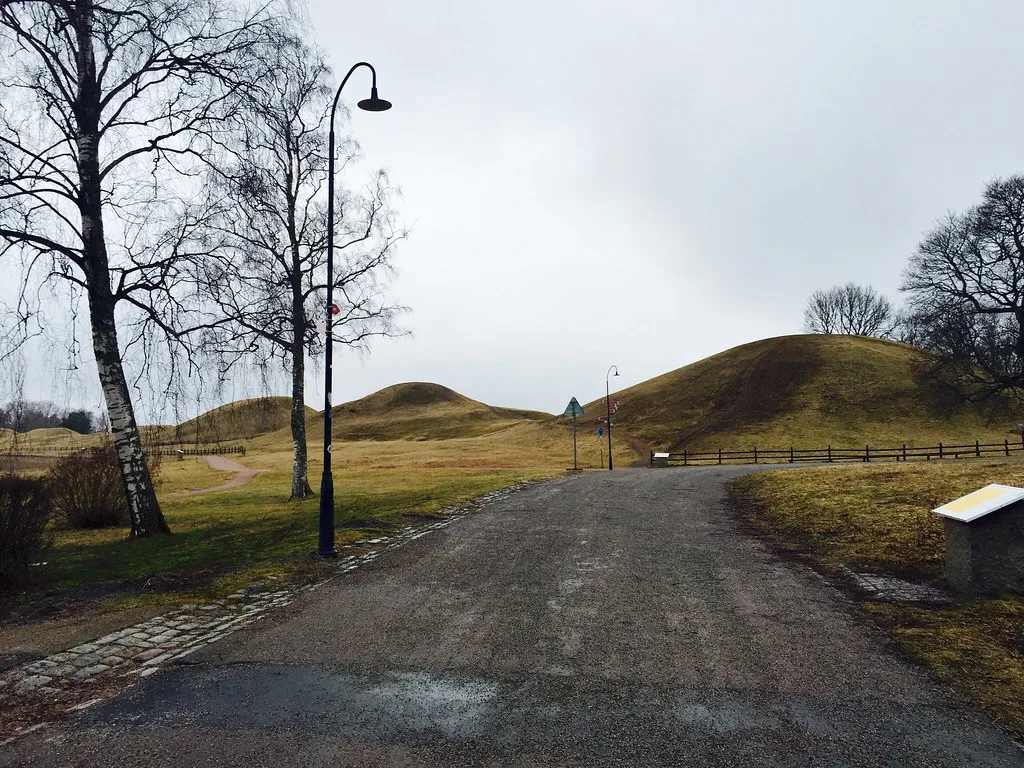
Gamla Uppsala sits just north of the modern centre and holds the oldest layer of the city's story. Its largest monuments are the three great burial mounds, long associated with kings and leading figures of the pre-Viking and Viking eras.
The mounds are earthworks you read with your legs as much as your eyes: you walk the site, look across the ridges and try to picture the ceremonial landscape rather than a ruin. Norse tradition links the place with the gods and with legendary Swedish kings, which is part of why it feels bigger than its grassy outline suggests.
The Gamla Uppsala museum supplies the context the landscape cannot, with archaeology that frames the mounds and the wider ceremonial site. Start there if you want the mounds to make sense, then walk out to them. For the wider set of collections in the city, see the guide to Museums in Uppsala.
Give the site a half-day rather than an hour. The combination of open ground, a museum and a church makes it the kind of place where a hurried circuit wastes the trip.
Why the city moved: from Östra Aros to Uppsala in 1273
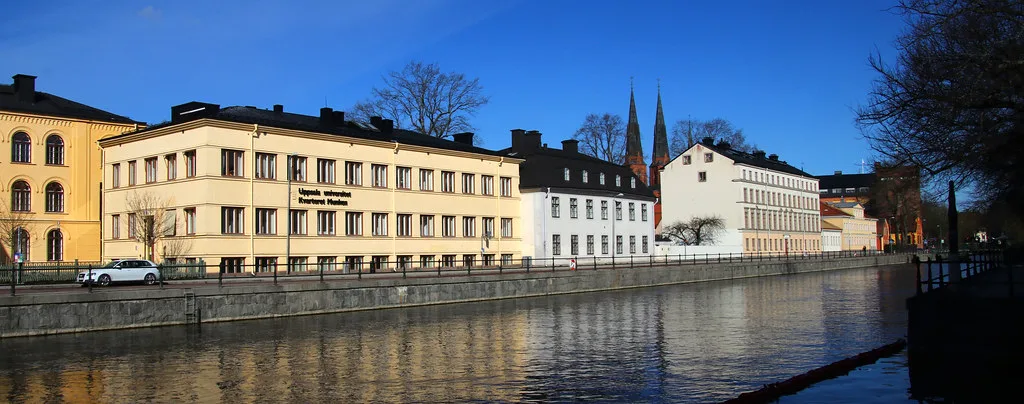
The name Uppsala once belonged to the old pagan and political centre now called Gamla Uppsala. The modern city began as Östra Aros, a port and trading settlement at the mouth of the Fyrisån where it meets Lake Mälaren, and it inherited the older name when the archbishop's residence and the relics of Saint Eric were moved there in 1273.
Saint Eric had been killed in 1160 on the spot where the cathedral now stands, and the translation of his relics made the new site a pilgrimage destination as well as an administrative one. That combination of waterway, shrine and archbishopric is why the city took shape where it did rather than beside the mounds.
In practice, the move is the key to reading Uppsala on foot: the river explains the trade, the cathedral explains the power, and Gamla Uppsala explains the origin story that was left behind.
Uppsala Cathedral: consecrated in 1435 and the largest in Scandinavia
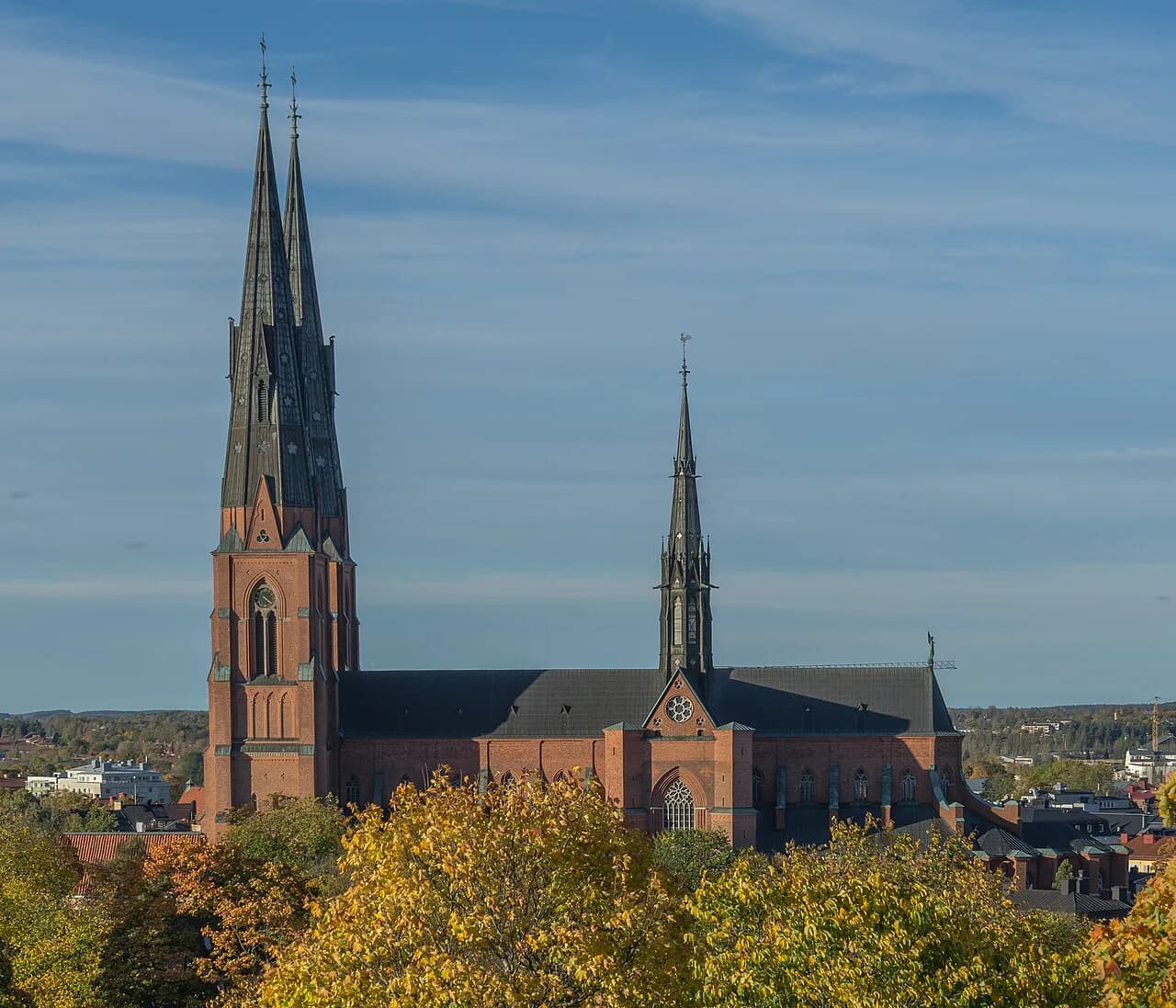
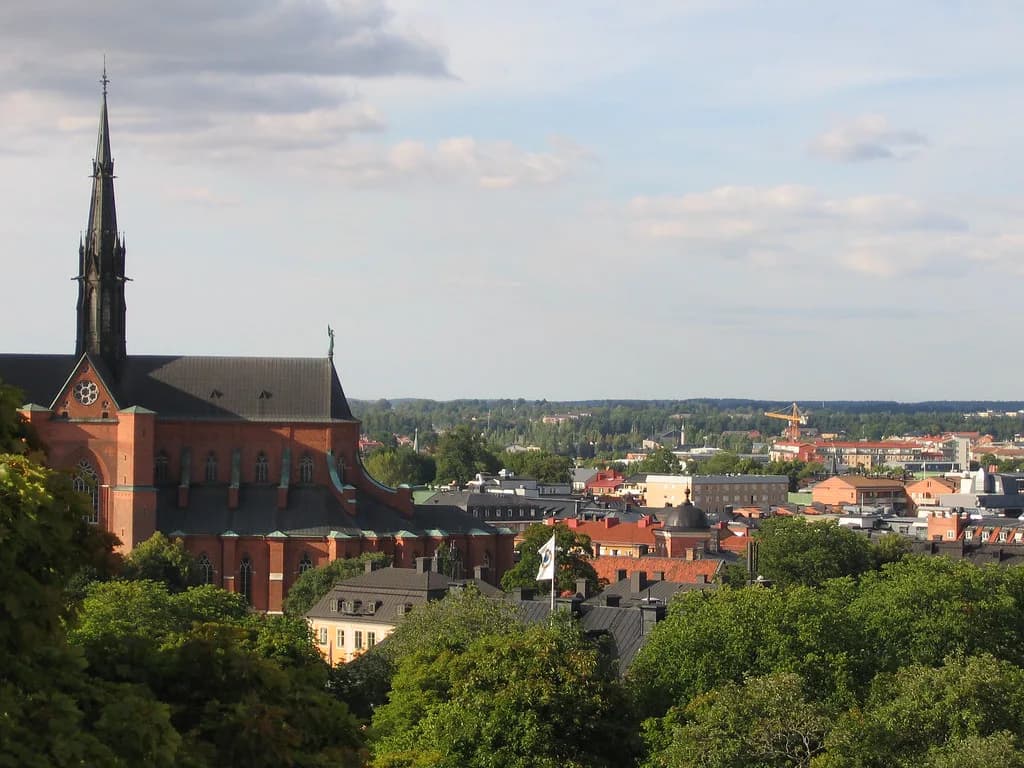
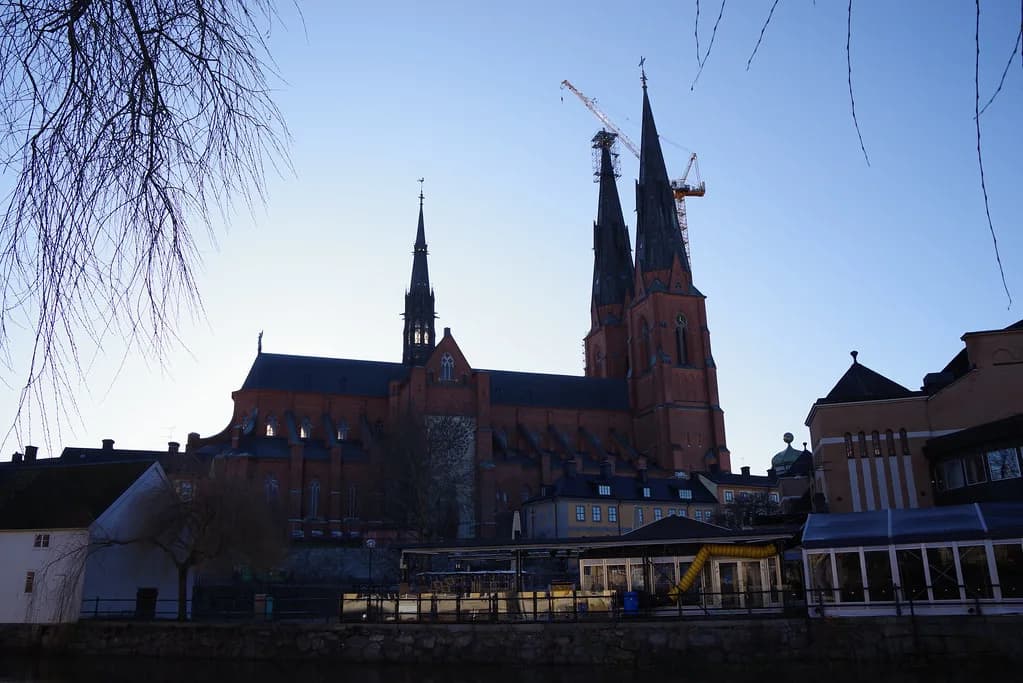
Uppsala Cathedral was consecrated in 1435 after more than 150 years of building, and it is the largest cathedral in Scandinavia.
It is the building that makes the archbishopric visible. Its scale dominates the skyline and explains why the medieval city clustered where it did, between the river and the church. As the seat of the Church of Sweden's archbishop, it has been the country's religious centre for centuries rather than a parish church that happened to grow large. For other churches in the city, see the churches in Uppsala guide.
Treat the cathedral as the anchor of your afternoon rather than a quick photo stop. It sits close to the university buildings and the castle, so it slots naturally into a walking loop of the centre.
Uppsala University, founded in 1477: Gustavianum and the Anatomical Theatre
Uppsala University was founded in 1477, the first university in Scandinavia, and it changed the city from a religious centre into an intellectual one.
Gustavianum, completed in 1625, served as the university's main building for many years. Its best-known curiosity is the anatomical theatre that Olof Rudbeck created in the dome in 1663 for public medical lectures, a domed room where students once watched dissections from tiers above the table.
The university is not a single sight but a spread of buildings through the centre, including the Renaissance-style main building opened in 1887. Walk the streets between them rather than hunting one entrance, and you get the student city that gives Uppsala its character. If you want a break from history, the Uppsala Art Museum is a short walk from the same quarter.
Uppsala Castle, begun in 1549 under Gustav I Vasa
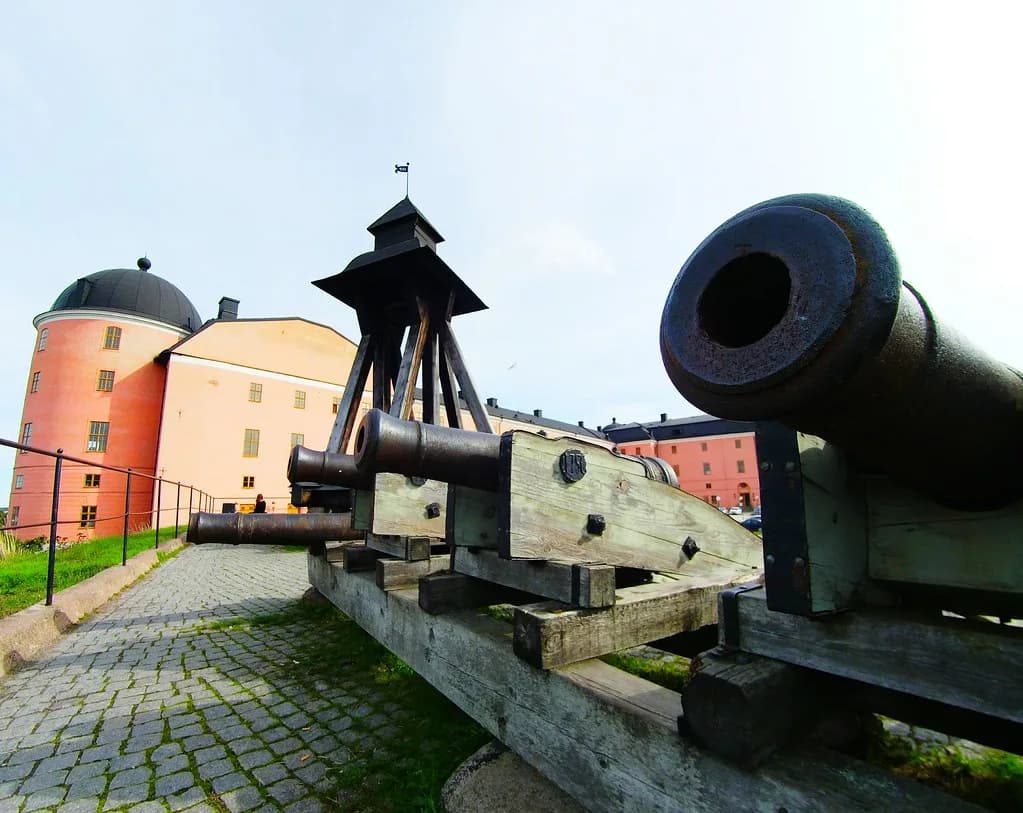
Uppsala Castle was begun in 1549 on the orders of Gustav I Vasa as a defensive fortress and royal residence. It is the piece of the story that puts the monarchy into a city otherwise dominated by church and university.
The castle's position on the ridge above the centre gives you the clearest sense of how the city fits together, with the cathedral below and the river beyond. The 1702 fire damaged part of it along with the cathedral roof, so what you see is a rebuilt and altered building rather than an untouched Vasa fortress.
If your time is tight, treat the castle as a viewpoint and a story rather than a long interior visit. It pairs well with the cathedral because they are minutes apart.
The fire of 1702 and the grid streets you walk today
A devastating fire in 1702 destroyed almost the entire city, including the cathedral roof and part of the castle. The rebuilding replaced the chaotic medieval layout with the regular grid of streets you walk today, so the centre's straight lines are an eighteenth-century decision rather than a medieval survival.
That is why Uppsala feels orderly rather than tangled. If you expected an old town of winding lanes, the grid is the explanation, and it also makes the centre quick to cross on foot.
Keep this in mind when you plan a route: the distance between the cathedral, the university buildings and the river is short precisely because the post-fire plan regularised the streets.
Carl Linnaeus and the 18th-century scientific city
Carl Linnaeus became professor of medicine at the university in 1741 and turned Uppsala into a global centre of botany. His name belongs beside the university in any short history of the city, because the scientific reputation of eighteenth-century Uppsala rests largely on his work and his students.
The Linnaean era also sits neatly between the rebuilt streets and the modern city: after the fire and the new grid came the intellectual flowering that gave Uppsala its international name. For a visitor, it adds a human figure to buildings that might otherwise read as institutional.
How to see it in a day: Gamla Uppsala in the morning, the centre in the afternoon
Split the day in two. Spend the morning at Gamla Uppsala with the mounds and the museum, then return to the centre for the cathedral, the university quarter and the castle in the afternoon.
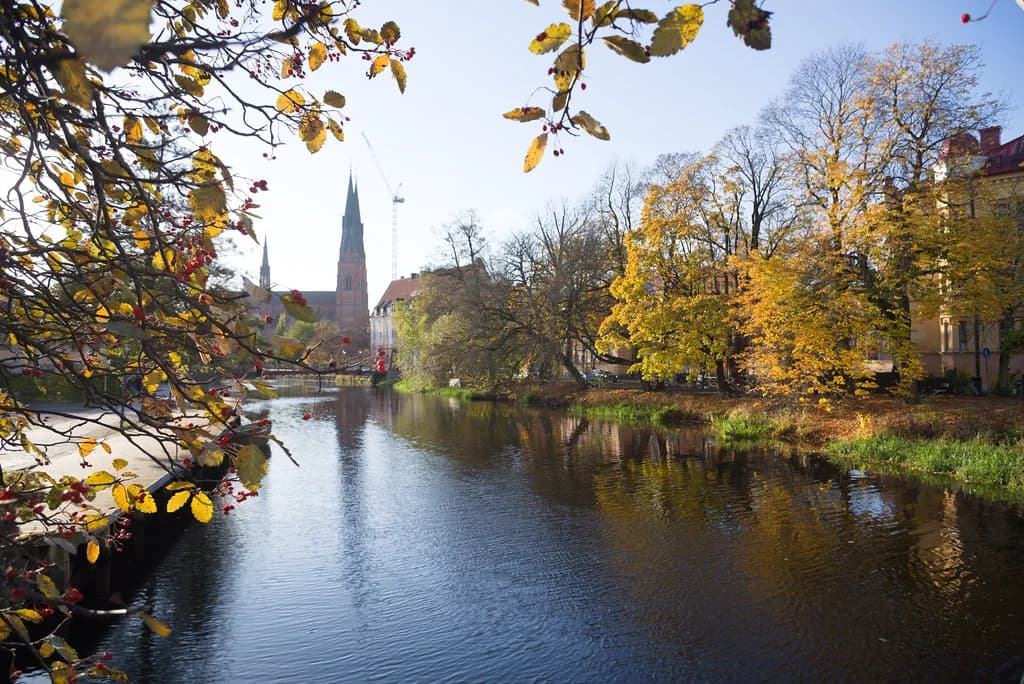
The centre loop works because the post-fire grid keeps the distances short: cathedral, Gustavianum and castle sit within a compact area above the Fyrisån. Leave the riverbank walk for the end of the day, when the light is better and you have already done the interiors.
If you are coming from Stockholm, note that the railway line linking the two cities opened in 1866. One day is enough for this outline; a second day lets you slow down at the mounds and take the university buildings one at a time.
Picking your trade-off: depth at one site or a loop of all three
The honest choice is between depth and coverage. One site done properly, usually Gamla Uppsala or the cathedral, leaves a stronger impression than three hurried stops, but a loop gives you the whole narrative from Iron Age to eighteenth century in a single day.
If your interest is archaeology and myth, give the morning to the mounds and the museum. If it is architecture and the medieval church, make the cathedral the centrepiece and treat the castle and university buildings as the supporting walk.
Which piece of Uppsala's past should you choose?
Choose Gamla Uppsala if you want the oldest and most atmospheric layer, and the cathedral and university quarter if you want the medieval and early modern city in a compact walk. With two days, do both without choosing.
Whichever you pick, the reward comes from knowing what you are looking at: mounds that predate the city, a cathedral that made it a religious capital, and a grid that replaced what the fire took.
Explore more Uppsala guides
Frequently Asked Questions
Was Uppsala ever Sweden's capital?
Uppsala is best understood as a religious and political centre rather than a capital. It became the seat of the archbishopric after the 1273 move and the country's religious heart, with the cathedral at its core.
What connects Uppsala Cathedral with Saint Eric?
Saint Eric was killed in 1160 on the spot where the cathedral now stands. When the archbishop's residence and his relics were moved from Old Uppsala to Östra Aros in 1273, the new site became both a pilgrimage destination and an administrative centre, and the cathedral was consecrated there in 1435.
What was the Viking history of Uppsala?
Gamla Uppsala was a pre-Viking and Viking-era centre with three large burial mounds linked by tradition to kings and the gods. Its museum covers the archaeology of the site and the surrounding landscape.
Is Uppsala University the oldest in Sweden?
Yes. Uppsala University was founded in 1477 and is the first university in Scandinavia, which is why the city shifted from a religious centre to an intellectual one.
Sources
Notes for your next Swedish city break
Optional updates to our Sweden guides.
You might also like
Continue reading
More guides you'll find useful