Gamla Uppsala: The Royal Burial Mounds and What to See
Gamla Uppsala holds the three Kungshögarna mounds from the 500s and Sweden's first archbishopric. Here is what you see and what each part means.
On this page
Gamla Uppsala is worth half a day: three large burial mounds from the 500s, a medieval church on the site of Sweden's first archbishopric, and open ground that was one of Mälardalen's leading political and religious centres. It sits in a village outside modern Uppsala, which is why the mounds stand in fields rather than in a city. This guide covers the Kungshögarna, the rows of wooden posts found by archaeologists, the shift from pagan to Christian power, and how to shape a visit around those three features.
The site rewards a little preparation, because the story is really two stories: what medieval writers said happened here, and what excavation has since shown. Keep both in view and the mounds, the church and the surrounding landscape stop being scenery and start reading as a sequence of decisions about power.
Gamla Uppsala in one paragraph
Uppsala was a significant economic, religious and political centre in Mälardalen from the 200s and 300s, and the place is best known for the three great mounds from the 500s known as Kungshögarna. Gamla Uppsala is the old settlement; today's Uppsala grew up around Östra Aros, which took over the archbishopric in 1273. Read the site as a former centre of gravity rather than a royal monument park.
For a wider set of stops in the city, the guide to Museums in Uppsala shows how the mound site compares with the town-centre collections, which is useful when you are dividing a short break between the two.
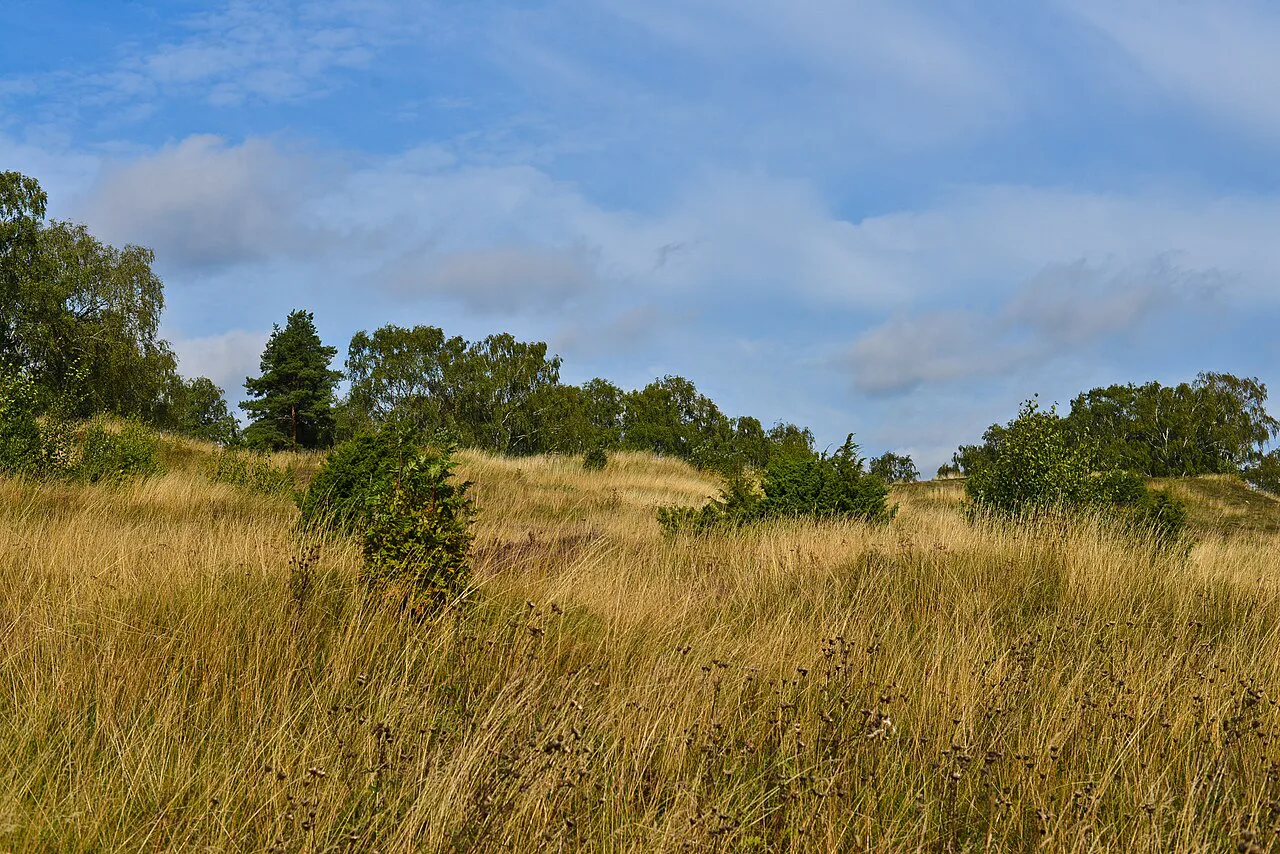
The three Kungshögarna mounds
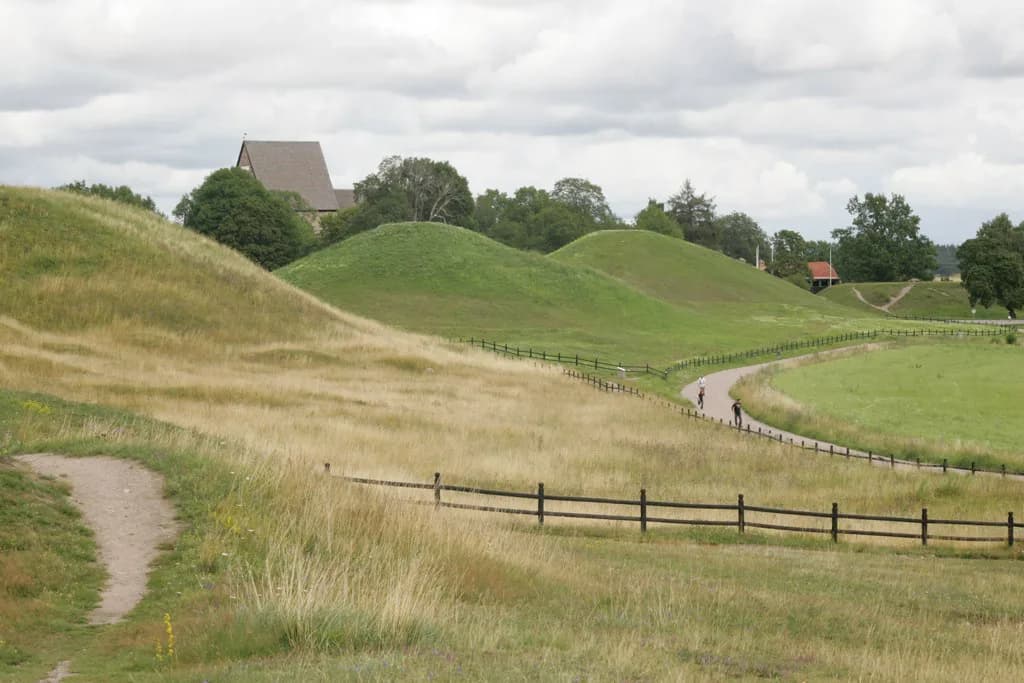
The three Kungshögarna are the centrepiece: large earthen mounds raised in the 500s, standing in a line that still dominates the approach to the church. The source material calls them Kungshögarna without naming who lies in them, so treat the royal label as a traditional name rather than a confirmed burial roll. Walk the circuit around all three before heading to the church, so the scale registers while you still have the open field in front of you.
The 2012 and 2013 field investigations changed the picture of the site's size and status, with analysis and reporting continuing afterwards. The results point to Gamla Uppsala having been a larger and more important place than previously thought, which is the key correction to carry with you as you look across the fields.
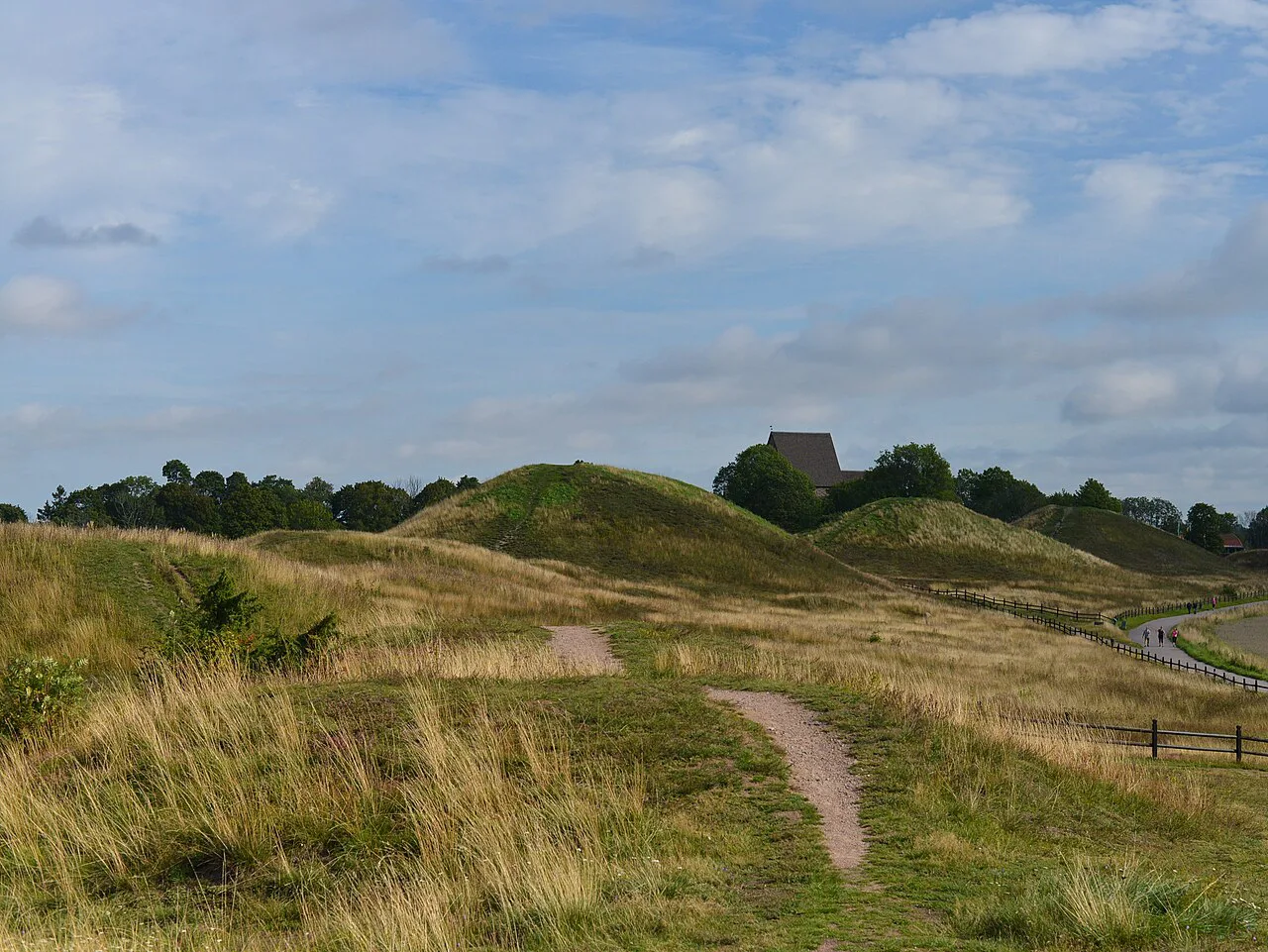
The two rows of wooden posts
Excavation also revealed traces of two very long rows of stout wooden posts, raised around 1,400 years ago to form a large monument in the landscape. They may have marked a route for ceremonial processions or set out how people should approach the seat of power. The ground around the mounds was carefully planned, not casually used.
The post rows are the detail that separates Gamla Uppsala from a simple field of barrows, showing the surrounding landscape was laid out as architecture.
From pagan centre to Christian seat
The medieval writer Adam of Bremen described a famous pre-Christian temple at Gamla Uppsala in the 1000s, where the Svear held great sacrificial feasts known as blót. Researchers are uncertain how reliable that account is and what the temple actually looked like, so hold the description as a written claim rather than a documented building. The excavation finds are the firmer evidence for the site's importance.
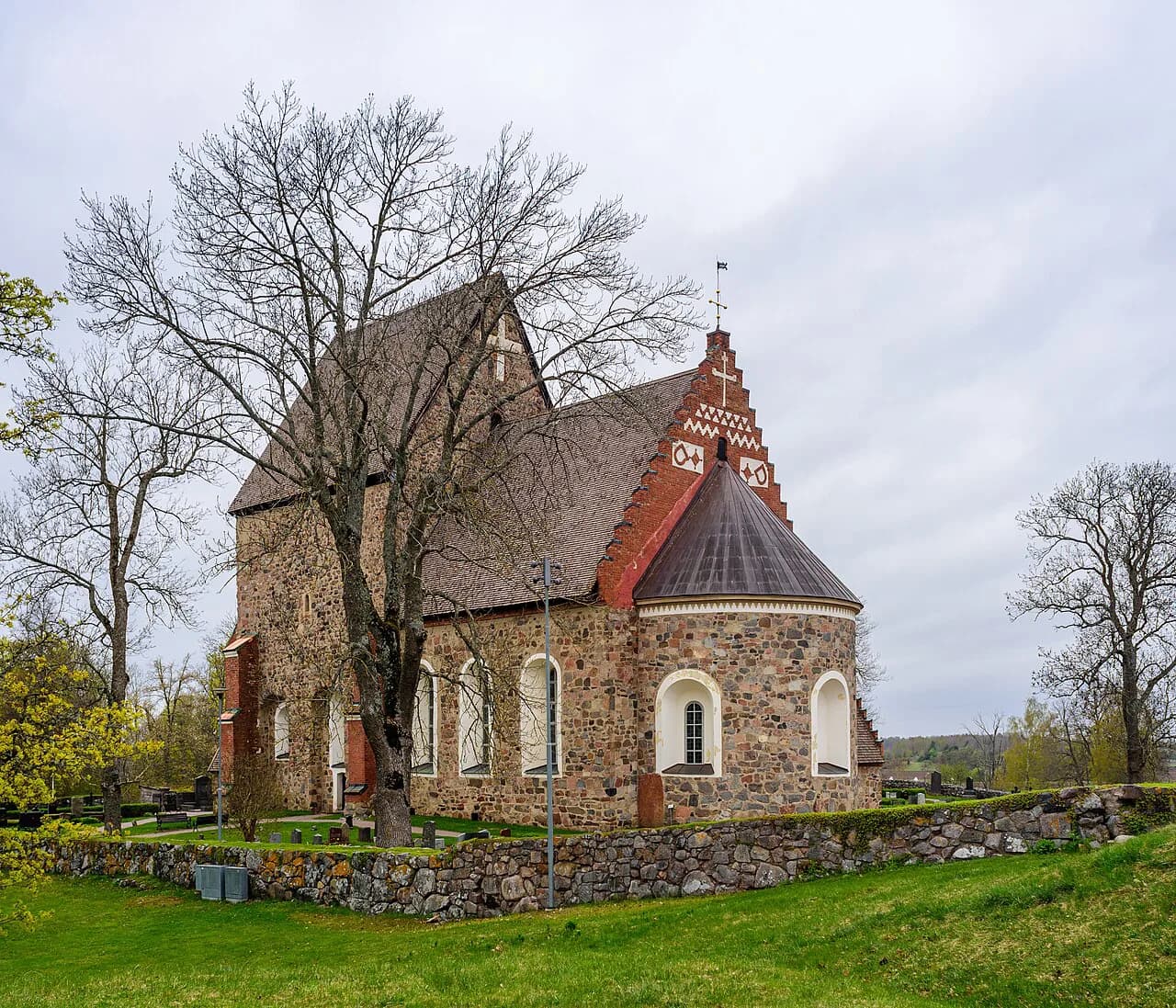
Christianity then took over the site's prestige rather than starting from scratch: the church could draw on a place already regarded as a religious and political centre to strengthen the new faith. The bishop's seat moved from Sigtuna to Gamla Uppsala by the 1140s, possibly to mark Christianity's victory over the older religion, and in 1164 Gamla Uppsala became the seat of Sweden's first archbishop.
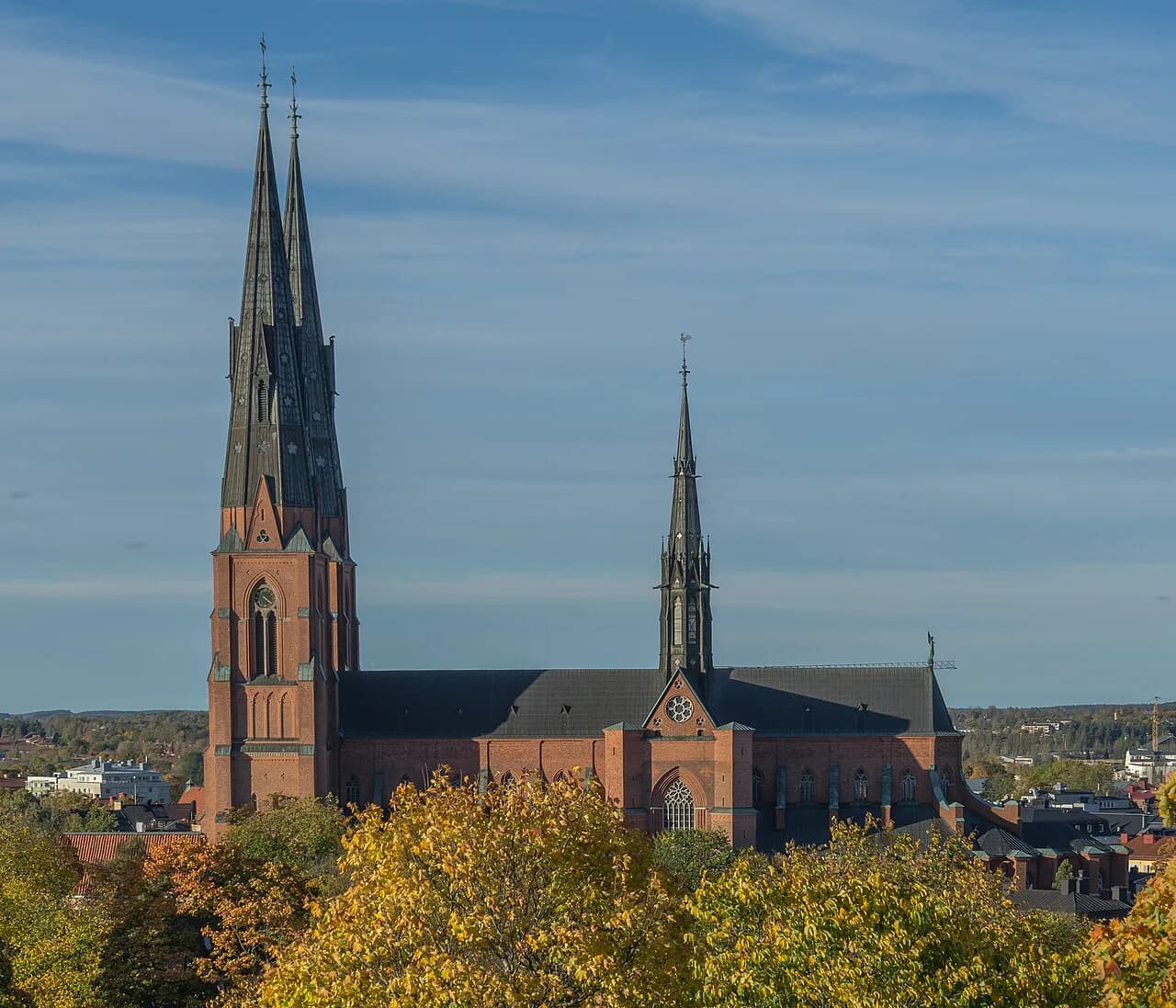
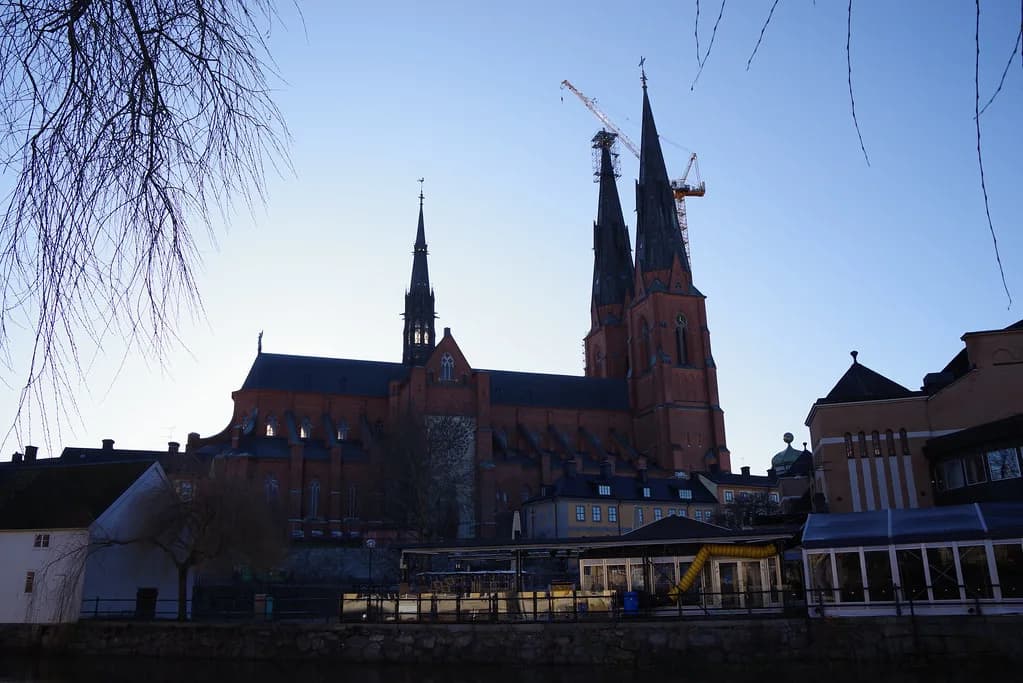
Gamla Uppsala kyrka is the building that carries this phase of the story, and it is the natural second stop after the mounds. For the later cathedral that inherited the archbishopric, see the guide to Uppsala Cathedral.
Why the archbishop moved to Östra Aros
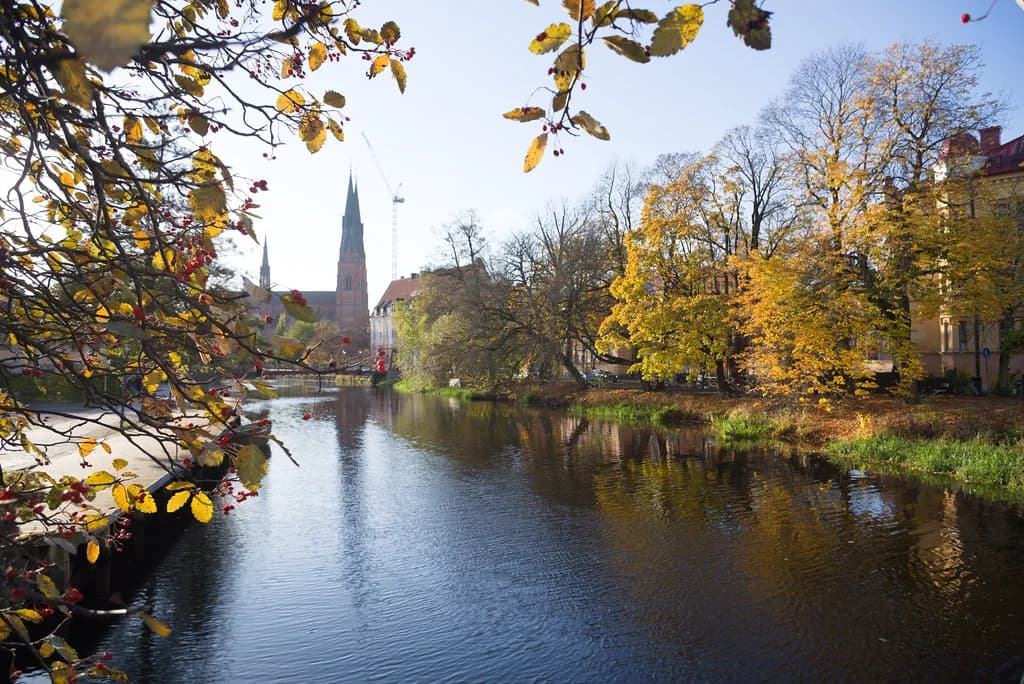
In 1273 the archbishop's seat moved south to Östra Aros, today's Uppsala, where construction of the new Domkyrkan had recently begun. The cathedral was not consecrated until 1435, so the move came well before the building was finished. That transfer is why the mounds now sit in a village: the institution left, and the town grew elsewhere.
Keep this in mind when you compare the two locations, because the distance between Gamla Uppsala and the cathedral is the physical trace of an administrative decision made over seven centuries ago.
How the 1600s made it a national symbol
In the 1600s Gamla Uppsala began to be seen as the supposed cradle of the Svear kingdom, making it a centre for göticism, the fashion for tracing Swedish greatness to antiquity. That idea shapes how the site is presented and read today, long after the archaeology has moved on. Knowing it helps explain why such a quiet place carries such weight in the national imagination.
For the city's broader backstory, the Uppsala history guide fills in the centuries between the medieval move and the modern university town.
What to see on the ground and how long to allow
Plan around three features: the Kungshögarna, the church, and the open landscape that reveals how the site was laid out, including those post rows. The mounds and church sit close together, so a focused visit fits comfortably into a half day without rushing.
The site's own museum displays finds and gives context before or after walking the mounds, and it is covered alongside the city's other collections in the Museums in Uppsala guide. Opening days, seasonal hours and ticket prices change, so check the museum's own pages for the day you plan to go.
If you want an art stop on the same trip, Uppsala Art Museum is a town-centre counterpart to the open-air history here.
Getting there and fitting it into a short Uppsala break
Gamla Uppsala lies outside central Uppsala, north of the modern city and within reach of the centre. Check local transport and current visitor arrangements before you set out, and note that the outdoor site and the museum are separate.
On a one- to three-day Uppsala trip, give the mounds a morning and keep the afternoon for the Domkyrkan and the town centre, which keeps travel to a minimum. If you are choosing between sites, Uppsala Attractions: 13 Visitor Guides sets Gamla Uppsala alongside the rest of the city.
Visitors often ask what Uppsala was called before; the answer is that the old centre was Gamla Uppsala, while today's city grew from Östra Aros. That single fact explains the layout of both places.
Is Gamla Uppsala worth the trip out?
Yes, if you want the oldest layer of Uppsala's story in one walkable place: three mounds from the 500s, a planned ceremonial landscape, and the church that held Sweden's first archbishopric. It is a poor fit only if you want indoor displays and nothing else, since the strongest experience here is outdoors.
Go in the morning, walk the mounds first and the church second, and add the museum if you want indoor context. Check opening days and any admission charges for the museum before you set out.
Explore more Uppsala guides
Frequently Asked Questions
What is the difference between Gamla Uppsala and Uppsala?
Gamla Uppsala is the old settlement with the burial mounds and the early church. Today's Uppsala grew from Östra Aros, which took over the archbishop's seat in 1273.
Do I need a ticket to see the burial mounds?
The mounds stand in open ground and are visited on foot; check current visitor arrangements locally. The museum has its own opening days and charges, so confirm these before you travel.
How much time should I allow?
A half day covers the three Kungshögarna, the church and the surrounding landscape at an unhurried pace. Add more time if you include the museum.
Sources
Notes for your next Swedish city break
Optional updates to our Sweden guides.
You might also like
Continue reading
More guides you'll find useful