
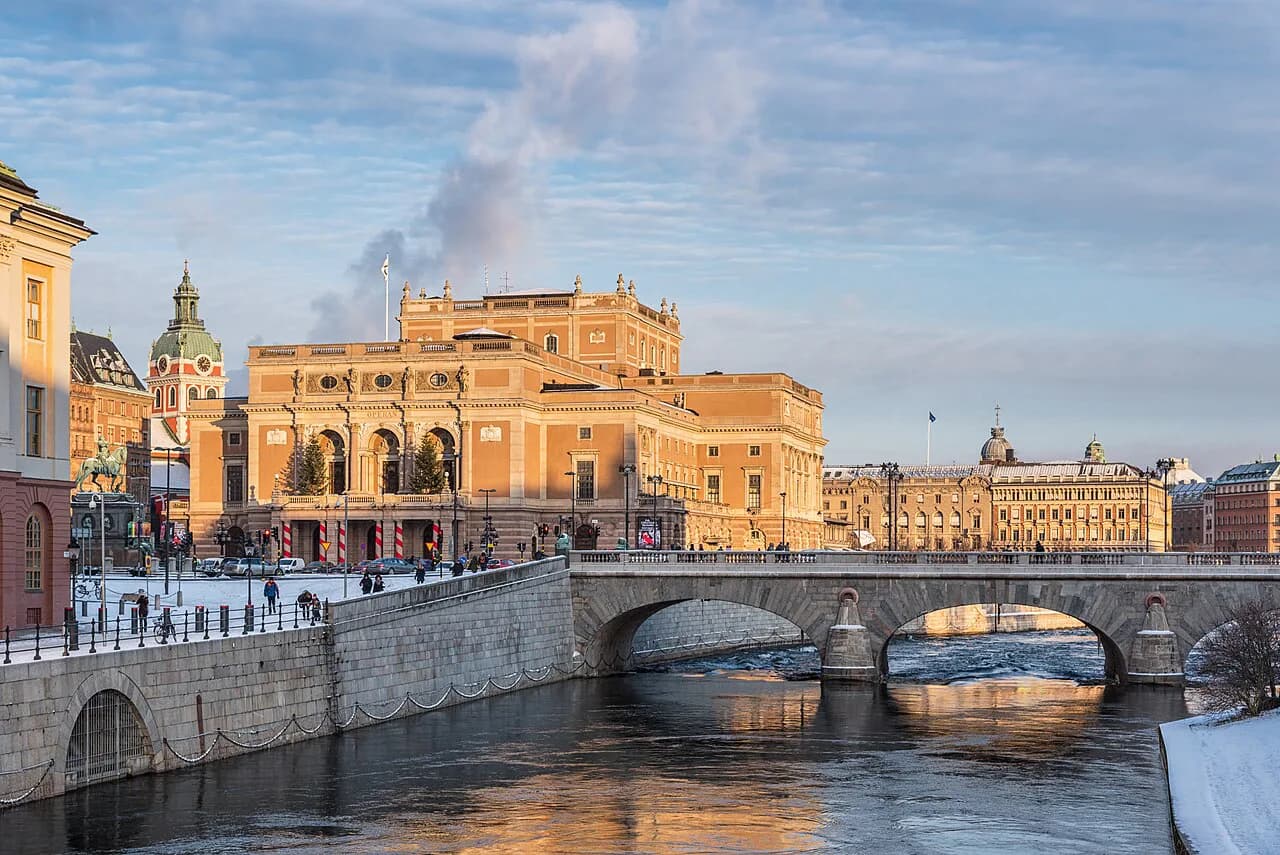
Royal Swedish Opera (Kungliga Operan), Stockholm

The Royal Swedish Opera, Kungliga Operan, is Stockholm's main house for opera and ballet, standing on Gustav Adolfs torg at the edge of the Norrström waterway in central Stockholm. This guide covers what the building is, how to reach it, how a performance is structured and what to weigh before you book a seat.
The house's own production pages give the practical shape of an evening: each listing sets out the stage, running time, language and act breakdown, with ticket information alongside it. When a production is not currently playing, the official site is the place to watch for a re-run.
What the Royal Swedish Opera is and where it sits
Kungliga Operan occupies a prominent block on Gustav Adolfs torg, the square that opens onto Norrbro, the bridge carrying traffic and pedestrians between Gamla Stan and the modern city centre. That position makes the opera unusually easy to fold into a sightseeing day: you can walk from the old town in a few minutes and arrive without needing transport.
Treat it as a single venue to plan around rather than one stop on a long list: the building, its foyer and the main auditorium are what you come for, and an evening here is the point. For a wider set of nearby options, see Stockholm Attractions: 29 Visitor Guides.
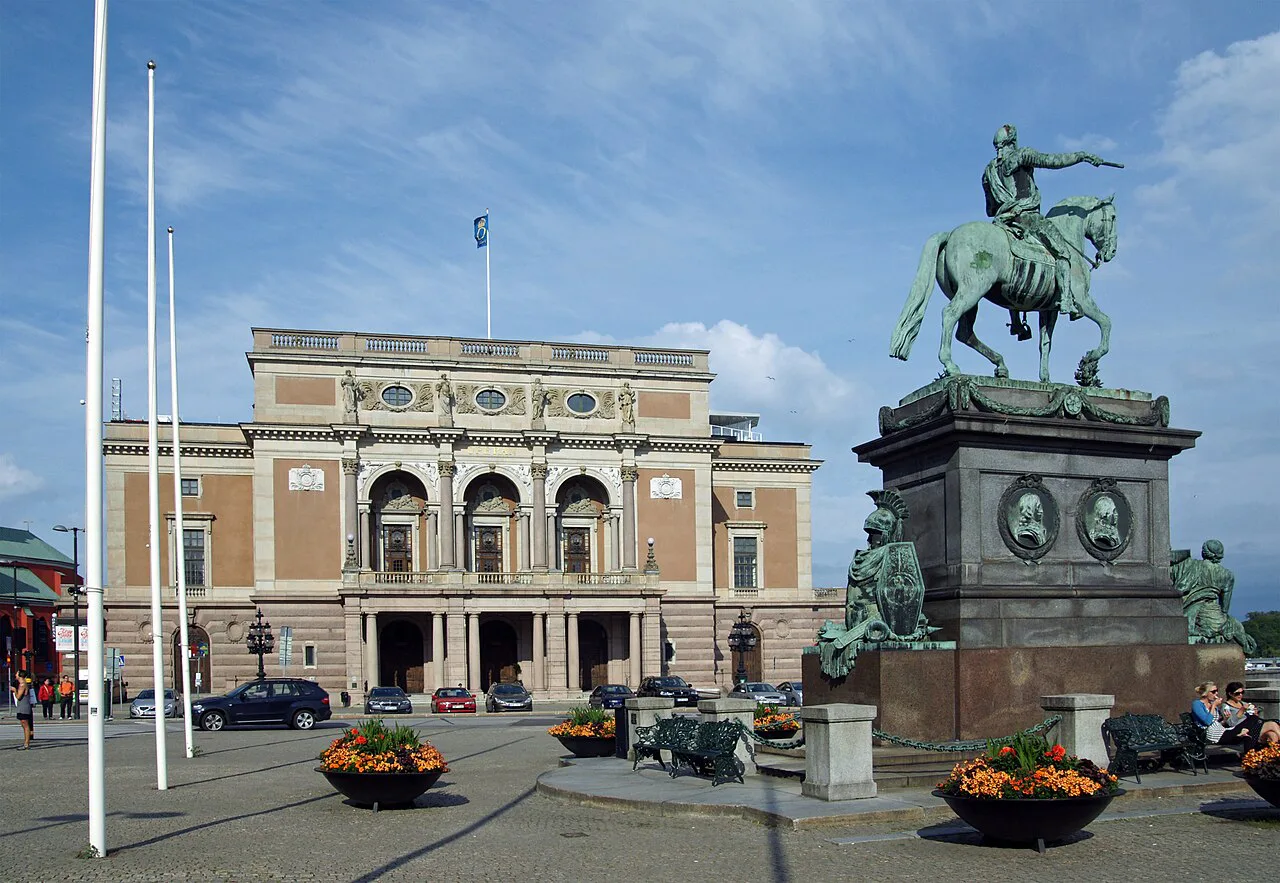

How to get to Kungliga Operan and what to look for outside
On foot, aim for Norrbro and Gustav Adolfs torg: from Gamla Stan you cross the bridge towards the square, while from Sergels torg and the central shopping streets it is a short walk south-west. Arriving this way also gives you a clear view of the building's facade before you go in, which is worth a few minutes.
For the wider layout of the old town on the far side of the bridge, Riddarholmen Church sits within easy walking distance of the route. If you are only in Stockholm briefly, group the opera with these central sights rather than planning a separate trip across town.
What happens inside: main stage, acts, interval and running time
Performances take place on the main stage, and the official listing for Mozart's Die Zauberflöte gives a running time of about two hours fifty minutes: Act 1 runs 60 minutes, the interval is 30 minutes, and Act 2 runs 80 minutes. That breakdown is the clearest guide to how an evening will feel, whatever production you book.
The staging in that listing is Ole Anders Tandberg's production of Die Zauberflöte, described by the house as an action-packed version built around Mozart's best-known music. If you want a first opera that will not feel like homework, a Mozart title of this kind is the sensible pick.
Why performances are sung in Swedish with Swedish surtitles
The house lists Die Zauberflöte as sung in Swedish with Swedish surtitles, and states that everyone in the cast sings in Swedish. If you do not read Swedish either, the words will not be something you can follow, so the score and the staging have to carry the evening for you.
The plot of Die Zauberflöte is simple enough to follow if you read a synopsis before you go: Tamino searches for Pamina with Papageno, protected by a magic flute, tested by trials, and shadowed by the Queen of the Night. Learning the story in advance turns a Swedish-language evening into a comfortable one.
Tickets, seating and booking for the Royal Swedish Opera
The house runs ticket sales as a section of its own site, with a ticket information page covering prices, ticket types and the seating plan, plus a calendar of performances. Those pages are where to look for what a seat costs for a given date, since prices vary by production, date and seat category.
Die Zauberflöte was scheduled for the main stage from 18 December 2025 to 13 April 2026, and the production page states that this performance is not currently playing. Treat any date you see as a season or re-run announcement until the calendar shows bookable seats.
The house asks readers to subscribe to its newsletter for news of coming seasons, ticket sales and possible re-runs, and its archive records previous performances. If your trip falls between announced seasons, that newsletter list is a better bet than checking the site daily.

How much time to allow for an evening at the opera
Budget roughly three and a half hours from doors to exit for a full-length opera: the performance itself runs about two hours fifty minutes, and you need time to get to your seat and leave afterwards. That is an evening, not an add-on to a packed day, so slot it in place of a second museum visit rather than alongside one.
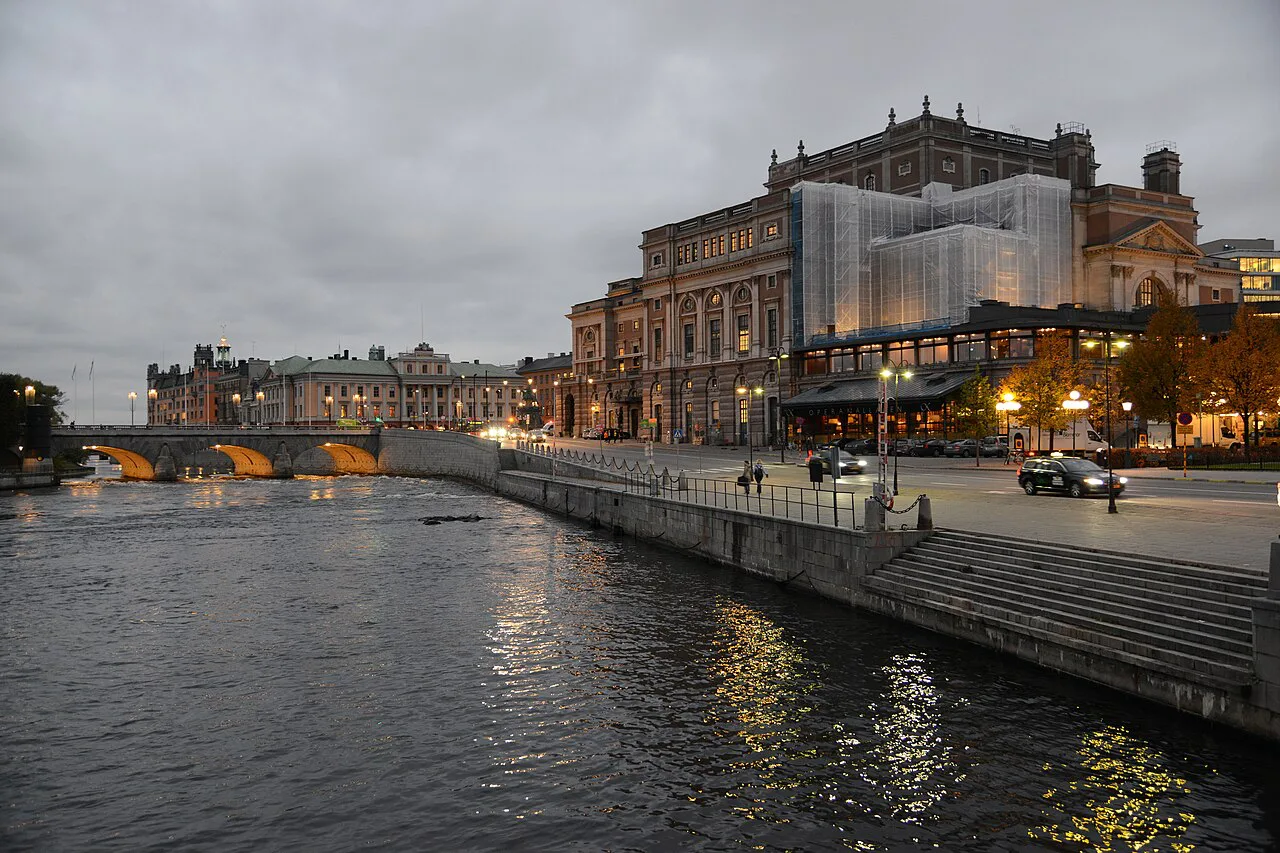
If you are in Stockholm for a short break, a single opera night works best on the middle evening, leaving your arrival and departure days flexible. Build in a short walk along the Norrström afterwards rather than a tight dash for onward travel.
What to see nearby around Gustav Adolfs torg and the waterfront
The area immediately around the opera rewards an hour of wandering: the square itself, the bridge view towards Gamla Stan and the palace, and the waterfront stretch along Norrström. Riddarholmen Church, one of Stockholm's most distinctive old-town landmarks, is a short walk away and pairs well with a daytime visit.
Across the water sits the Nationalmuseum at Södra Blasieholmshamnen, an art collection that fits neatly into the same half-day as the opera's surroundings. It makes a sensible pairing if you want culture in the afternoon and a performance in the evening.
For a modern-art alternative, Moderna Museet on Skeppsholmen is a short walk across the bridge from the Nationalmuseum side and gives you a second waterfront option. A culture-heavy day could combine it with the opera in the evening, though the walking adds up.
Practical points before you book
Decide first whether Swedish-language singing with Swedish surtitles suits you. If it does, pick a Mozart or similarly familiar title and read the synopsis in advance; if it does not, the opera may be better saved for a trip where you have more time to study the piece.
Second, confirm the production is actually on during your dates in the house's own calendar, then look at seat categories and prices on the ticket information page. Do not rely on second-hand price ranges from resellers, and do not treat a past season's dates as a current programme.
Third, think about the rest of your day. The opera eats a whole evening, so keep the daytime light and stay within walking distance of Gustav Adolfs torg if you can, which also avoids a rush after the final curtain.
Is the Royal Swedish Opera worth your evening?
Yes if you want a genuine night at one of Stockholm's principal houses and can follow the story from a synopsis rather than from the sung words. The two-act, roughly three-hour shape of an opera evening is a real commitment, and the Swedish-language staging is the deciding factor for many visitors.
Start with the house's production pages and calendar, pick a date that genuinely exists in its programme, then look at the ticket information page for seat categories and prices. If the dates do not align, plan the rest of the trip around the Gustav Adolfs torg waterfront and its galleries instead. For more, see Nationalmuseum Stockholm.