Gothenburg History: A Short Guide for Visitors
Gothenburg was founded in 1621, but its trading story begins earlier at Lödöse. Trace that past through museum galleries and the city's streets.
On this page
Gothenburg's history fits into a simple shape: a trading post on the Göta älv called Lödöse came first, and the modern city dates from 1621, when Gustav II Adolf founded Gothenburg at a site that could hold a larger harbour. Two stops carry most of the story for a visitor, the Museum of Gothenburg on Norra Hamngatan and, for anyone with a spare half-day, Lödöse Museum about 45 minutes north. This guide covers what each period left behind, what the museum's permanent galleries actually contain, and how much of a one-to-four-day break the city's past deserves.
What Gothenburg's history comes down to
Three strands explain most of what you see in the city centre. First comes the river trade that made the Göta älv corridor valuable long before a city stood at the mouth. Second is the deliberate 1621 founding, a royal decision to build a port at a stronger, more defensible position. Third is the twentieth century, when shipyards, ball bearings and Volvo cars turned Gothenburg into an industrial city whose products travelled worldwide.
That industrial century is the one most worth understanding before you walk around, because it explains the working waterfront, the suburbs and much of the city's self-image. The Museum of Gothenburg presents it through objects rather than timelines, which makes it a good first stop rather than an afterthought. If you want the wider set of collections to choose from, the guide to museums in Gothenburg puts this one alongside the rest.
Why Gothenburg was founded in 1621
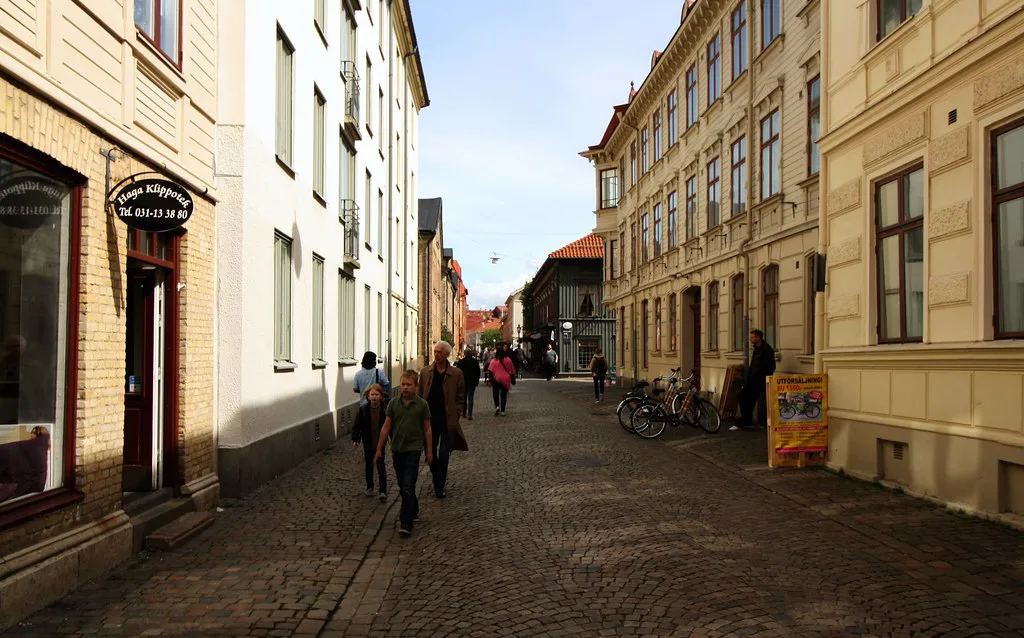
Gustav II Adolf founded Gothenburg in 1621, choosing a location that could accommodate a larger and more modern harbour than the older settlement on the river offered. The move was strategic rather than sentimental: the crown wanted a port that could handle serious trade and defend itself. The shift away from Lödöse was gradual, but the founding marked the point at which the region's centre of gravity moved to the site of the present city.
For a visitor, that date is the hinge of the whole story: anything you see in the historic core belongs to the city after 1621, while the earlier trading world survives mainly in museums and along the river. Keep the distinction in mind when a building looks old, because the oldest fabric in central Gothenburg is still younger than the medieval layers elsewhere in Sweden. It also means the city's street plan was designed rather than grown, which is why the centre reads as orderly.
Lödöse: the trading town that came before Gothenburg
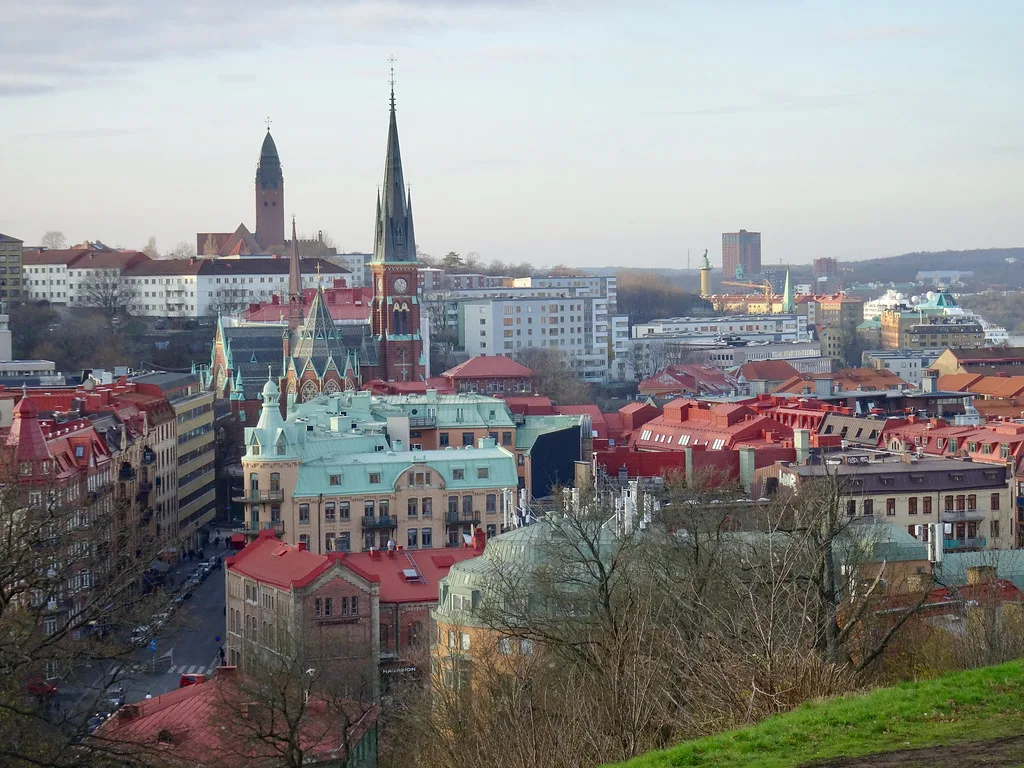
Lödöse sat on the banks of the Göta älv, just north of where Gothenburg now stands, and its position made it a hub where goods could be transferred between the Swedish and Norwegian coasts. Proximity to Norway, and for a time to Denmark, gave the town a role in Scandinavian trade long before the modern city existed. When the crown founded Gothenburg in 1621, much of Lödöse's population was moved to the new settlement, and the old town faded from memory.
Lödöse Museum tells that story with finds that date back as far as the 1000s, including a woman's skeleton, a set of armour and a map reconstructing the old town as it once stood. It sits about 45 minutes north of Gothenburg, so treat it as a half-day excursion rather than a stop you slot between two city sights. The trade-off is straightforward: fewer visitors and a quieter experience in exchange for travel time and a thinner supporting cast of nearby attractions. Check the museum's own pages for opening days before you commit to the trip.
What the Museum of Gothenburg covers, from the 17th century to the 20th
The Museum of Gothenburg at Norra Hamngatan 12 covers roughly 12,000 years of regional history, and its permanent displays run from the 17th-century exhibition Birth of Gothenburg through to the present day. That span makes it the single most efficient place to get the city straight in your head, because it links the founding, the trading years and the industrial era in one building. The museum publishes opening hours of Tuesday and Thursday 10–18, Wednesday 10–20 and Friday to Sunday 10–17.
Those hours reward a little planning. The Wednesday evening slot is the obvious choice if you want to spend a full day outdoors and still see the galleries, while a Friday to Sunday visit works well before an afternoon elsewhere in the centre. The museum lists its opening hours on its own site, so confirm the day you intend to go before setting out. Entry prices and any free-entry arrangements are published there too rather than fixed here.
Budget around two hours for the history galleries if you read the labels, or closer to an hour if you move briskly through the 20th-century material. The building sits on Norra Hamngatan, an easy walk from the central station area and the canals, which makes it simple to pair with a walk along the water. For a wet afternoon, it belongs near the top of any list of things to do in Gothenburg when it rains, since the collection is indoors and substantial.
The 'Thing about Gothenburg' exhibition and the objects that tell the city's story
The Thing about Gothenburg is the museum's permanent exhibition on the 20th century, built from more than 50 objects plus 13 buildings to tell the city's story through the things residents chose as meaningful. Shipyards, ball bearings, Volvo cars and a shrimp sandwich on Avenyn all appear, alongside political struggle and the local sense of humour Swedes associate with the city. The result is a portrait of Gothenburg in good times and bad rather than a chronological march.
It works as the final piece of the museum's 400-year puzzle: the sequence starts with Birth of Gothenburg and ends in the present, so walking the galleries in order gives you the city's arc in a single visit. Visitors who prefer people to objects should head for the earlier rooms first, where the founding story carries more narrative weight. Allow extra time here if you like design and social history, because the object labels carry much of the meaning.
If your taste runs more to pictures than to industrial objects, balance the day with art. The Gothenburg Art Museum and Where to Find the City's Art covers the collections and galleries worth your time, and it pairs naturally with a morning at the history museum.
Where else in Gothenburg you can see the city's past
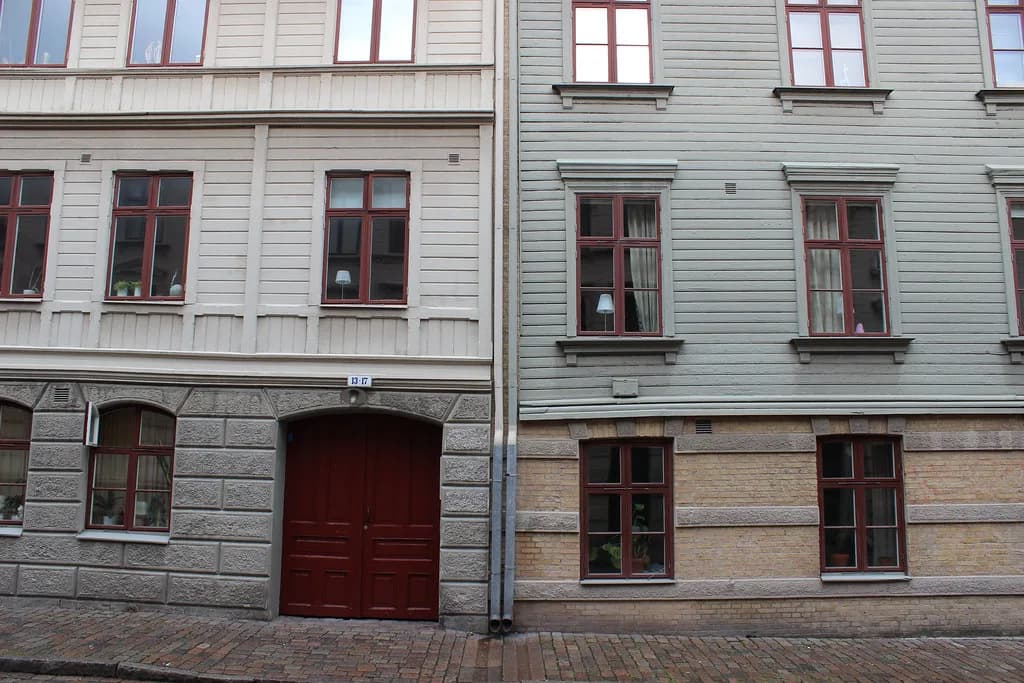
Beyond the museum, the city's history is mostly a matter of streets and buildings rather than monuments. Haga Nygata is the best-known street in the old Haga neighbourhood, lined with cafés and independent shops, and it is the most rewarding single street for a sense of the city's older residential quarters. Avenyn, by contrast, is the broad boulevard through the centre that shows how the city presented itself as it grew. Both are easy to walk and take under an hour each.
Skansen Kronan and Oscar Fredriks Church round out the picture: the first is a hilltop fortification with views over the centre, the second a striking church that dominates its neighbourhood skyline. Neither needs a long stop, but together they give you the military and religious sides of the city's growth. For the ecclesiastical detail, Gothenburg Cathedral (Domkyrkan) is the central stop, and the churches guide covers it and the others worth a look.
If fortresses appeal, the Castles and Fortresses Around Gothenburg guide sets Skansen Kronan in the wider context of the region's defences. The city's museum collections are gathered in the Museums in Gothenburg guide if you want to plan a longer run of indoor stops.
How much time to give the city's history on a short break
On a one-day break, give the Museum of Gothenburg two hours and skip Lödöse entirely; the centre, Haga and the waterfront will fill the rest. On two or three days, keep the museum at two hours and add a walk through Haga and up to Skansen Kronan for the view, which together take half a day. Only on a four-day trip does Lödöse Museum become realistic, and even then it costs you most of a morning or afternoon once you allow for the 45 minutes north.
The honest trade-off is that Gothenburg's history is concentrated in one building. If you have only a day, the museum plus a wander through Haga gives you the founding, the industrial century and the streets in a single loop. If you have longer, Lödöse adds the pre-1621 layer that the city itself cannot show you.
Should you add Lödöse to your trip?
Add Lödöse Museum only if your break runs to four days and you have already covered the centre. The 45 minutes north each way eats a half-day, and the reward is a quieter, more archaeological version of the story the city museum tells well.
For most visitors, the Museum of Gothenburg plus a walk through Haga and up to Skansen Kronan is the right allocation of time, leaving the rest of the break for the waterfront and the city's other collections.
Frequently Asked Questions
In which country is Gothenburg?
Gothenburg, or Göteborg in Swedish, is on the west coast of Sweden, at the mouth of the Göta älv river. It is the country's second city and the starting point for the history described here.
What came before Gothenburg?
Lödöse, a trading town on the banks of the Göta älv just north of the present city. It handled goods between the Swedish and Norwegian coasts long before Gustav II Adolf founded Gothenburg in 1621, and much of its population was moved to the new settlement when the modern city took shape.
Sources
Notes for your next Swedish city break
Optional updates to our Sweden guides.
You might also like
Continue reading
More guides you'll find useful