Lund Market Hall: A Visitor's Guide to Saluhallen
Lund Market Hall has traded since 1909, with a cast-iron roof, a food hall of shops and places to eat, and an easy half-hour visit in the city centre.
On this page
Lund Market Hall, called Saluhallen in Swedish, is worth about half an hour of a Lund city break. It is a red-brick food hall between Mårtenstorget and Botulfsplatsen, with no entrance fee, so you can drop in between sights rather than build a morning around it.
The appeal is two buildings in one. The original hall opened in 1909 with an iron roof structure and an old wall clock that are still in place, while a 2012 extension facing Botulfsplatsen added a glazed frontage, a second floor and room for restaurants. This guide covers where the hall sits, how long to allow, what is inside and the hygiene debate that got it built.
Where Lund Market Hall sits in the city centre
The hall occupies the block between Vårfrugatan and Mårtenstorget, with its modern face towards Botulfsplatsen. That puts it a few minutes' walk from Stortorget and the lanes of Lund old town, so it works as a mid-walk stop rather than a separate outing. Plan it as one point on a loop through the centre.
You arrive on foot. The centre is compact and flat, which makes a Lund walking tour past Mårtenstorget and Botulfsplatsen the easiest way to reach the hall without a detour, and a Lund bike rental keeps it within a few minutes of most central streets.
How long you need: about half an hour
Budget about 30 minutes inside. That covers a lap of the original hall, a look up at the iron roof and the old clock, a wander through the shops and the glazed extension, and time to decide whether you want to eat. The city's tourist information suggests that half-hour figure, which signals a short architectural and food stop rather than a museum you work through room by room.
If you add lunch or a fika, the visit stretches, but the building itself will not fill an afternoon. On a one-day itinerary, pair the hall with the cathedral and a walk along the old streets; if you are weighing up whether the city justifies the trip, the case in is Lund worth visiting applies here too, because the hall is a supporting act rather than the headline.
Opening hours and the free entry
The hall is free to enter. The visitor guide gives opening hours of Monday to Friday 10:00 to 18:00 and Saturday 10:00 to 15:00, with nothing listed for Sundays or public holidays, so treat those as the known window rather than a full week. Swedish opening hours often shift between high summer and the rest of the year, which is why it is worth confirming the day before you go.
Individual shops, cafés and restaurants inside set their own times, and the hall's published hours are not a promise that every counter is serving. Check the hall's own site for the current week before you build a meal around it. If you are keeping costs down, free things to do Lund helps you balance a paid lunch against the city's no-cost sights.
What is inside now: around twenty shops and restaurants
Saluhallen now holds around twenty shops and restaurants across two floors, according to the hall itself. The ground floor is where the food counters and places to eat cluster, and the upper level came with the rebuild. It suits both a quick browse and a longer lunch.
The hall has been a food destination since it opened, when chefs, restaurateurs and ordinary shoppers queued on equal terms for produce. Today it works as a deli-and-lunch stop in the middle of the shopping streets, so a short browse fits neatly alongside shopping in Lund. If you are mainly after coffee and a pastry, the city's café scene is covered separately in Lund cafes.
The building itself: iron roof, old clock and red brick
Look up. The iron roof structure designed for the 1909 hall is still the one you see, and the old wall clock remains on the wall. The exterior is the original red-brick market hall, which is why the building reads as civic architecture rather than a shopping centre.
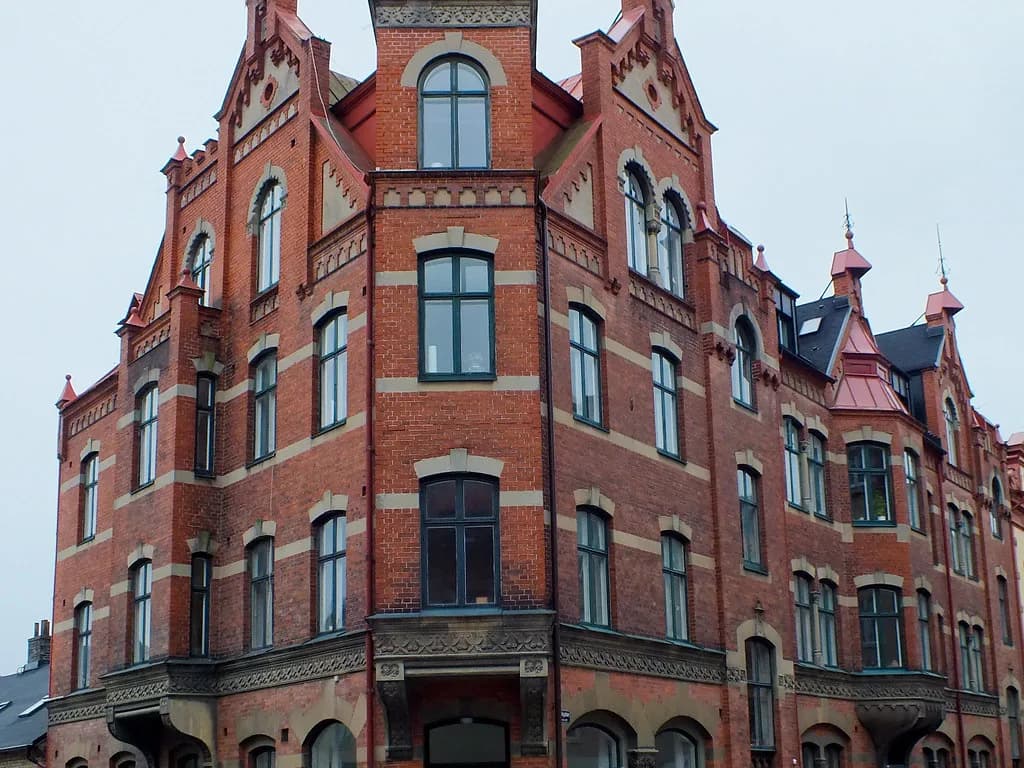
The hall was designed by architect Salomon Sörensen, and the city council settled on the site between Vårfrugatan and Mårtenstorget in 1907. For context on how it fits the wider city, architecture in Lund rewards a slow look at its brick and stone, and a Lund architecture walk makes a good pairing with the hall.
The interior has changed a lot since 1909, with renovations in 1973 and further refurbishment running up to 2012. In the 1960s there were even proposals to demolish the hall, and the city council set aside SEK 50 000 in 1968 towards rebuilding plans before protests ended the idea. Read that figure as history, not as anything you will pay today.
The 2012 extension facing Botulfsplatsen
The extension facing Botulfsplatsen was designed by architect Viggo Marsvik and added a second floor, ground-floor space for restaurants and outdoor seating. Its glazed facade deliberately contrasts with the original red brick behind it, and the official reopening took place in November 2012, so this is recent history rather than the original market building.
The practical effect is that the hall has two moods. The older hall is the architectural and historical stop; the glazed side is where you sit and eat. Arriving from Botulfsplatsen you enter through the modern face, so walk through to the brick hall before you settle at a table.
Where it fits in a wander around Mårtenstorget and the old centre
Mårtenstorget, just outside, is the square that took over the fruit and vegetable trade when the hall opened in 1909. The hall therefore sits between two squares: market trading outside, food counters inside, which makes it a natural link on a loop from Stortorget back towards the university buildings.
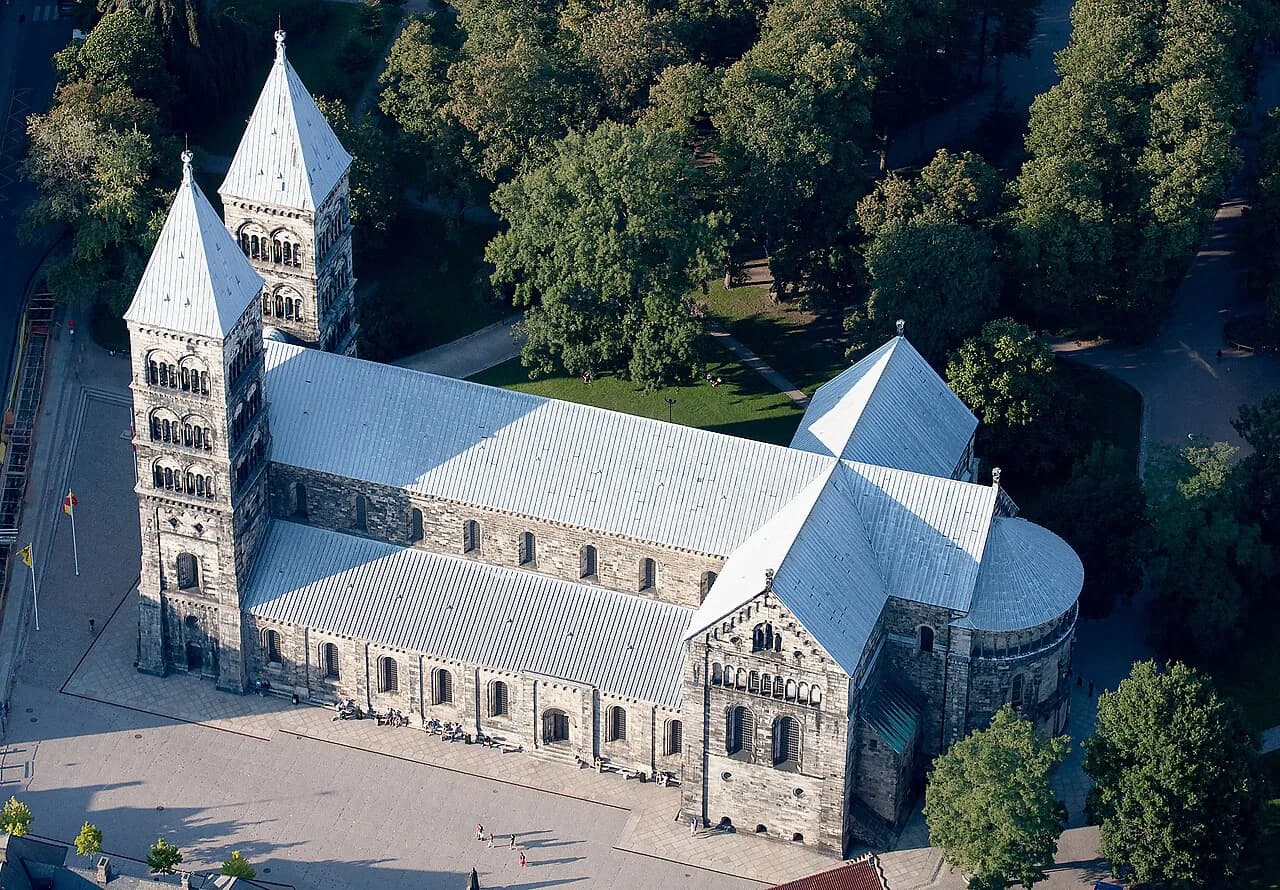
A sensible half-day route is Stortorget, the cathedral, a wander south through the lanes, then Mårtenstorget and the hall. Lund Cathedral is the city's unmissable interior, so give it more time than the hall and treat Saluhallen as the pause in between. The full menu of sights is set out in Lund Attractions, the better place to plan the order of the day.
A short history: the 1899 hygiene petition and the 1909 opening
The hall exists because of a hygiene argument. Meat and fish had been sold from covered wagons on Stortorget, and in 1899 the newspaperman and city politician Christian Bülow petitioned the city council to investigate a covered market hall, citing heat, damp, smoke and dust around fresh food. The council appointed a committee that December, and its members visited market halls in other Swedish cities and abroad before recommending a hall for meat, pork and fish only.
It took a decade. The council chose the Vårfrugatan and Mårtenstorget site in 1907 to drawings by Salomon Sörensen, and the hall opened on 21 April 1909, when fresh food and meat trading moved in and the remaining fruit and vegetable trade shifted to Mårtenstorget. At opening the hall had a large hall and two smaller ones, and 46 traders occupied it from the start.
Even then it was not full. Many stands were empty at the start, and traders complained that the stands were too narrow and the air poor. That awkward start is a useful reminder that the handsome brick building was a public-health project first and a food destination second.
Why it works as a rainy-day or short-stop option
Lund's old centre is full of sights that keep you outdoors: squares, lanes and the park at Botaniska trädgården. The market hall is the obvious indoor pause when the weather turns, and half an hour inside costs nothing to enter. It is also a sensible first stop if you arrive before a hotel room is ready or need to wait out a shower.
Keep expectations calibrated. It is a working food hall, not a museum, and it will not fill a wet afternoon on its own. Pair it with the cathedral and a café, and allow half an hour rather than a whole morning.
Is the market hall worth the stop?
Yes, if you are already in the centre and want a short, free look at a building that has anchored Lund's food trade since 1909. Skip it if your time in the city is down to a couple of hours, in which case the cathedral and Stortorget earn the minutes more.
Where to put Saluhallen in your Lund day
Slot the market hall between Mårtenstorget and Botulfsplatsen on a walk through the old centre, give it half an hour, and use the free entry to justify a browse even if you eat elsewhere.
If you are still deciding how many days Lund deserves, the wider picture in Is Lund Worth Visiting? What Lund Does Well and Who It Suits will help you settle the shape of the trip.
Explore more Lund guides
Frequently Asked Questions
Is Lund Market Hall free to enter?
Yes. The hall's visitor information gives no entrance fee, so you can walk in, look at the iron roof and the old clock, and browse the shops without paying. What you spend inside on food and produce is separate.
What is sold in Lund Market Hall?
The hall holds around twenty shops and restaurants over two floors, with food counters and places to eat concentrated on the ground floor. It was built for meat, fish, cheese and butter in 1909, but today it functions as a general food hall and lunch stop.
Can you visit Lund Market Hall on a Sunday?
The published hours cover Monday to Friday 10:00 to 18:00 and Saturday 10:00 to 15:00, with no Sunday listed. Check the hall's own site for the current week before planning a Sunday visit.
Sources
Notes for your next Swedish city break
Optional updates to our Sweden guides.
You might also like
Continue reading
More guides you'll find useful