
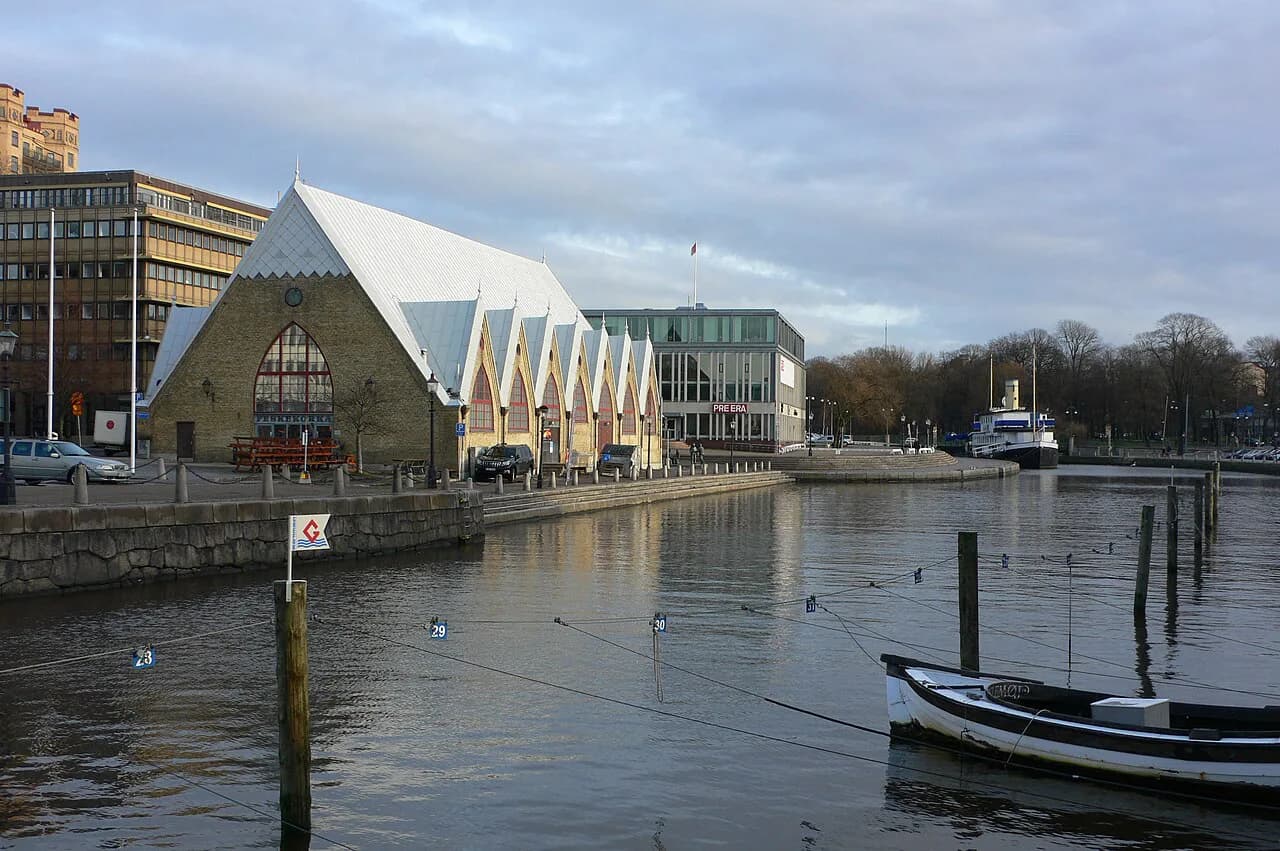
Feskekörka: Gothenburg's Fish Church by the Canal

Give Feskekörka 45 to 60 minutes if you want to eat, or 20 minutes for a quick look round the hall. The 1874 fish market on Fisktorget, beside the Vallgraven canal, reopened after several years of renovation and now works as both a fish counter market and a food destination with restaurants and a bar.
The locals' nickname is the honest review: the pointed windows and open, pillar-free hall make it look like a church, and kôrka is Gothenburg dialect for church. This guide covers where it sits, how to reach it, what the building does, who trades inside and what to see on the surrounding streets.
Why Gothenburg calls it the fish church
Feskekörka has sold fish since 1874, when the city moved an unruly open-air trade into a proper hall. Before that, fish was sold from a raft on the Stora Hamnkanalen in front of the German Church, then from Fisktorget by the Rosenlundskanalen, where sun, rain and street dust spoiled the goods.
In 1871 the city decided to build a fish hall on Fisktorget, funded by a 75,000 kronor grant from the Renströmska Fund. The finished building came in at 74,963 kronor and 12 öre, with Victor von Gegerfelt as architect and Krüger & Westerberg as builders.
The nickname stuck because von Gegerfelt drew on old Nordic stave churches and neo-Gothic architecture. From inside you can see the wooden roof structure, its trusses braced so the hall could span the space without load-bearing pillars.
Where Feskekörka is, by Vallgraven
Feskekörka stands on Fisktorget in the heart of Gothenburg, with its long side and outdoor seating facing the Vallgraven canal. That puts it a short walk from Kungstorget and the shopping streets around the centre, so it slots easily into a morning or a lunch break.
Treat it as a market stop rather than a sight in its own right: the hall is compact, and the pleasure is in looking at the fish counters, choosing something to eat and watching the canal.
How to get there and how long to allow
The hall sits within walking distance of central Gothenburg's tram and bus network, and the official listing gives directions and public transport details alongside the address and phone number. Plan to arrive before the lunch peak if you want a table, since the restaurants and outdoor seating are the main draw.
For a short city break, 45 to 60 minutes covers a walk round the counters, a look at the roof structure and a sit-down meal; a 20-minute pass suits anyone just photographing the building. Because the site reopened after renovation with new restaurants, bars and a stage, expect more of an event space than a quiet market hall.
What's inside: two fish counters and a delicatessen
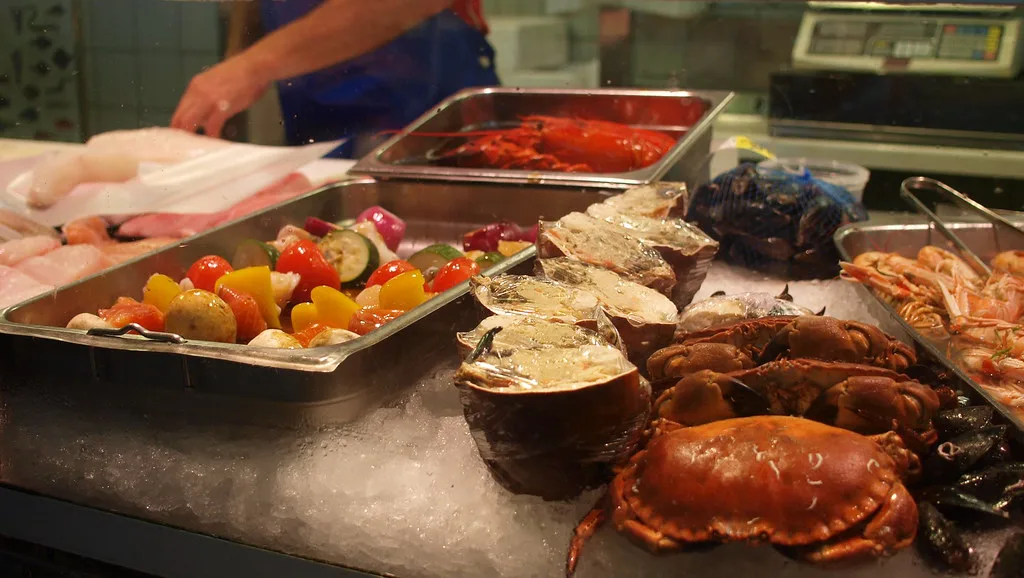
Flåtens Fiskhandel is the counter for cooking at home, with whole or filleted fish, pickled herring, fish gratins, soups and ready-made lunch dishes. Ebbes Fångst is the delicatessen side, with fresh and smoked shrimp, crayfish, roe, caviar, smoked salmon and fixings for a seafood platter.
Both counters let you buy by weight and take away, which makes them a good stop before a picnic rather than a full meal. Ask at the counter for advice on choosing fish; the staff are the experts on what is good that day.
The restaurants and bar
Four kitchens trade inside, most of them named on the Göteborg & Co listing: Lilla Åstols Rökeri, Haldis Kök, Ekmans and Victor von G, alongside a bar. Victor von G is the hall's bar, described on its own site with herring, oysters and small flavours of the west coast.
Haldis Kök serves Bohuslän-style home cooking and street food, Ekmans plates classic flavours in a homely Bohuslän setting, and Victor von G is the bar with herring, oysters and west coast small plates. The hall's site carries a booking page for its restaurants, though not every kitchen appears there.
Eating outside by the canal
The hall has one of Gothenburg's largest outdoor seating areas, facing the Vallgraven canal, and the renovation added a stage with entertainment and food events. That makes it a natural stop on a sunny day when you want to sit by the water rather than inside.
Come with flexible plans: the outdoor tables are the point on a warm day, but the indoor counters and covered hall work in any weather, so the visit doesn't depend on the forecast.
What's nearby on a Feskekörka walk
Kungstorget and the surrounding shopping streets are a few minutes away, and the Vallgraven canal path makes a pleasant loop back towards the centre. If you want more green space afterwards, Slottsskogen is Gothenburg's big central park and a good place to walk off lunch.
For a viewpoint instead, Skansen Kronan crowns a hill above Haga and is a short tram ride or a longer walk from the canal. Both make sensible pairings with Feskekörka rather than separate days out.
When to go and what to expect
Feskekörka is a working market and food destination, not a museum, so the experience is shaped by which counters and kitchens are trading when you arrive. The hall's own site lists restaurant menus and a booking page, and the city listing names the venues inside, so check current days and times there before making it your lunch stop.
The restaurants and the canal-side outdoor seating are the main draw at lunchtimes, when the tables by Vallgraven fill up. Budget 45 to 60 minutes including a meal.
Is Feskekörka worth a stop?
If you're already in central Gothenburg, Feskekörka is an easy yes: a genuine 1874 building, a working fish market and a convenient lunch stop by the canal. If you're short on time, a 20-minute walk-through covers the architecture and the counters without a full meal.
Treat it as part of a canal-side morning with Kungstorget, rather than a destination in itself, and check the hall's own site before you go for which kitchens are open.
Explore more Gothenburg guides
Frequently Asked Questions
What is Feskekörka famous for?
Its church-like architecture. Pointed windows, an open hall and a roof structure inspired by stave churches earned it the local nickname the fish church, and Gothenburg has sold fish from the site since 1874.