
Gunnebo House and Gardens: a visitor's guide

Gunnebo House is worth the trip if you want one well-preserved 18th-century estate rather than another city street: the gardens, park, café and shop are open to roam, while the manor house and Orangery are seen on a guided tour. Allow half a day from central Gothenburg, most of it spent outdoors. This guide covers where the estate sits, how to reach it by bus, bike or car, and how to shape a visit around the manor's tour times.
Why Gunnebo is worth the trip from Gothenburg
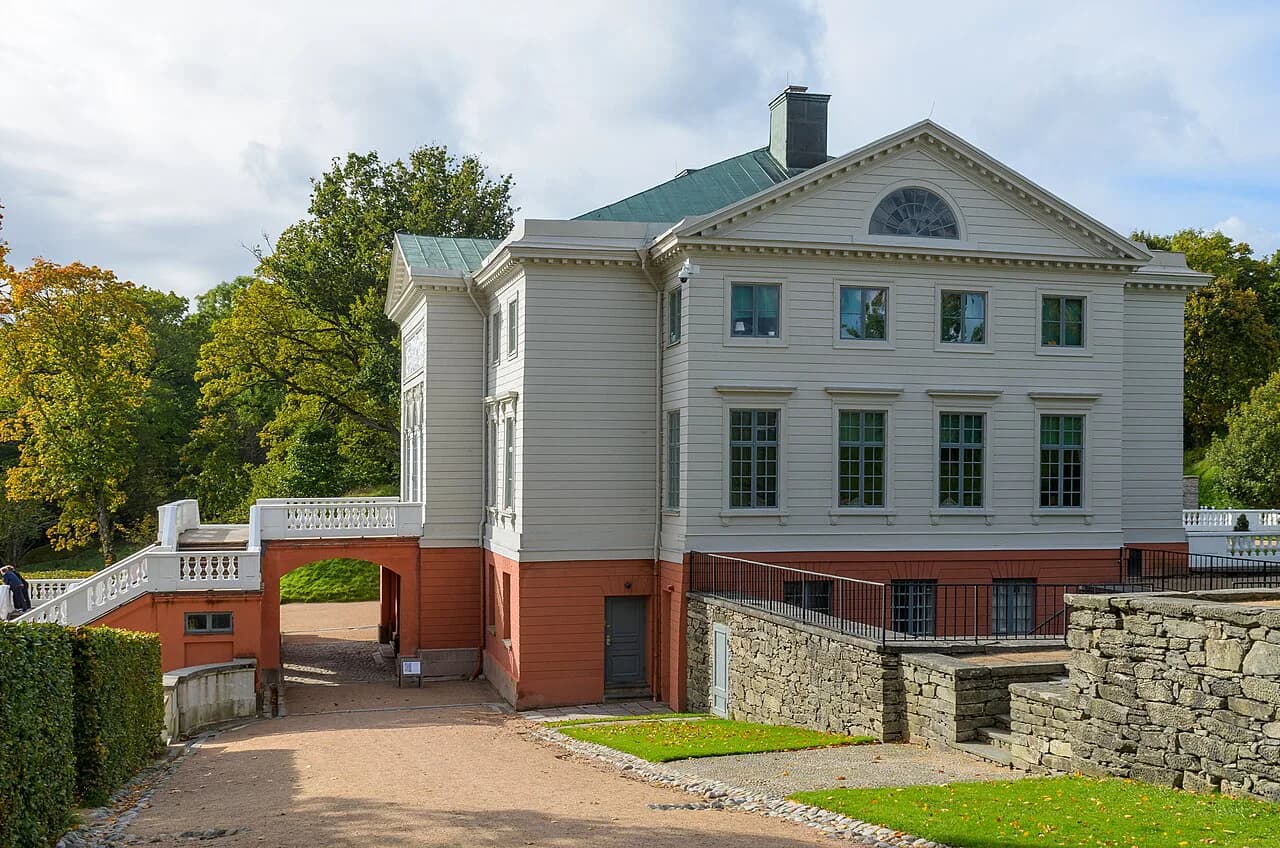
Gunnebo slott sits in Mölndal Municipality, south of Gothenburg, in a cultural landscape wrapped by a nature reserve and two lakes. It was designed in the 1780s as a summer residence for the Hall family by Gothenburg's city architect Carl Wilhelm Carlberg, who drew not only the main house but the outbuildings, interiors and gardens, which is why the estate reads as one coordinated 18th-century environment rather than a house with grounds attached.
More than 200 original Carlberg drawings survive and have guided restoration since the 1950s, from colour schemes to carpentry and decorative details, and they helped return original furniture to its old places. That continuity is the reason to come: this is among the best-preserved 18th-century settings in Scandinavia, not a pastiche.
The practical trade-off is distance: you swap a chunk of a city-break day for a rural estate, so it suits travellers with three or four days in Gothenburg better than a packed 24-hour stop. Once you arrive, the parterre, park, kitchen garden, café and shop are all on site, so nothing more is lost in transit.

Where Gunnebo House is
The address is Gunnebo Slott och Trädgårdar, Christina Halls väg, 431 36 Mölndal. The estate is part of the 100-hectare Gunnebo Cultural Reserve, which takes in the house and gardens plus surrounding land and historic buildings, so the walk from the bus stop or car park already runs through the landscape.
Sitting between two lakes and a nature reserve is what makes a half-day feel unhurried: you can move from formal garden to open park without leaving the reserve. The estate is open every day, all year round, while the house and Orangery follow tour times, so plan your arrival around the tour you want.

How to get to Gunnebo by bus, bike or car
The nearest stop is Gunnebo park, about a 900 m walk from the estate. Bus 754 runs between Heden and Mölndal via Helenedal, roughly 15 minutes from Heden and about 10 minutes from Mölndals Bro, so the usual approach is a tram or bus into Mölndal and a change onto the 754. Build in the walk at both ends of the day.
Cyclists can reach Gunnebo on signed paths from Mölndal or from Gothenburg via Delsjömotet, and there are cycle stands in three places on the estate. Drivers arrive easily from the E6 or Route 40 and will find 295 parking spaces, including disabled spaces, with parking meters at each location; cars are not allowed into the gardens for security reasons.
The manor house: Carlberg's summer residence
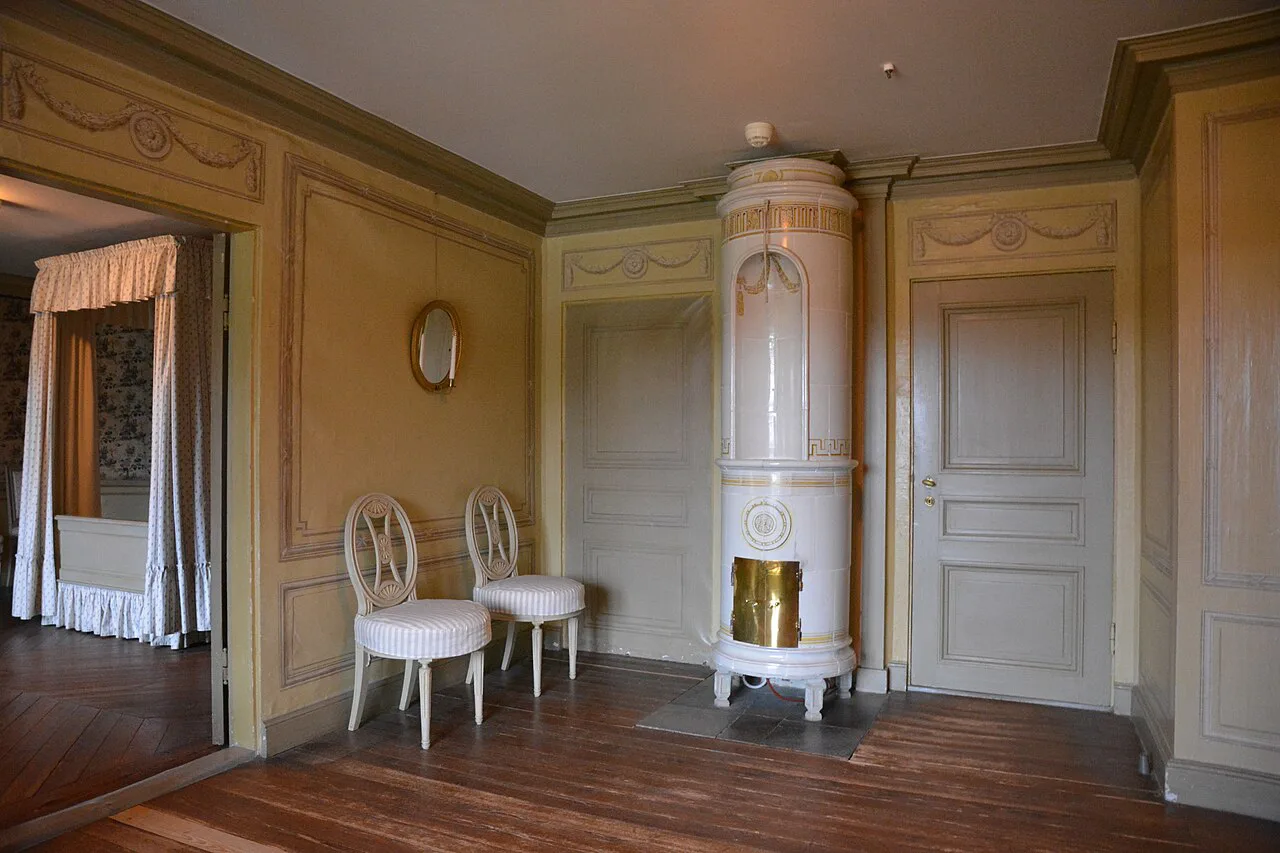
Inside, the house tells the story of a wealthy 18th-century Gothenburg family at play rather than at work: a summer residence built for the Hall family, furnished to Carlberg's drawings and restored using those same drawings. Look for the unified decoration — colours, carpentry and fittings designed together — and for the original furniture traced and brought back.
Gunnebo's interest is the opposite of Gothenburg's older civic buildings, where different hands and later rebuildings show in the fabric: here it is one architect's coherent plan, carried out and later recovered. Read up before you go and the tour will land much better.
Visiting the house and Orangery on a guided tour
The manor house is only accessible as part of a guided tour, and the same applies to the Orangery, so there is no independent wander through the rooms. Tours take in the architecture, the interiors and the surrounding buildings and gardens, and tickets are booked through the estate's own site. Arrive early enough to find the meeting point and use the waiting time in the parterre or the café.
Tour times and tour ticket prices vary across the year, so check the booking page for your date and reserve before travelling out from the city. The house, Orangery, café and shop close on 24–25 and 31 December and 1 January.
The gardens: baroque parterre, English park and kitchen garden
Treat the grounds as three landscapes rather than one. The period garden in front of the house is symmetrical, drawing on Italian Renaissance and French Baroque models, and reads best as a whole from the house side. The English park links the buildings, the formal garden and the wider cultural landscape, with looser planting and longer views.
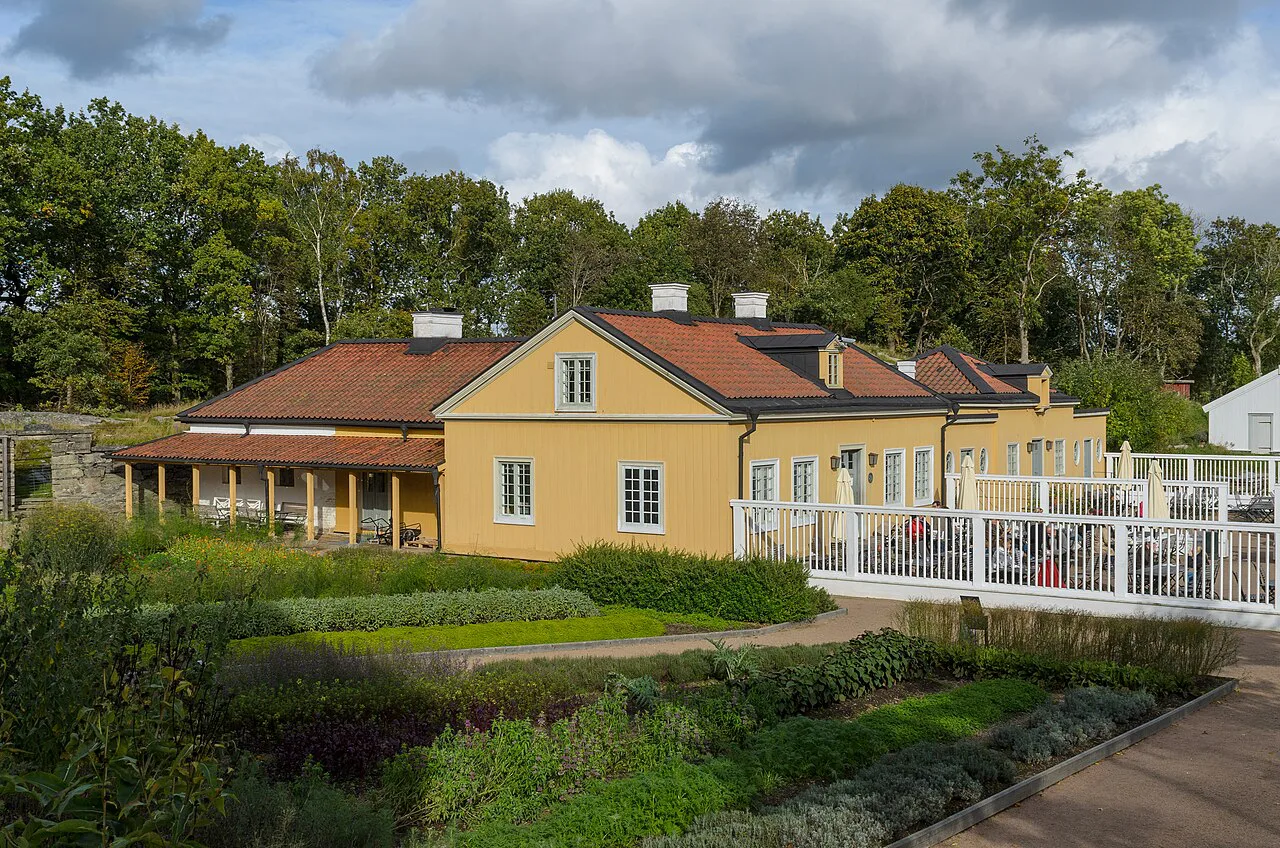
The third landscape is productive: an eco-certified kitchen garden recreated from 18th-century drawings, growing vegetables and herbs for the estate's restaurant. Head here before or after your tour, when the light is kinder for reading the planting beds. It also gives the café menu a context most museum cafés lack.
The grounds are the loosest part of a visit: you can move between the formal beds and the reserve's paths out towards the lakes at your own pace, then return to the house for the tour. For a second green stop in the city, the Gothenburg Botanical Garden makes a natural counterpoint.
Gunnebo Kaffehus och Krog and the estate shop
Gunnebo Kaffehus och Krog is the estate's KRAV-certified café and restaurant, with a bakery using eco-certified flour milled from heritage grains and produce going from the kitchen garden to the plate. Café, restaurant and shop open daily from 11 am to 4 pm and close on 24–25 and 31 December and 1 January. Lunch or fika here is the obvious way to break a half-day visit.
The shop sells local crafts, Gunnebo products, gardening tools and bakery goods, which makes it a sensible last stop before the walk back to the bus. The kitchen closes with the café, so do not rely on a late lunch.
Opening hours and tickets: what to plan around
The estate publishes its current opening hours and tour booking on its own site, and that is the page to trust for the day you travel. The café and shop timetable is not the same as the house tour timetable, so read both. Ticket prices are set by the estate; confirm the current figure when you book rather than budgeting from an old listing.
Because the house can only be seen on a tour, the tour schedule is the real planning constraint: pick your slot first, then fit transport and the gardens around it.
How much time to allow
A half-day is the right unit: roughly an hour for the guided house tour, an hour for the parterre, English park and kitchen garden, and another hour for lunch or fika plus the shop. Add the 900 m walk from Gunnebo park at each end and the bus connections through Mölndal. That fits a morning or an early afternoon without eating your whole day.
If you are short of time, skip the shop and take the tour plus the formal garden only; with a full day, walk out into the cultural reserve towards the lakes between tour and meal. Rain changes the maths: the house tour and café become the anchors and the park gets a shorter look.
Gunnebo through the year
The estate's calendar carries seasonal draws: a harvest theme in autumn, markets, Midsummer celebrations in the gardens and craft courses, alongside guided tours. The Christmas market appears on Gothenburg's events listing as 14–29 November, which shows the kind of window to expect rather than a fixed annual date.
Autumn suits the estate's character: harvest flavours in the café, quieter gardens and trees turning in the reserve. Spring and early summer suit the kitchen garden, while market weekends bring the most visitors and the fullest buses.
Pairing Gunnebo with the rest of a Gothenburg break
Because Gunnebo is a half-day out of the city, it works best paired with a lighter city afternoon rather than another big museum. Slottsskogen gives you a free park with Barnens Zoo, and it suits families who have spent the morning in a formal 18th-century garden and need somewhere to run.
Alternatively, keep the historical thread going with Skansen Kronan, the 17th-century fortification above Haga, which offers the city view that Gunnebo's flat parkland cannot. For a wet-weather swap, Aeroseum occupies a rock hangar in the north of the city and makes a strong contrast with an 18th-century estate.
On a third day, the wider list of things to do in Gothenburg covers the harbour-side sights that fill the gaps around a Gunnebo morning. Book the tour first, then build the rest of the day around your slot.
Is Gunnebo worth half a day?
Yes, if you value one coherent historic estate over another city street: Carlberg's design, the baroque parterre, the English park and the working kitchen garden together justify the journey, and the guided tour is the only way inside the house. The cost is time — the bus via Mölndal and the 900 m walk — so treat it as a half-day rather than a quick stop. Book the tour before you travel.
Explore more Gothenburg guides
Frequently Asked Questions
Is Gunnebo House free to visit?
The grounds, park and cultural reserve can be explored without a ticket, but the manor house and Orangery are only seen on a guided tour, which is ticketed. The estate publishes current tour prices on its booking page, so confirm the figure there for your date.
Can you go inside Gunnebo House without a tour?
No. The manor house and Orangery are accessible only as part of a guided tour, so choose a tour slot before planning the rest of your visit. The gardens, English park, café and shop can be visited independently around it.
How long should a visit to Gunnebo take?
Allow half a day: about an hour for the guided house tour, an hour for the parterre, English park and kitchen garden, and an hour for the café and shop, plus the walk from the bus stop. A shorter visit works if you take the tour and the formal garden only.