
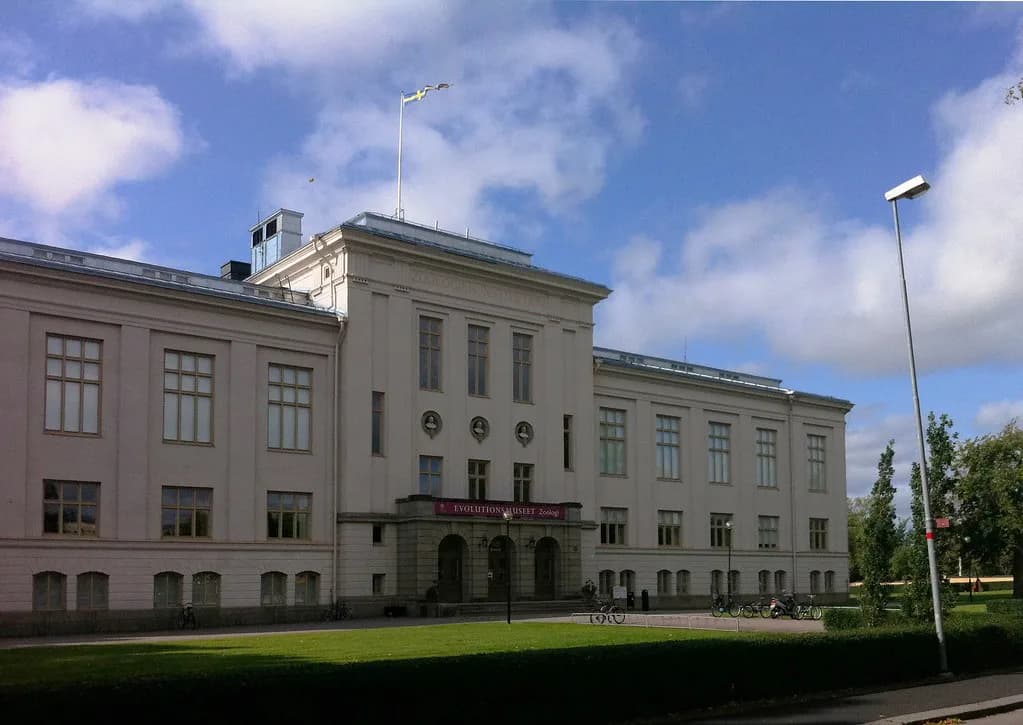
Museum of Evolution Uppsala (Evolutionsmuseet): A Visitor's Guide
The Museum of Evolution in Uppsala is a university museum split across two buildings, with a short walk between the houses, so budget for that transfer rather than expecting one continuous hall. Its draws are minerals, dinosaur skeletons and mounted animals, plus fossil collections on a Scandinavian scale. This guide covers how the visit works, what to see and how to fit it into a day in Uppsala.
Come for the dinosaur skeletons and the mineral displays first; the zoological material rewards anyone with time left. Allow a half day if you want both buildings properly, and rather less if you plan to skim one.
What the Museum of Evolution in Uppsala is
Evolutionsmuseet is Uppsala University's museum of evolution, built around mineralogy, palaeontology and zoology rather than a single themed exhibition. The minerals, dinosaur skeletons and animals give it three distinct pulls, and knowing that in advance helps you decide where to linger.
The collection is one of the largest fossil holdings in Scandinavia, with around five million specimens spanning zoological and palaeontological material. Treat that as context for what sits behind the displays rather than a promise that everything is on show.
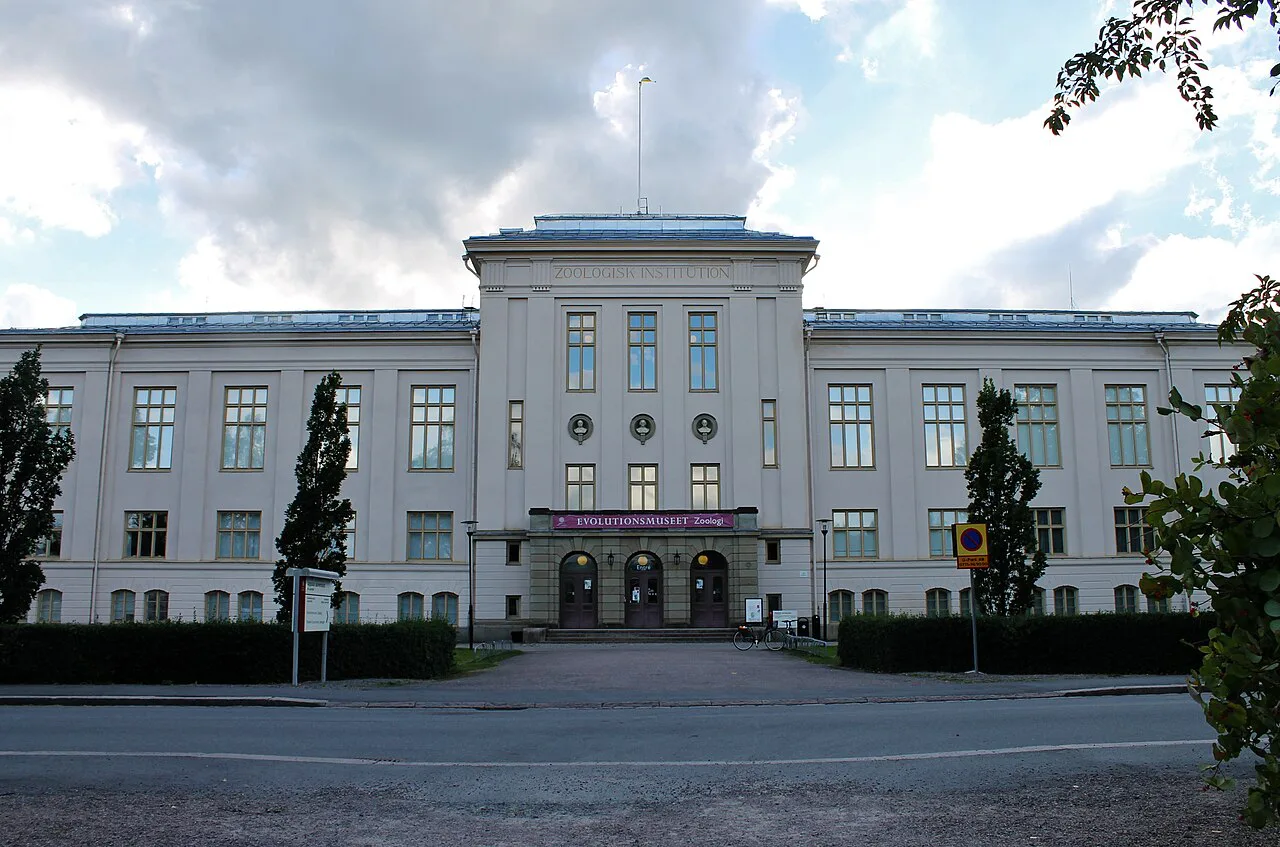

Where it is and how the two buildings are split
The museum is a Uppsala University institution, and its displays are divided between two houses with a short walk in between. Plan your route so you finish one building before starting the other; backtracking wastes time you would rather spend on the skeletons.
Because the visit is in two parts, carry everything you need between them and check the layout on arrival so you know which house holds the minerals and which the dinosaur material. It is a small piece of planning that keeps a two-house visit relaxed.

How to get there and move between the houses
The museum sits within Uppsala's university quarter, which you can walk across, and the transfer between the two buildings is on foot. Build the walk into your timing instead of treating the museum as a single stop.
Uppsala is compact enough that the museum fits naturally into a walking day around the centre, with the river and the main squares within easy reach. If you are arriving by train, come into the centre first and work the museum into your route rather than making a separate trip.
What to see: minerals, evolution and dinosaur skeletons
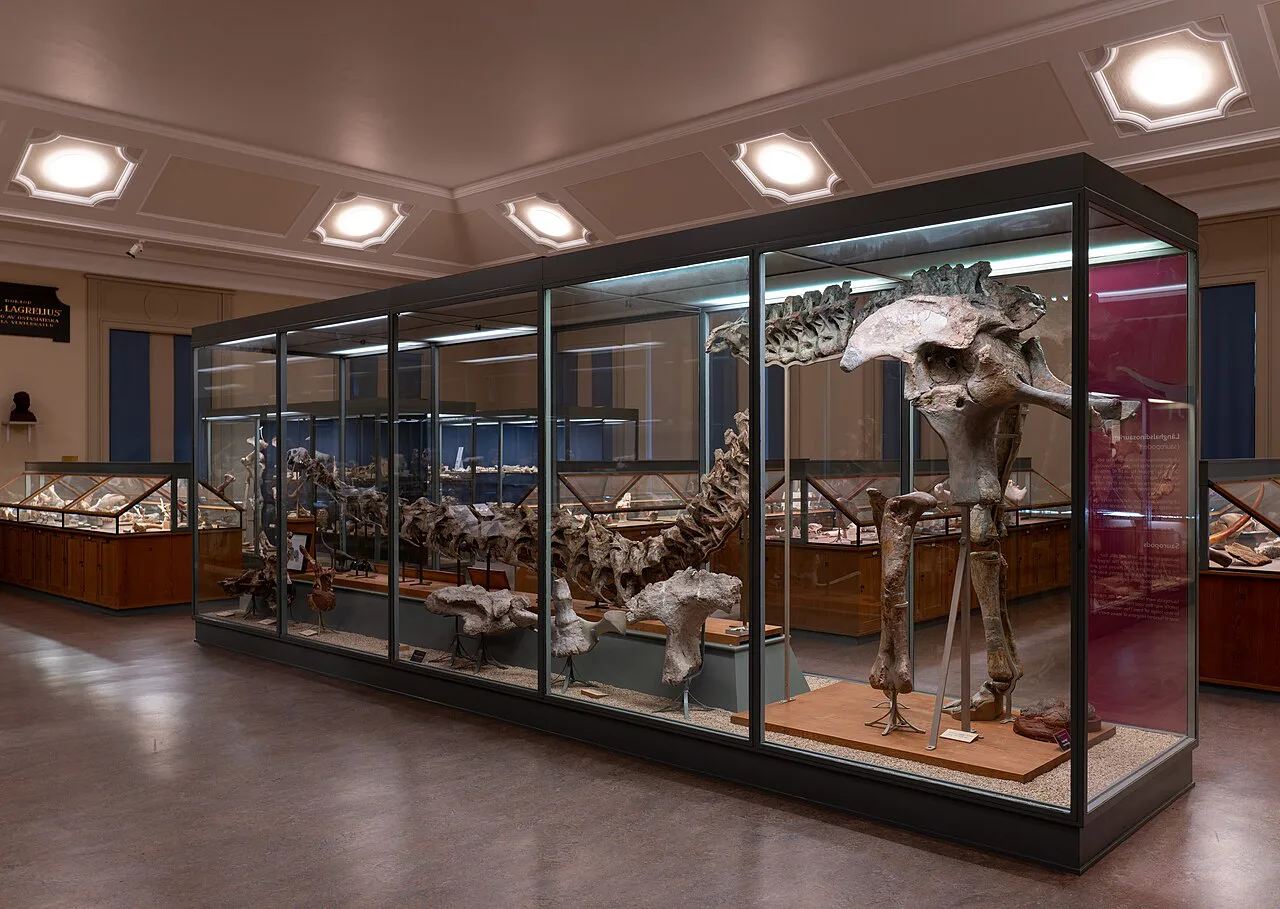
Start with the dinosaur skeletons if they are your reason for coming, then move to the mineral displays, which are the quiet highlight of the collection. The mounted animals round out the zoological side and suit anyone travelling with children.
The evolution displays work best read as a sequence, so follow them in order rather than dipping in and out. Labels and exhibition text carry the story; give them time and the specimens make more sense.
The fossil collections and their scale
The fossil material is the museum's scientific backbone, with a breadth reflected in a collection of around five million specimens across zoological and palaeontological material. Only part of a collection this size can be displayed, so read the exhibits as a selection rather than an inventory.
For anyone interested in palaeontology, the fossil displays are worth more time than the rest of the museum, and they pair well with the dinosaur skeletons in the same visit.
How much time to allow for both buildings
Allow a half day for both buildings at an unhurried pace, including the walk between them. If you have only an hour, pick one house and do it properly rather than rushing through both.
Families tend to spend longer with the animals and skeletons, while mineral enthusiasts linger over the display cases. Decide which of the three draws matters most to you and shape the visit around it.
Opening hours, tickets and booking
The museum's own pages are the place to confirm opening days, any seasonal changes and how tickets are sold before you travel, as these vary through the year. Check the university museum's site for the current arrangements rather than relying on older listings.
Some Uppsala university museums offer free entry and others charge, and the pattern differs between them, so confirm for this one specifically. Do not assume a city card covers it without checking the card's own list of included museums.
Nearby sights to pair with a museum visit
Gustavianum, Uppsala University's own museum, is the obvious companion and covers the university's history and collections, making a natural second stop.
Carolina Rediviva, the university library, is another university building worth a look, chiefly for its grand reading room and exhibitions.
For a change of pace, the Linnaeus Garden and Uppsala Botanical Garden are both green, central and tied to the university's scientific past.
If you want to round off the day with the city's main sights, Stora Torget and the cathedral area are a short walk away and easy to combine with a museum morning.
Is the Museum of Evolution worth half a day?
Yes, if you want dinosaurs and minerals in one place and can give it the time a two-building museum needs. Skip it if your Uppsala time is very short and you would rather see the cathedral and the river.
Pair it with Gustavianum or Carolina Rediviva for a university-focused day, or with the gardens if you want fresh air afterwards.