
Uppsala Botanical Garden: a visitor's guide to the Botaniska trädgården
Allow two to three hours at Uppsala Botanical Garden, and go on a day when the Tropical Greenhouse is open, because the glasshouse keeps its own set hours. The garden spreads across 14 hectares directly below Uppsala Castle. This guide covers what stands where, how to reach the Villavägen entrance, when the greenhouse opens and which sights sit within a short walk.
What the garden is and who runs it
Uppsala Botanical Garden is a working university garden rather than a municipal park, which explains both its scientific planting and its slightly institutional feel. The garden is closely associated with Carl Linnaeus, and its historic orangery, the Linneanum, remains its best-known building.
The Fyrisån runs through the centre of Uppsala, with the cathedral and the main university buildings on the river's western side and the castle rising behind them. The garden sits just beyond the castle on Villavägen, so it forms the natural end point of a walk uphill from the centre. If you want the wider set of sights around it, the Uppsala Attractions: 13 Visitor Guides page puts the garden alongside the city's other museums and historic buildings.


Where it is and how to get there
The garden is addressed on Villavägen, effectively opposite Uppsala Castle. On foot, the walk from Uppsala Cathedral takes roughly 20–25 minutes and climbs steadily, which is worth knowing if you are combining it with the cathedral in one morning. It is a pleasant route through the historic centre, but it is uphill.
Buses from Uppsala Centralstation serve stops near the garden, with the ride taking around 10–15 minutes to Slottsbacken or Botaniska trädgården, and anyone arriving from Stockholm by train has roughly a 40-minute journey before that bus connection. Treat those routes and timings as a planning guide and confirm them with the operator before you travel, since timetables change between seasons.

What to see outdoors
The outdoor garden mixes strict baroque geometry with a working collection, and the two read very differently. The formal baroque layout gives you straight lines and clipped edges, while the water garden and the rockery are looser, rockier compositions that reward a slower look, particularly in low evening light. The rockery holds alpine plants and is the most photogenic corner when the sun drops.
The standout structure is the Linneanum orangery, an eighteenth-century building funded by a donation from King Gustav III. Give it a proper pause rather than treating it as scenery on the way to the glasshouse.
In the warmer months the lawns work as picnic ground with the castle as a backdrop, and children get play and educational areas that explain plants interactively. The garden also hosts themed festivals and concerts at times through the season. Those events are the one thing worth checking before you set out, since a concert can change how much of the garden feels accessible.
The Tropical Greenhouse
The Tropical Greenhouse was built in the 1930s to house plants from around the world and now holds what Destination Uppsala calls Uppsala's only rainforest. It is the current glasshouse in the Botanical Garden, distinct from the older Linneanum orangery. Inside you walk among palms, banana plants, coffee trees and orchids, past vines, oversized leaves and carnivorous plants. On sunny days the calls of poison dart frogs carry through the planting.
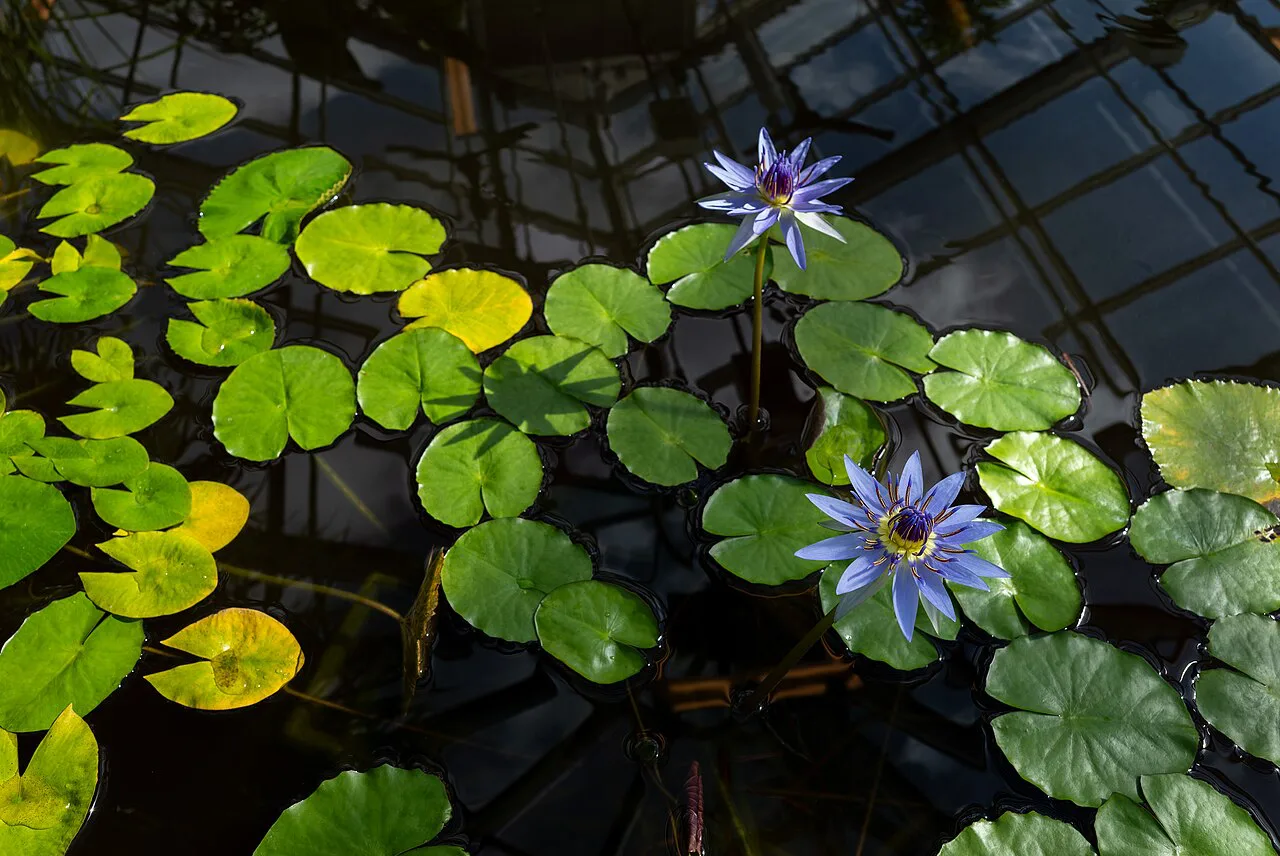
The largest single specimen is the giant water lily Victoria, whose leaves can reach two metres across, and it is the reason many visitors come. The glasshouse opens Tuesday to Friday 9.00–15.00 and Saturday to Sunday 11.00–15.00, and it is fully wheelchair accessible with accessible parking and a restroom. Its address is Villavägen 8.
Opening hours and when to go
Do not assume the greenhouse hours apply to the whole garden. The Tropical Greenhouse keeps the Tuesday–Friday and weekend pattern above, while the outdoor grounds have their own rhythm through the year. Plan the glasshouse for the middle of the day and leave the baroque parterre, rockery and water garden for the hours either side.
Late spring and summer give you the fullest experience: the collection is at its most vigorous, the lawns are usable and the outdoor planting is in season. Early autumn is quieter and the rockery still performs well in lowering light. Outside the warm months the glasshouse remains the main draw, so weight your visit towards it.
Tickets, tours and group visits
Group visits and tours need arranging in advance, so ask about them when you plan rather than arriving and hoping for a place.
Admission and tour prices are not something to guess at, so check the current fees before you budget. Ask about accessibility or group arrangements at the same time.
How long to allow
Two to three hours covers the glasshouse, the orangery and a full circuit of the outdoor beds without rushing. If you only want the Tropical Greenhouse and a look at the baroque parterre, an hour is enough. Families with children tend to need longer, so budget three hours plus and bring something to eat.
Pair the garden with the castle directly above it and you have a comfortable half-day rather than a full one. The uphill walk from the cathedral means it makes more sense as the second stop of a morning than the first. Build in slack if you are catching a guided tour, as the tour time sets the shape of your visit.
Nearby sights worth adding
The Linnaeus Garden on Svartbäcksgatan 27 B is a separate, smaller garden behind a planked fence in central Uppsala, and it is the one visitors most often confuse with the Botanical Garden. Both belong to Uppsala University, but the Linnaeus Garden holds Linnaeus's former professorial residence and the Linnaeus Museum, and it opens from the beginning of May to the end of September. During 2026 the garden and museum are open 14 May to 13 September, with Thursday to Sunday hours from 14 to 31 May and 1 to 13 September, Tuesday to Sunday in June to August, and pre-booked groups only from 1 to 13 May and 1 to 30 September. The garden is closed over winter while the museum takes pre-booked groups only, so check the arrangement for your own dates.
A few minutes uphill toward the castle, the Gustavianum, Uppsala University's museum of the history of science and medicine, gives context to the botanical collections and the university tradition behind them. The Carolina Rediviva, Uppsala University Library, sits just beyond it with its own exhibitions and manuscripts. Both fit neatly into the same day as the garden.
For a broader sweep of the city after the garden, the Museum of Evolution Uppsala (Evolutionsemuseet) and the Observatorieparken give you natural history and a green viewpoint respectively. The Museum of Evolution is the obvious next stop if the children enjoyed the greenhouse. If you are fleshing out the rest of the trip, things to do in Uppsala covers how these fit into a one or two-day plan.
Linnaeus' Hammarby lies outside the city and needs its own trip, so keep it for a separate day rather than trying to fold it into a garden morning. Within the city centre, Uppsala Cathedral and the university main building round out the historic core that sits between the station and the castle. Both are within the same uphill walk you take to reach Villavägen.
Is the Botanical Garden worth the uphill walk?
Yes, if you treat it as a half-day pairing with the castle and the cathedral rather than a standalone outing. The Tropical Greenhouse justifies the climb on its own, and the baroque parterre and the Linneanum orangery give the visit a shape beyond a pleasant stroll. Two to three hours is the right allowance, with more for families.
Time it for a day when the glasshouse is open, aim to arrive with slack for any guided tour, and check admission and ticket arrangements on the university's pages before you set out. The garden works best as the green finish to a city-centre circuit.
Explore more Uppsala guides
Frequently Asked Questions
Is the Uppsala Botanical Garden the same as the Linnaeus Garden?
No. The Botanical Garden is the 14-hectare site on Villavägen below Uppsala Castle, with the Linneanum orangery and the Tropical Greenhouse. The Linnaeus Garden is a separate, smaller historic garden on Svartbäcksgatan in central Uppsala, attached to Linnaeus's former home and the Linnaeus Museum. Both belong to Uppsala University, which is why they are often confused.
How much time should I set aside for the garden?
Two to three hours lets you see the Tropical Greenhouse, the orangery and the outdoor beds without hurrying. If you only want the glasshouse and a look at the baroque parterre, an hour covers it. Families usually do better with three hours because of the play areas and picnic lawns.