
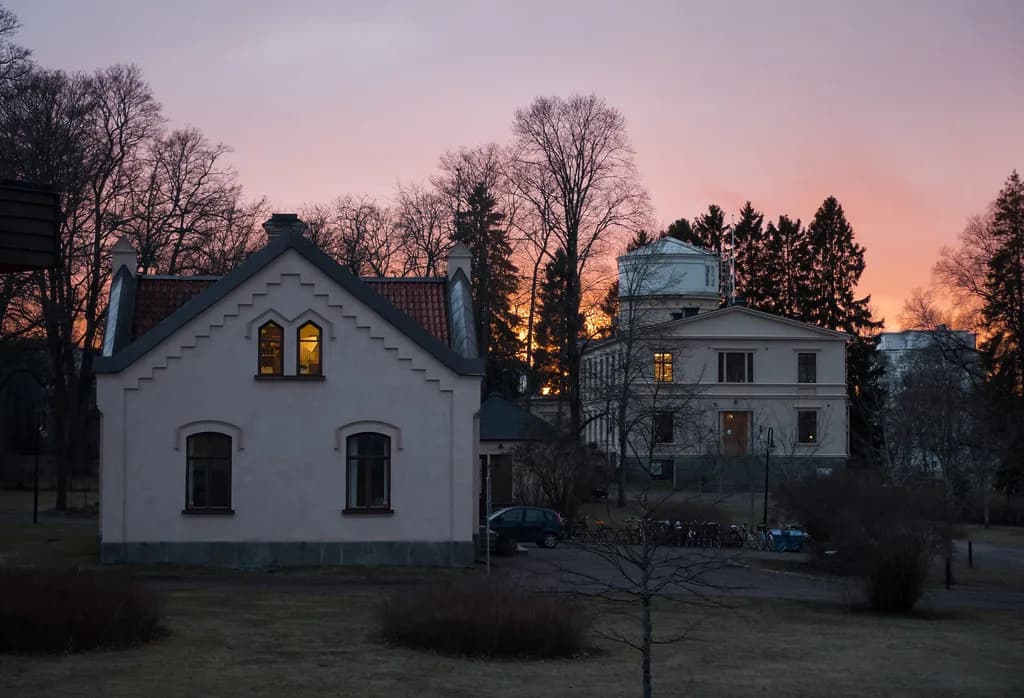
Observatorieparken Uppsala: What to See at the Observatory Park
Observatorieparken is not a ticketed sight but a pocket of green on Uppsala's ridge, sitting between Luthagen and Rackarberget and close to Ekonomikum, with central Uppsala a few minutes away by bike. Treat it as a short, quiet leg of a walking route rather than a half-day destination in its own right. This guide covers where the park sits, how to reach it from the historic centre, how long to allow, and the gardens and museums worth adding on the way back.
Where Observatorieparken sits on the Uppsala map
The park occupies the ground between the Luthagen neighbourhood and Rackarberget, close to both Ekonomikum and the adjoining Observatorieparken green space, with student housing buildings on its edge at Luthagsesplanaden. That places it north-west of the cathedral ridge, on the same side of the city as the university's economics campus. Use the ridge itself as your landmark: once you are walking uphill away from the river towards Luthagen, you are heading the right way.
Two food shops sit within walking distance of the neighbourhood, which makes the park an easy place to pause with a picnic rather than a detour that needs planning. The area is residential and student-heavy rather than monumental, so come for a breather between bigger sights rather than for architecture. It also works as a marker for how compact Uppsala is: the student nations and cultural life of the centre are only a short ride from here.
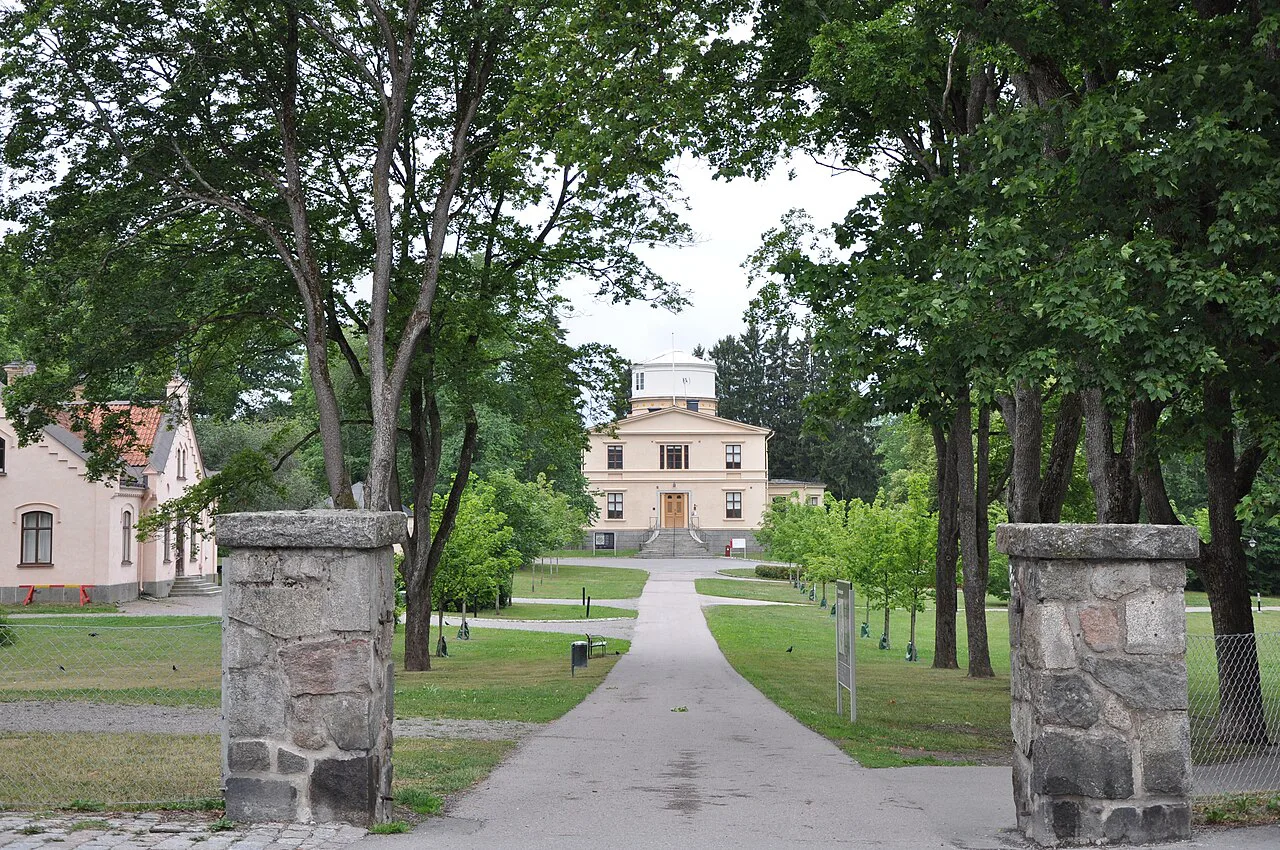

Getting there on foot or by bike
Cycling is the natural way to reach the park. From the cathedral and university quarter, head north-west across the river and up towards Luthagen; on a bike the centre, the student nations and the city's cultural life are all just minutes away. On foot, follow the ridge uphill from the river towards Luthagen.
The historic streets around the cathedral, the Fyris River and the alleys by the castle are the city's most walkable ground, so most visitors reach the park on foot without needing any transport at all. If you are combining the park with the riverside, walk the Fyris first and climb to the ridge afterwards.
What to see in the park
Expect mature trees, open grass and a ridge setting rather than formal beds or a visitor centre. The appeal is the position: you get a quiet, green counterpoint to the stone-and-brick centre, and a sense of how Uppsala's ridge shapes the city. Bring a picnic if the weather is kind, since the neighbourhood shops are close by.
Set your expectations accordingly. This is a neighbourhood park with a student backdrop, not a landscaped attraction with gates, guides or displays. If you want planted collections and labelled species, the city's garden sights are the better target and are covered below.
How long to allow
Twenty to thirty minutes is enough to walk the park and take in the ridge, and a full hour covers a slow loop plus a stop. It slots neatly into a half-day on foot that starts in the cathedral quarter, crosses the river and returns through Luthagen. Arriving without a plan is fine: there is a simple open route rather than a set circuit.
Nearby gardens for plant lovers
Uppsala's garden reputation rests largely on Carl Linnaeus, who studied, taught and lived in the city for almost fifty years. His legacy runs through the Linnaeus Garden, the Linnaeus Hammarby home and eight marked Linnaeus Trails over ridges, fields and riverbanks, where almost 350 of the species he displayed still grow. The trails are the closest thing to the park's own landscape on a grander scale, and they reward a half-day rather than a quick stop.
The Botanical Garden is the other obvious pairing, and it is at its best in summer, when thousands of plants are in leaf. It is one of Uppsala's most beloved attractions during the summer months, so a route taking in the park, the botanical grounds and the cathedral is realistic. Check the garden's own pages for seasonal opening before you build a day around it.
Nearby sights in the historic centre
Back on the ridge, Uppsala Cathedral is one of the city's most iconic landmarks, while Uppsala Castle nearby invites visitors to explore its past, visit the art museum and enjoy views over the city. Between them stands Gustavianum, the university's oldest preserved building and now one of Sweden's most absorbing museums. All three sit within a compact area, so they combine easily with the walk to and from the park.
Book lovers should add Carolina Rediviva, the university library, where the Codex Argenteus, known as the Silver Bible, is on display. It is a short step from the cathedral, making a natural end point to the loop rather than another uphill push.
For more ideas across the city, from the castle ridge to the river walks, the wider Uppsala Attractions: 13 Visitor Guides collection gives you the full set of places to slot around this route.

Practical points before you go
The park is a simple, open green space rather than a booked attraction, so treat it as a leg of a walk rather than a scheduled visit. Things nearby do vary: the Botanical Garden is a summer highlight, and museums and cathedral opening times change through the year, so confirm the day's times with each place before setting out. Sweden is largely cashless, so carry a card, and wear shoes you can walk uphill in.
Is Observatorieparken worth the walk?
Yes, if you are already heading to Luthagen or the Linnaeus sights, and no if you are counting sights. The park earns its place as a short breather on a ridge walk, best paired with the cathedral quarter, Gustavianum and one of the city's gardens. Build the day around those and let the park be the quiet stretch in between.
Explore more Uppsala guides
Frequently Asked Questions
Which part of Sweden is Uppsala in?
Uppsala sits in eastern central Sweden, inland from Stockholm and within reach of the Baltic coast. It is the seat of Sweden's oldest university.
Is Uppsala worth visiting for a city break?
It is, especially for a one or two-day stop built around the cathedral, the castle ridge, the university museums and the Linnaeus gardens. Observatorieparken adds a quiet green leg to that route rather than a headline sight of its own.
Do I need to plan ahead to visit Observatorieparken?
Treat it as a simple open green space you pass through on a ridge walk rather than a booked attraction. The museums and gardens nearby set their own entry arrangements, so check each one's own page before you go.