Swedish Traditions: What You'll See on a City Break
Swedish traditions for city-break travellers: fika, Midsummer, Valborg, crayfish parties, Lucia and lagom, and which ones your trip can realistically overlap.
On this page
Swedish traditions split into two groups that matter differently on a short trip: year-round customs such as fika and lagom that you will meet on any visit, and fixed celebrations such as Midsummer, Valborg, crayfish parties and Lucia that depend on when you travel. A one-to-four-day city break can comfortably absorb the everyday habits and at most one seasonal celebration, so the date you pick shapes everything. This guide covers what to look for, when each tradition falls and how the social register behind them works.
Visit Sweden treats Midsummer Eve as the country-closing celebration, which is the clearest signal that late June is not an ordinary week to arrive. Fika, by contrast, needs little planning: it is the regular pause for coffee and something baked that structures the Swedish day. Treat the seasonal items as dates to build a trip around and the everyday items as things you will stumble into.
What Swedish traditions are and how they show up on a short city break
The traditions a visitor actually encounters divide by frequency. Fika and the values of lagom and modesty appear every day, in cafés, offices and how strangers behave on the street. Midsummer, crayfish parties and Lucia each occupy a narrow window and dominate that window. Your job as a traveller is to decide which group you are chasing before you book.
That distinction matters because a two-day trip in February and a two-day trip in late June produce completely different experiences, even in the same city. The everyday customs reward short visits, while the seasonal ones are worth extending a trip for if the dates align. If you only have one celebration in you, pick the one whose season suits your tolerance for crowds and cold.
Fika: the everyday coffee-and-bun custom and how to do it properly
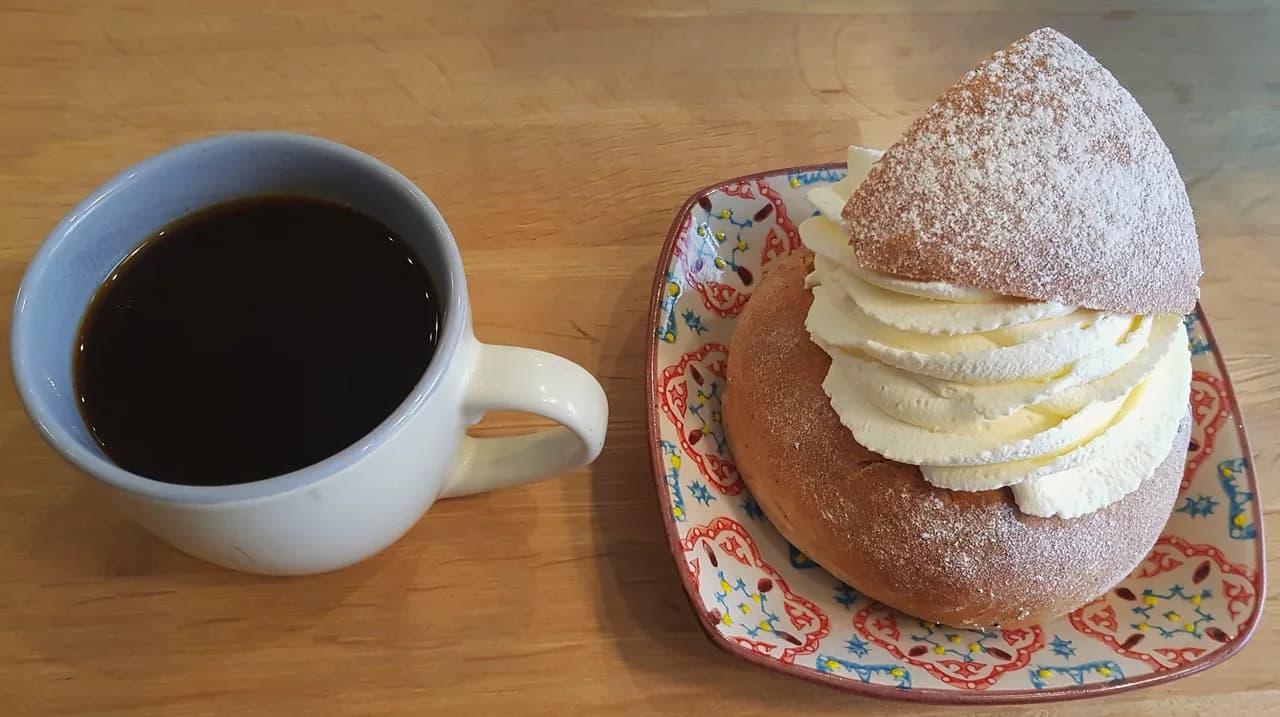
Fika is the Swedish habit of stopping for coffee and something baked. The culture guide behind this site reports that 82 per cent of Swedes drink coffee daily, averaging 3.2 cups, which tells you the custom is genuinely embedded rather than a tourist performance. To do it properly, take a seat rather than a takeaway cup, order a kanelbulle or similar baked good, and let the break run.
What are the main Swedish traditions a visitor will notice? The everyday ones are fika, the coffee and bun break, and lagom, the cultural preference for moderation. The seasonal ones are Midsummer in late June, crayfish parties at the end of summer and Lucia in December.
Can I join a Swedish celebration as a tourist? Public events such as Lucia processions and open-air Midsummer gatherings are staged to be watched, and public celebrations are open to attend. Private crayfish parties and family Christmases are harder to access.
The coffee itself is strong: the same culture guide warns first-timers that Swedish coffee is not a mild drink. If you are ordering a bun, kanelbullar are the standard fika order and the one item to try first.
Do not treat fika as a quick pit stop before the next museum. Sitting down is the point, and the break is as much social as nutritional. It also fits neatly into a city-break schedule: a fika in the late morning and another in the mid-afternoon, and the sightseeing day organises itself around them.
Midsummer: Midsummer Eve and the country-closing celebration in late June
Midsummer Eve is the celebration the country organises itself around, marking the longest day of the year in late June. Visit Sweden describes it as the big Swedish celebration alongside Christmas and Easter, which is the strongest signal that late June is a difficult week for ordinary sightseeing. Public celebrations tend to involve raised maypoles, dancing and outdoor gathering.
For a city-break traveller, the practical advice is to either embrace it or avoid it. If you want to join in, expect crowds and book transport early; if you want museums and quiet streets, choose another week. Forbes describes Midsummer as one of five must-know Swedish traditions, alongside a love of nature and lagom, which confirms how central it is.
Valborg and the spring bonfires
Valborg falls at the end of April, when Swedes mark the arrival of spring. The date is fixed by the calendar rather than by Easter, so it lands at the same point each year, and it is one of the seasonal events a short trip can be planned around. Its spring timing makes it distinct from the summer celebrations.
Valborg events are organised locally rather than centrally, so check what is running in the city you are visiting before you set out. Late April evenings in Sweden are cold once the sun drops, even when the day has been mild, so wrap up warmly. If you are in a park or open area, take your litter home.
Crayfish parties at the end of summer
Kräftskiva, the Swedish crayfish party, happens at the end of summer and is one of the most social traditions on the calendar. Forbes lists summer crayfish parties alongside fika and Midsummer as a must-know tradition, which shows how seriously Swedes take an evening of crayfish. The season is short and the parties are usually private, so a visitor is more likely to encounter the atmosphere in restaurants and markets than to be invited to one.
If you travel in late August, look out for crayfish on menus and in shop displays; it is a clear seasonal marker even if you are not attending a party. Drinking is part of the event, and the culture guide reports that 86 per cent of Swedes find alcohol and socialising intertwined, so expect a convivial evening rather than a quiet meal. This site does not cover restaurant recommendations, so treat the crayfish itself as the thing to look for.
Lucia in December and the procession of lights
Lucia falls in December and is marked by processions of white-clad singers carrying candles and singing the Lucia song. Visit Sweden lists it among the traditions worth knowing, and it is the winter custom that a December city break can realistically overlap. The procession is usually staged in churches, schools and public squares, and it is a public spectacle you can watch.
The exact date varies by organiser, so check local listings for the city you are visiting rather than assuming a fixed day. December is dark in Sweden, which is precisely why a candlelit procession lands so well: it is a tradition built around light rather than spectacle. Arrive early at public events, since the most popular processions draw a crowd.
Christmas, Easter and the rest of the Swedish holiday calendar
Christmas and Easter are the two other holidays Visit Sweden names alongside Midsummer as the country's main celebrations. Swedish Christmas is an intensely family occasion, with much of the celebrating happening at home, and Easter follows a similar pattern of private gatherings rather than public events. Many Swedish celebrations are also outdoor or countryside-based.
For planning purposes, the pattern to internalise is that Sweden concentrates its celebrations into a handful of narrow windows. A city break that avoids those windows gets quiet museums and open streets; one that hits them gets atmosphere but also closures and crowds. Decide which you want before you book, and treat the holiday calendar as the first filter, not the last.
Lagom, modesty and the social rules behind the traditions
Lagom, roughly meaning just the right amount, is the value that sits behind much of Swedish behaviour. Hej Sweden links it to jantelagen and describes Swedes as modest, restrained and conflict-averse in public, which explains why celebrations feel calm and orderly rather than loud. Understanding this register is more useful to a visitor than memorising dates, because it tells you how to behave once you are there.
The same culture guide gives concrete rules worth following: address people by first name, keep a little more distance in queues than you might at home, avoid arguing in public, and steer small talk away from politics, religion and alcohol. It also notes that Swedes rarely do small talk at all, so a brief exchange about the weather or weekend plans is plenty. These are cultural tendencies rather than laws, but they shape how traditions are celebrated.
Swedish design is often read through the same lens of restraint and function, which makes a design museum a useful companion to the social side of a trip. If you want to see the aesthetic that lagom produces, spend an afternoon in one.
How to join a public celebration in Stockholm or Gothenburg
The safest way in is to attend a public event rather than a private one: bonfires at Valborg, processions at Lucia and open-air Midsummer gatherings are all designed to be watched. Turn up, watch, and do not try to join a family group's picnic uninvited. Swedes are welcoming in a reserved way, and respecting the boundary is what makes you welcome.
In Gothenburg, known to Swedes as Göteborg, the same public-events principle applies, so check what the city is staging in the week you are there. The culture guide's point about queue distance and avoiding political or religious small talk matters most at crowded public events, where a little space goes a long way. When you walk out of town to a gathering in open country, the right of public access lets you cross land and stop for a break, so long as you leave no trace.
The practical side: planning around the Swedish holiday calendar
Plan the trip around the calendar rather than the other way round. This matters most at seasonal events, which sit on fixed dates and can be the difference between a city that is open and one that is shut. Pick the dates first, then check what is running in the city you are visiting.
Planning around the calendar is the single biggest lever on a short Swedish trip. Decide whether you want an everyday visit built around fika and lagom, or a seasonal one built around Midsummer, crayfish or Lucia, and pick your dates accordingly. Then check local listings for the specific city, since public events vary from place to place even when the tradition is national.
Which tradition should you plan your trip around?
If your priority is joining a celebration rather than just seeing a city, plan around Midsummer or a crayfish party, the seasonal events with the clearest public profile. If you want a low-effort visit with everyday atmosphere, any month works, because fika and lagom are always present. December travellers get Lucia as a bonus, provided they check local listings rather than assuming a fixed date.
Whichever you choose, build the trip around one tradition rather than trying to catch several, since the windows are narrow and Midsummer in particular is a country-closing celebration. Then let the everyday customs, starting with fika, fill the rest of the days. For more, see Swedish Cinnamon Buns.
Explore more Sweden guides
Frequently Asked Questions
What are the main Swedish traditions a visitor will notice?
The everyday ones are fika, the coffee and bun break, and lagom, the cultural preference for moderation. The seasonal ones are Midsummer in late June, crayfish parties at the end of summer and Lucia in December. Valborg falls at the end of April, and Christmas and Easter are the two other main holidays.
Can I join a Swedish celebration as a tourist?
Public events such as Lucia processions and open-air Midsummer gatherings are staged to be watched, and public celebrations are open to attend. Private crayfish parties and family Christmases are harder to access. Check local listings for the city you are visiting to see what is being staged during your dates.
Sources
Notes for your next Swedish city break
Optional updates to our Sweden guides.
You might also like
Continue reading
More guides you'll find useful