Dala Horse: What It Is, Its History and Where to Buy One
What the Dala horse is, where it comes from and how the 1939 New York World's Fair made it famous, plus practical pointers for picking one on a Swedish city break.
On this page
A Dala horse is a carved, painted wooden horse from the Swedish province of Dalarna, and it is one of the souvenirs most travellers end up carrying home. This guide covers what the horse is, how the Dalarna workshops shaped it, why a giant horse at the 1939 New York World's Fair helped turn it into a national symbol, and where to look for one on a Swedish city break.
What a Dala horse is and what it symbolises
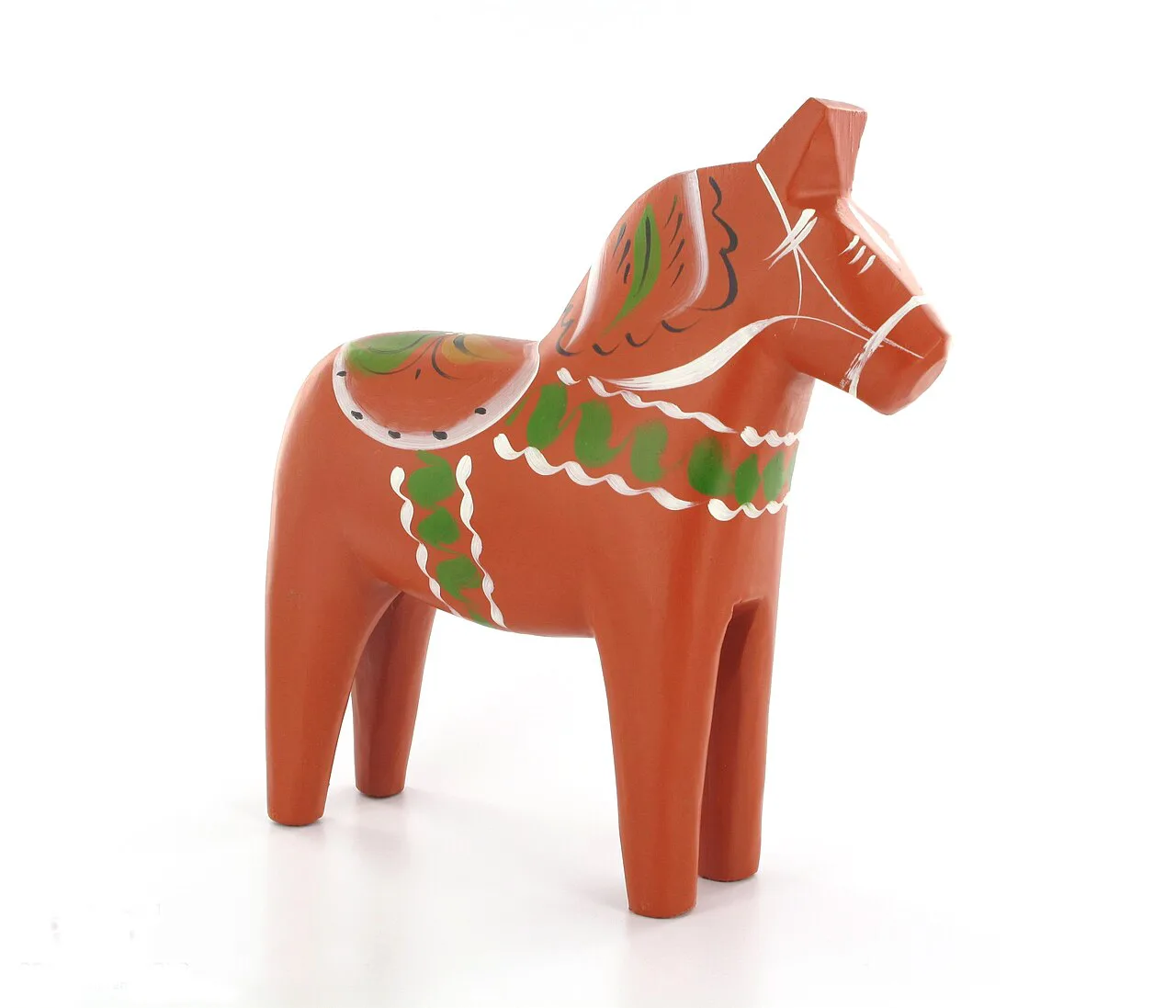
The Dala horse, or dalahäst, is a traditional carved and painted wooden statuette of a horse that originated in Dalarna, in central Sweden. Its stylised shape, thick legs and curved neck make it recognisable at a glance, and the painted flower patterns on its body echo the furniture and wall painting of the region. It is now treated as an authentic symbol of Sweden. Treat it as an emblem of Swedish folk craft; the historical record cited here does not establish any older religious meaning.
Where the Dala horse comes from: Dalarna and the forest workshops
Small wooden horses were being sold at markets in Dalarna's towns and villages in the 17th century, which is the earliest form of the craft described in the historical record. A century later, men working in the forests carved horses during long winter evenings and brought them back to the villages for children to play with. Travelling salesmen who dealt in household goods also carried dalahästar and used them as payment for board and lodging, and the carving became a source of income for poorer families. Children learned to carve after school, so the horse was a household craft before it was a souvenir.
Is the Dala horse pagan? The historical record cited here traces the Dala horse from a carved wooden toy sold at Dalarna markets to a painted folk craft and, later, a national symbol; it does not give the horse a religious meaning. Treat the pagan question as folklore rather than an established fact, and enjoy the horse as a piece of Swedish craft.
Can I buy a Dala horse outside Sweden? Yes. Some specialist retailers abroad stock Dala horses made in Dalarna, so you can often buy one without visiting Sweden.
How painting changed the simple wooden horse
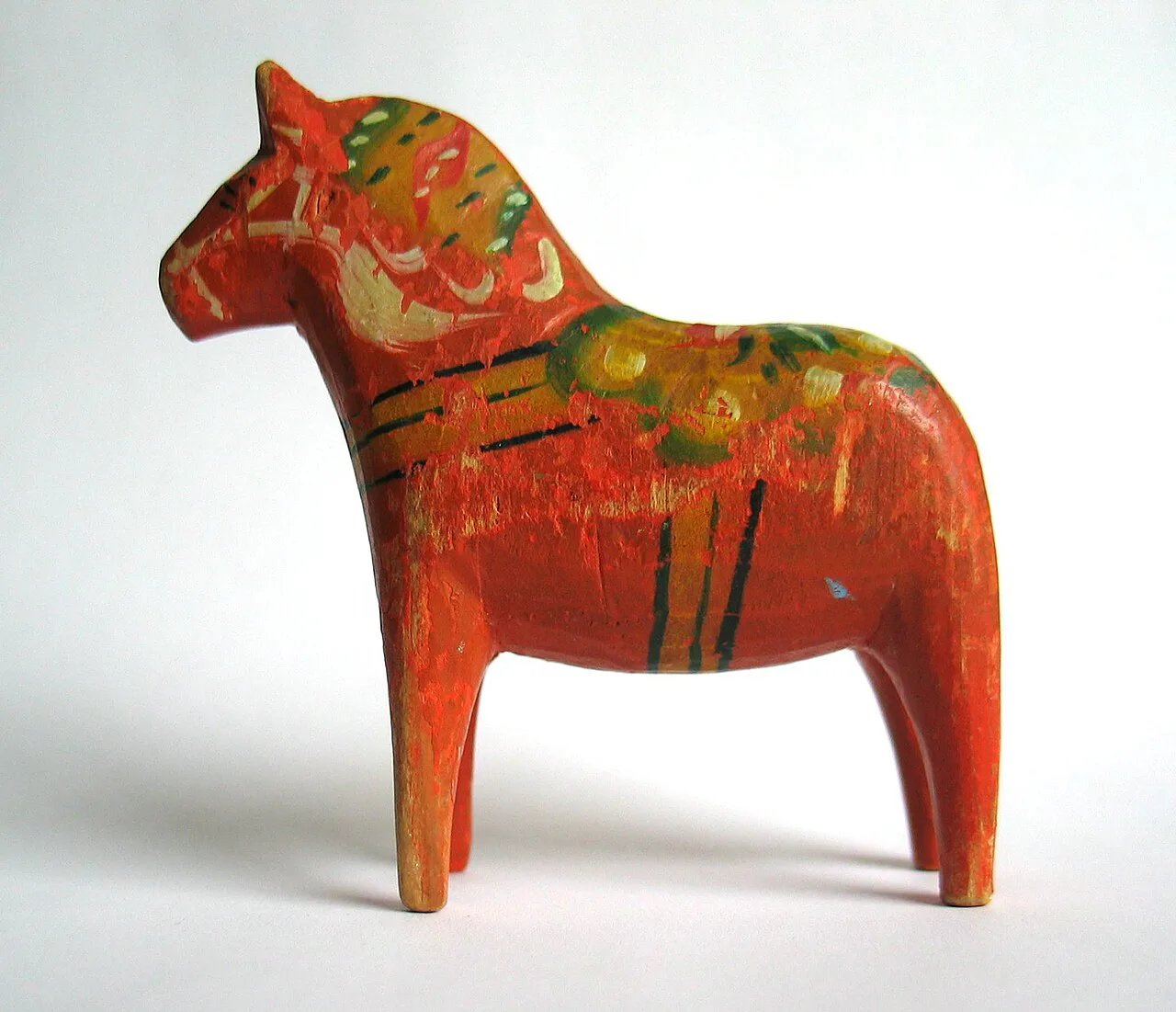
The earliest horses were plain wood, and the bright colours came later, inspired by the flower patterns painted on furniture and walls in Dalarna. That is the moment the horse moved from a child's toy to a decorated object worth keeping. Painted decoration is what gives a Dala horse its character, so look closely at the pattern on the body and saddle before you pay.
How a giant horse at the 1939 New York World's Fair made it famous
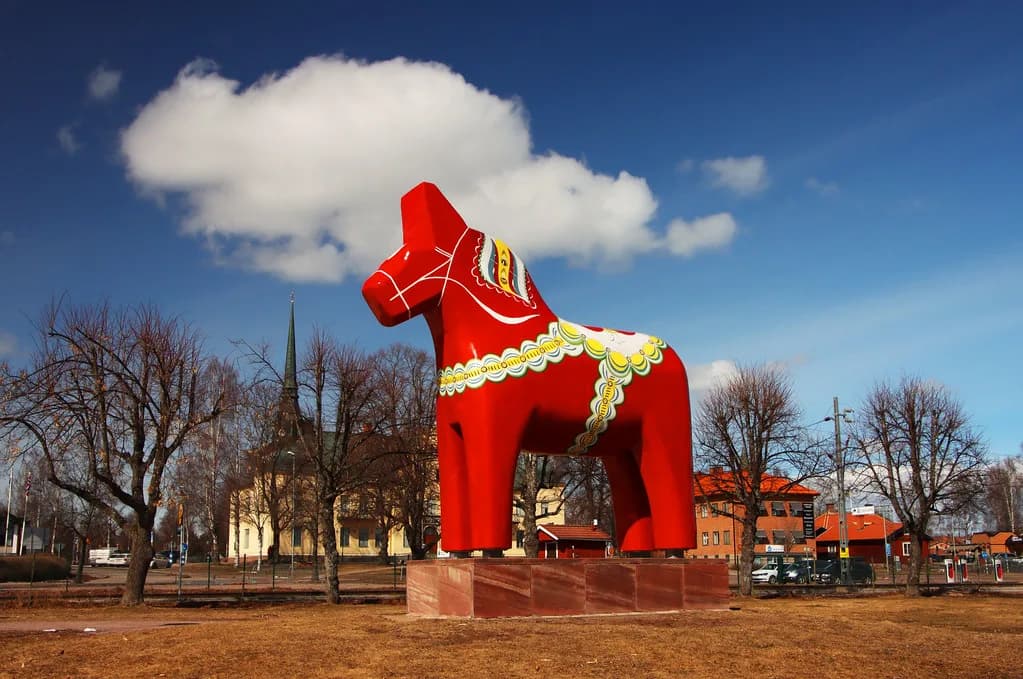
The Dala horse became known around the world at the 1939 New York World's Fair, where a giant painted horse stood outside the Swedish pavilion and caused a sensation among visitors. In the year after the exhibition, 20,000 Dala horses were shipped to New York, and the Swedish Dala horse became a symbol of Sweden. That is history rather than a figure for current production, but it explains why the horse appears on Swedish calendars, tea towels and shop signs today.
Carving and painting today: Nusnäs workshops
The best-known family story in the trade begins in 1928, when two siblings aged 13 and 15 started a small business; their children and grandchildren still produce Dala horses in the village of Nusnäs in Dalarna. If you only have a city break, look for Nusnäs-made horses in Swedish craft and souvenir shops instead of travelling to Dalarna.
Why Dala horses cost what they do
Each workshop and shop sets its own price, so treat any figure as a rough guide rather than a fixed one. Compare the carving, the painting and the weight of the wood rather than the pricetag alone.
How to recognise a genuine carved horse against a cheaper souvenir
Part of the point of buying a Dala horse in person is that you can look closely before you pay. Check the surface for brushwork and variation in the painted pattern, and turn the horse over to look at the base. Ask where it was made, and favour a shop that can name the workshop behind the horse.
Where to buy a Dala horse in Sweden
Swedish souvenir shops and craft shops in the larger cities are the obvious places to look, and the smallest painted horses make good gifts without weighing down hand luggage. For the full choice, including the larger painted pieces, head to Nusnäs in Dalarna, the village where the best-known family workshop is still producing horses. In a city break, a craft shop is a better bet than an airport kiosk, and buying from a shop that can name the workshop behind the horse is the simplest way to be sure what you are buying. If you are combining shopping with coffee, plan the stop around Fika: The Swedish Coffee Break Explained for Visitors, and leave room in your bag for the horse.
What size and colour to choose
The horse comes in a range of painted versions, so pick a colour that fits your home rather than guessing at symbolism. A small horse fits in hand luggage and on a shelf; a larger one makes a statement but needs careful packing and a bigger budget. If you are choosing between two horses of similar price, take the one whose painting you would happily look at every day. If luggage is tight, buy a small hand-carved horse and a bag of Swedish Cinnamon Buns for the journey home instead.
Bringing a Dala horse home from a city break
A carved wooden horse is solid and unlikely to break in a suitcase if you wrap it in clothing, which makes it one of the more practical souvenirs to bring home. Buy it early in the trip rather than at the airport, when you have time to compare carving and painting in a proper shop. Buy small if you are flying with hand luggage only, and buy a larger painted horse only if you have checked baggage.
Buy the horse you will actually keep
A Dala horse is worth buying if you want a Swedish keepsake that lasts; skip it if you only want a cheap fridge magnet. Spend more on a carefully carved and painted horse and less on the printed copies that fill airport shelves, and let the brushwork decide. Buy early in your city break, wrap it well and keep it small if luggage space is short.
Explore more Sweden guides
Frequently Asked Questions
Is the Dala horse pagan?
The historical record cited here traces the Dala horse from a carved wooden toy sold at Dalarna markets to a painted folk craft and, later, a national symbol; it does not give the horse a religious meaning. Treat the pagan question as folklore rather than an established fact, and enjoy the horse as a piece of Swedish craft.
Can I buy a Dala horse outside Sweden?
Yes. Some specialist retailers abroad stock Dala horses made in Dalarna, so you can often buy one without visiting Sweden. If you are visiting Sweden, a craft shop in Stockholm or Gothenburg gives you the chance to compare the carving and painting in person before you buy.
Sources
Notes for your next Swedish city break
Optional updates to our Sweden guides.
You might also like
Continue reading
More guides you'll find useful