One Day in Gothenburg: A Realistic Day Trip Itinerary
Plan one day in Gothenburg with a walking route through Götaplatsen, Avenyn, Haga and Skansen Kronan, plus a fika stop and honest timing trade-offs.
On this page
One day in Gothenburg is enough for the compact centre on foot: Götaplatsen, Avenyn, Haga, the canal and Skansen Kronan fit into a single unhurried loop. What it does not buy you is both a proper museum afternoon and a trip out to the Southern Archipelago, so this route forces that choice rather than pretending you can have everything.
The plan below runs roughly west to east across the middle of the city, starting at the top of Avenyn and finishing by the water. It assumes you walk most of it, with trams as a shortcut if the day slips. If you are still weighing up how to split your time across a longer stay, the wider Gothenburg itinerary covers the multi-day version of these same districts.
What one day in Gothenburg realistically covers
Göteborg is Sweden's second city, built on both sides of the Göta Älv where the river meets the Kattegatt, and its port is the largest in the Nordic countries. That geography matters for planning: the sights visitors come for cluster in a walkable middle, while the archipelago and the outer districts sit beyond it. A single day works best as a tight centre loop of roughly four to five kilometres with a couple of proper pauses.
Two practical notes set the tone for the day. Card payment is standard across the city, from tram tickets to a supermarket snack, so budget in kronor on the assumption that you tap rather than carry cash. And the walking is gentle but constant, so shoes matter more than any timetable.
Start at Götaplatsen and Avenyn
Begin at Götaplatsen, the square at the top of Avenyn, where the Poseidon statue presides over the city's main cultural address. From there you walk downhill along Avenyn, Gothenburg's principal boulevard, which carries you in a straight line towards the canal and the centre. It is the simplest orientation in the city: one square, one street, one direction.
Give this stretch half an hour if you are brisk and an hour if you stop. The Gothenburg Museum of Art sits at the Götaplatsen end, so if you already know the weather will turn, this is the moment to decide whether to come back for it later rather than pressing on.
Haga Nygata: the old neighbourhood and a fika stop
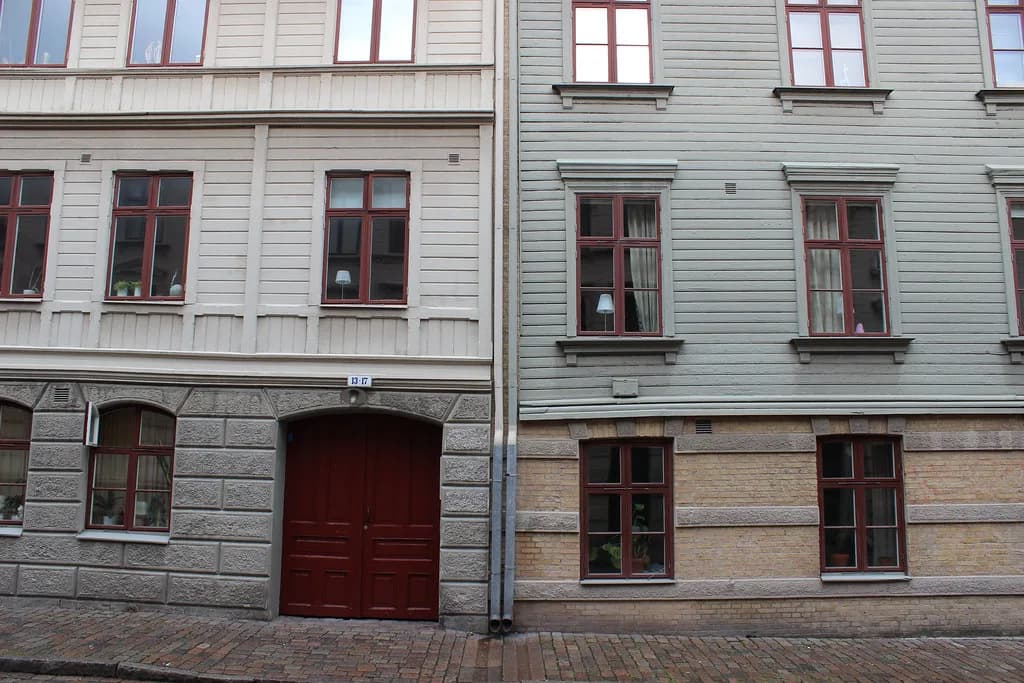
Turn off Avenyn towards Haga, one of Gothenburg's oldest neighbourhoods, where the pedestrian Haga Nygata is lined with independent shops and cafés. This is the natural place for fika, the Swedish coffee-and-pastry pause, and Café Husaren on Haga Nygata is the named stop for it. Order the oversized cinnamon bun as a shared novelty rather than a solo challenge; it is about as round as a dinner plate.
Budget 45 to 60 minutes for Haga including the fika, and treat the pastry as a small meal rather than a snack. If keeping costs down matters more than the café stop, a supermarket picnic eaten on a bench here works just as well; the Gothenburg on a budget guide sets out where the savings actually land.
The canal, Lejontrappan and Feskekôrka
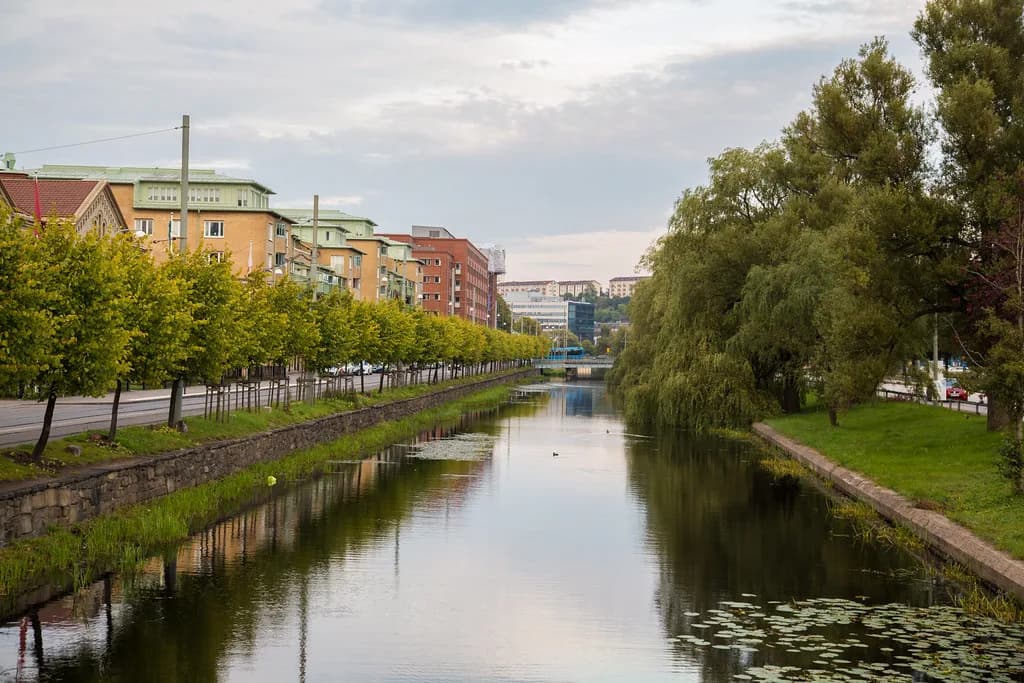
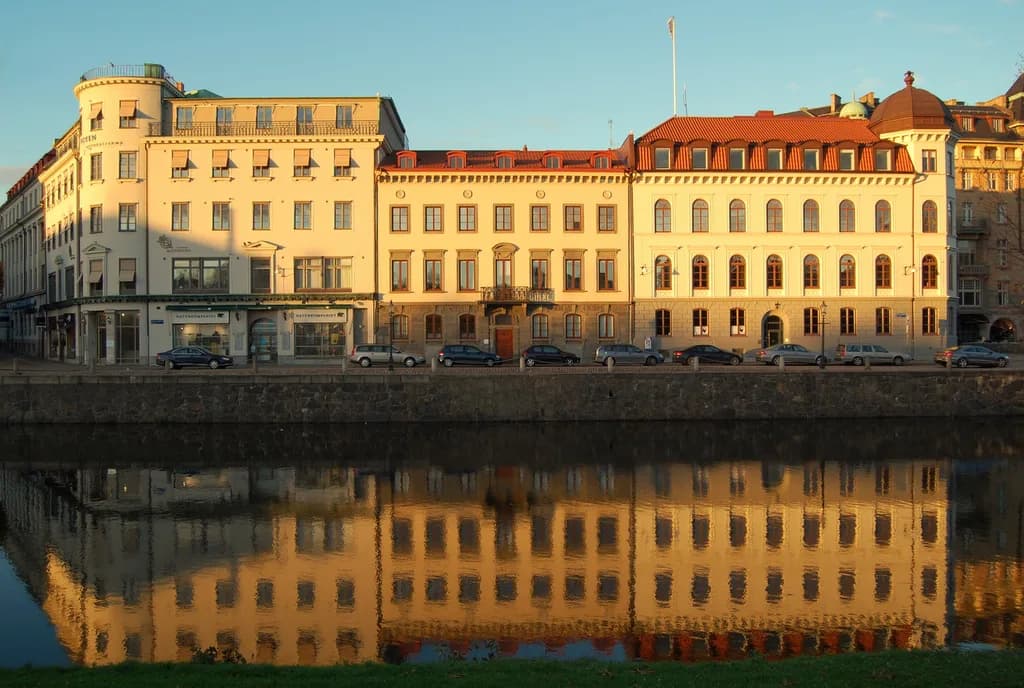
Drop down from Haga to Stora Hamkanalen, the canal that cuts through the centre, and find Lejontrappan, the stepped flight beside the water. It is a short stop, but the canal edge is where Gothenburg looks most like itself, with the water framed by low bridges and old facades.
Carry on to Feskekôrka, the fish market nicknamed the Fish Church for its church-like outline, which sits a few minutes' walk from the canal. It is a building to look at and step into rather than a long visit. From here you can continue along the water towards the centre.
If you want the city from the water instead of the pavement, Stromma runs a Paddan canal cruise of about 50 minutes, with departures every 30 to 60 minutes, listed from around 11:00 to 17:00. It eats most of an hour of your day, so take it in place of a museum rather than on top of one.
Saluhallen and Domkyrkan in the city centre
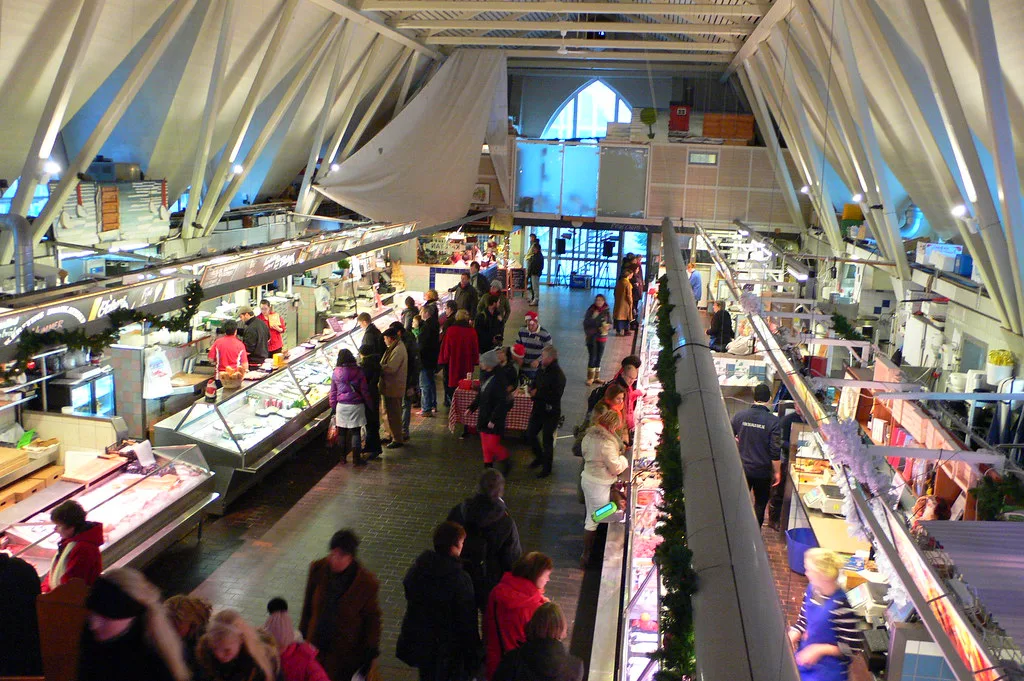
Head inland to Saluhallen, the market hall, where the food counters make an obvious lunch stop without committing you to a full restaurant sitting. Domkyrkan, Gothenburg Cathedral, is a short walk away and gives you a quiet interior and a sense of the city's older core. Both are quick visits that fit neatly between the canal and the next climb.
This is the point in the day where you choose your afternoon. Either you stay in the centre for a museum, or you push out to Slottsskogen and the green west side. Doing both, plus the archipelago, is not realistic before evening.
Skansen Kronan for the view over Haga
Climb to Skansen Kronan, the old fortification on the ridge above Haga, for the view back over the rooftops. The walk up is short but steep, and it is the best payoff in the centre of the city for the effort. Time it for late morning or late afternoon when the light is kinder and the steps are quieter.
From the top you can see how compact the day has been: Haga, the canal and the centre all sit within a few minutes of each other. That is also the argument for not overloading the schedule with transport.
Lunch and how to keep costs down
Swedish transactions run on card, so your budget is whatever you tap rather than what is in your wallet. That makes it easy to overspend on small purchases across a day, and worth setting a rough kronor ceiling before you start. The is Gothenburg expensive guide works through what a short break actually costs.
For lunch, the market hall counters let you eat well without a long sitting, and a picnic from a supermarket is cheaper still. Either way, keep the meal short: an hour at the table is an hour not spent on the ridge or the water.
Afternoon options: a museum, Slottsskogen or the archipelago
The green option is Slottsskogen, Gothenburg's main park, with walking paths, the Natural History Museum and a children's zoo inside it. Next door is the Gothenburg Botanical Garden, one of the largest in Europe, which is free to enter with a small charge for the greenhouses. That pairing alone can absorb a whole afternoon.
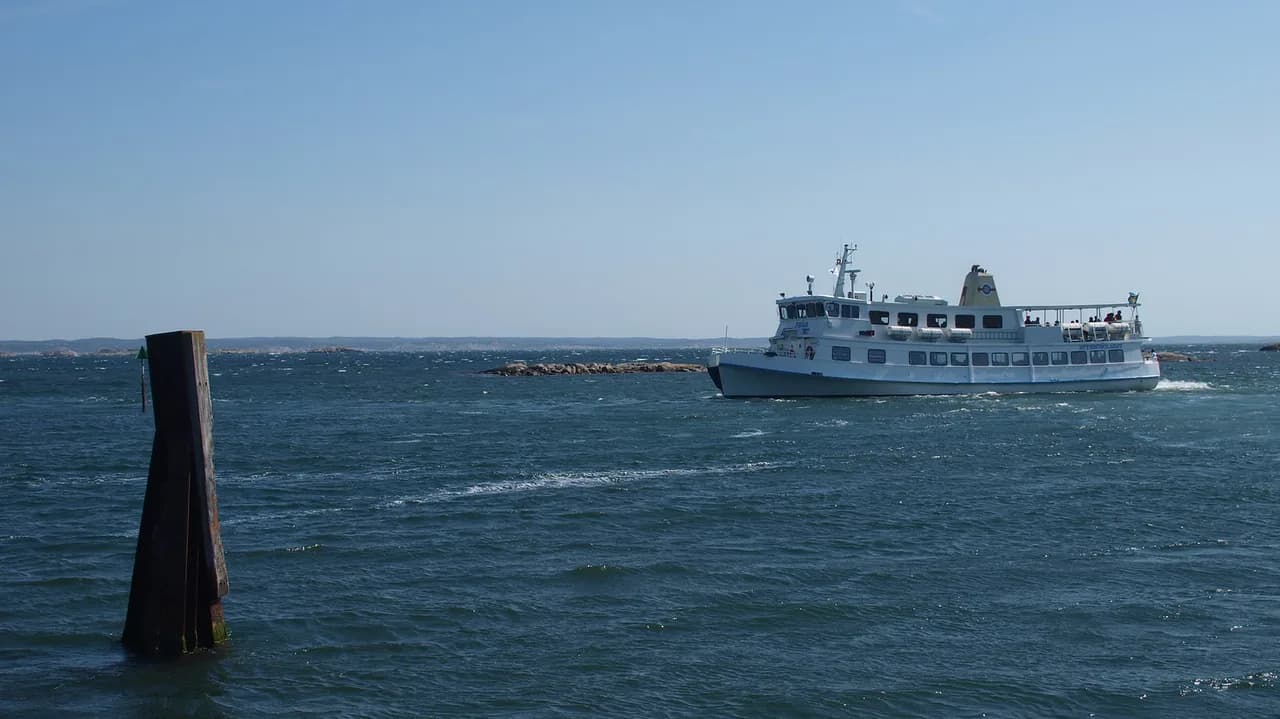
The water option is the Southern Archipelago, the island chain that is Gothenburg's signature escape. It is a half-day commitment rather than a quick detour, and it is the first thing to cut if you are working with a single day and want the centre done properly.
If you are wondering whether one day is the right length at all, the honest answer is that Gothenburg rewards two. The how many days in Gothenburg breakdown sets out what a second day adds and what a third is really for.
Which museum to pick if it rains
For a wet afternoon, the choice comes down to what you want from an hour or two indoors. Universeum is the science centre and the obvious pick with children, while the Gothenburg Museum of Art at Götaplatsen suits a quieter, more adult hour. The Göteborg City Museum and the Röhsska Museum of Fashion, Design and Decorative Arts are the other close-in options if you have already seen the big two.
Pick one and commit; trying to fit two museums into a rainy afternoon leaves you rushing both. Check each venue's own site for the day's opening before you set out, since hours vary through the year.
Evening: a last walk along the water
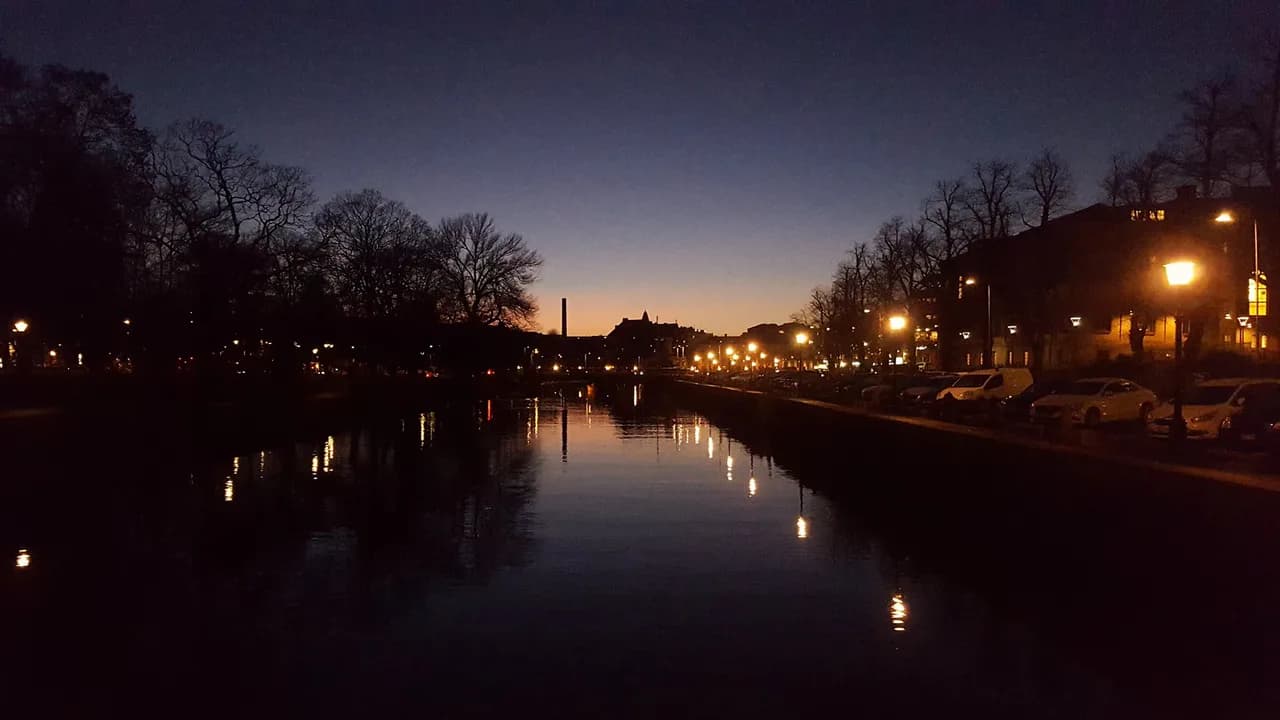
Close the day with a slow walk back along the canal and the waterfront, when the light softens and the city empties a little. It costs nothing and stitches the day together after a museum or an archipelago run. If you have energy left, the ridge above Haga is a fine last look before dinner.
One day versus two: what you miss
One day in Gothenburg gives you Götaplatsen, Avenyn, Haga, the canal, Feskekôrka, Saluhallen, Domkyrkan and Skansen Kronan at an easy pace, with time for one museum or one archipelago trip. What it leaves out is everything on the second layer: a second museum, a proper afternoon in Slottsskogen, and any real exploration of the islands.
If you are deciding whether the city justifies the flight at all, the is Gothenburg worth visiting piece weighs what it does well against what it does not. For a first-timer weighing two Swedish cities, the Gothenburg vs Stockholm comparison is the more useful read before you book.
Should you give Gothenburg the day, or the weekend?
If your trip is a single day, this loop is the right shape: start high on Avenyn, eat and wander in Haga, follow the canal, and finish on the ridge or by the water. Accept that you are choosing between the museums and the archipelago rather than seeing both.
If you can stretch to two days, the city opens up considerably, and the Gothenburg city break guide shows how to use the extra time. Arriving via Landvetter Airport also adds a transfer to the front of your day, so plan that leg before you commit to a tight schedule.
Explore more Gothenburg guides
Sources
Notes for your next Swedish city break
Optional updates to our Sweden guides.
You might also like
Continue reading
More guides you'll find useful