Swedish Souvenirs Worth Buying: Dala Horses, Glass and Design
Swedish souvenirs worth buying, from Dala horses and crystal to polkagris and spruce balm, with notes on what lasts and where to find it in Sweden.
On this page
The souvenirs worth buying in Sweden carry a maker's name: painted wooden horses, crystal from Orrefors, Kosta Boda or Målerås, striped polkagris from Gränna, and small tins of spruce balm sold in museum shops. This guide works through each category with an honest note on weight, fragility and whether the thing will still look good in five years.
Packing space is the real constraint on a city break, so buy as if your suitcase has to close: one substantial piece beats five small ones. If you are still shaping the trip itself, the [Sweden itinerary](/sweden-itinerary) lays out how the cities connect before you start shopping.
What Swedish souvenirs are actually worth buying
Sort purchases by how they travel rather than how they look on the shelf. Textiles, wooden kitchenware and tinned balm pack flat and survive checked baggage; glass and crystal need protection or a carry-on bag.
Buy from the person who made the object where you can. Handmade crafts in Sweden are designed and made by local artists, so buying directly from them keeps the money in the local economy instead of going to a souvenir chain — a better reason to pay a premium than a logo on a mug.
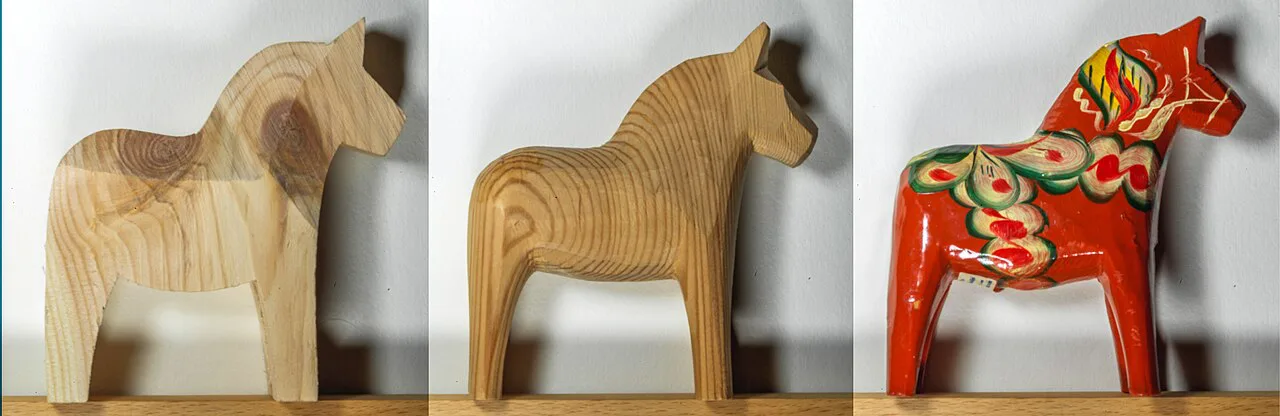
The painted Dala horse is the safe default gift and is stocked widely in Sweden. Treat it as the present you buy for other people and spend your own money on something you chose for its look rather than its label.
Dala horses and painted wooden crafts
The Dala horse says Sweden without a caption, and it comes in sizes from thumb-sized to mantelpiece. A small painted horse is light, unbreakable and easy to wrap, which makes it the lowest-risk gift on this list; check the paintwork at the edges and the base before you pay.
What is a famous Swedish brand to look for? For glass and crystal, look for Orrefors, Kosta Boda and Målerås, the three major Swedish crystal manufacturers. Their pieces appear in shops and glassworks, and a signed piece is easier to trace back to its maker than an unbranded one.
Is polkagris a Christmas sweet? No. Polkagris is a peppermint candy cane eaten for special occasions rather than as a seasonal treat.
Can I bring Swedish food and sweets home? Packaged sweets such as polkagris travel well, but import rules for food and tobacco differ by country, so check your own government's guidance before buying in bulk. Keep receipts for anything you declare at customs.
Painted wooden crafts sit alongside carved kitchen utensils and decorative objects. Swedish makers are good with wood, and the tradition runs from everyday spoons and boards to pieces you hang on a wall, with the maker usually named on the label in craft and museum shops.
Crystal and glassware from Orrefors, Kosta Boda and Målerås
Sweden's three major crystal manufacturers are Orrefors, Kosta Boda and Målerås, and their bowls, vases and glasses are the classic high-value buy. A single signed piece makes a better souvenir than a set of tumblers, because it survives the trip as an object rather than as luggage weight. Ask the shop to wrap it in bubble wrap and double-box it if you plan to check it in.
If you want something more individual, go to a glass artist's studio rather than a department store. Smaller glass workshops are increasingly working with recycled Swedish glass, and the pieces are often one-off. The trade-off is that studio pieces vary in shape and finish, so buy the one in front of you rather than ordering from a photo.
Crystal is heavy, and glass is the item most likely to break on the way home. Carry a small piece in hand luggage where the airline allows it, or leave the large vase for a maker that ships. If you are still choosing between cities, the [best cities in Sweden](/best-cities-in-sweden) guide helps you pick a base with the craft shops you actually want.
Handmade wooden kitchenware and everyday crafts
Wooden spoons, boards and bowls are the most useful thing you can bring back from Sweden, and they take a fraction of the space that glass demands. Handmade wooden utensils are made for daily use rather than display, so a slightly uneven grain is a sign of hand work, not a fault; wash them by hand and oil them occasionally and they will outlast most kitchen gadgets.
Craft shops in the bigger cities also carry candle holders and small decorative wood pieces. These are awkward shapes to pack but make strong gifts for people who entertain, so buy one rather than a set unless you have a hard-shell case with room to spare.
Polkagris from Gränna and Swedish sweets to take home
Polkagris is the red-and-white striped peppermint cane invented in 1859 by Amalia Eriksson in Gränna, where you can watch it being made. It travels well, it is easy to buy in quantity for colleagues, and the striped cane is unmistakably Swedish, so buy it late in the trip before it gets crushed.
Beyond the cane, Swedish sweets have a long history, with small pieces of pick-and-mix sold in grocery shops and chewy sweets alongside them. A bag of loose sweets is the cheapest edible souvenir on the list and takes no space at all. Leave chocolate out of hand luggage on a warm day, and check the rules for bringing food home before you buy a large haul.
Spruce balm and small natural skincare buys
Spruce balm is made from beeswax, rapeseed oil and pure spruce resin, and it is commonly used to treat mild burns and soften cracked skin. It is the most practical small souvenir here: a tin weighs almost nothing, and glassblowers traditionally kept it on hand for burns. You will find it in most museums and glassworks, which makes it easy to pick up between sights.
If you want to see how it is made, Anna-Linda's glass studio runs sessions where you make your own balm, which suits a slower afternoon better than another museum. This is a hands-on activity rather than a shop stop, so book ahead rather than turning up.
Silver jewellery and Swedish craft design
Silver is a traditional and affordable material in Swedish jewellery design, and the Sala silver mine is part of the reason it is so embedded in the craft tradition. A plain silver pendant or pair of earrings is light, wearable and easy to pack, which makes it the best souvenir for someone who wants something to use every day. Look for a maker's mark on the back.
Craft jewellery sits alongside small design objects in studio and museum shops, where the design is the draw rather than the metal. Prices vary widely by maker, so compare two or three shops on the same street before committing. If budget is the deciding factor, the [is Sweden expensive](/is-sweden-expensive) guide sets out what a city break costs in SEK.
Leather bags and harder-wearing leather goods
Swedish leather goods are often made from firm, hard-tanned hide rather than the soft leather most travellers expect, and the leather is tanned naturally without harsh chemicals. A structured bag or belt is therefore a long-term buy rather than a quick gift; try the strap and check the stitching at the stress points before you commit.
Seeing a bag made from scratch is possible if you plan around a workshop visit, and Målerås Leather is the name to look for if you want to watch leather being worked. A belt is the easier purchase: it packs flat, needs no protection and fits almost any suitcase. A bag adds bulk and weight, so only buy one if you are willing to carry it as your cabin bag.
Viking-themed pieces, snus and other popular small buys
Viking-themed items such as helmets, jewellery and rune stones are popular souvenirs, and they make fun, inexpensive gifts for children. They are decorative rather than useful, so buy one as a joke present rather than a centrepiece, and handle the piece before you pay because quality varies enormously.
Snus is a Swedish tobacco product sold in small tins, compact to pack and authentically local. Check the import rules for tobacco in your home country before you buy more than a tin.
Where to shop: museum shops, glassworks and flea markets
Museum shops and glassworks are reliable places to find spruce balm, craft pieces and small design objects in one stop, and the stock is usually edited rather than random. They are also convenient for wrapping a purchase for a flight, though you will usually pay more than at a market.
Flea markets, known as loppis or loppmarknad, are the best route to second-hand Swedish craft: glassware, jewellery, handicraft and antiques turn up all over the country. Second-hand shops appear in almost every town, and country communities sometimes hold markets on the same day. Go early and check glass for chips before you hand over money.
What to skip or think twice about
Skip anything that duplicates what you already own at home: fridge magnets, printed T-shirts and generic mugs take up space and say nothing about the trip. The same goes for large sets of glassware, which are heavy, fragile and rarely used. One well-chosen piece from a named maker is the better buy.
Think twice before buying food in bulk unless you have checked your home country's import rules, and never pack liquids above the cabin limit in hand luggage. Crystal that is not wrapped properly will break, so either pay for protective wrapping or choose something else.
Souvenirs by city: Stockholm, Gothenburg, Malmö and Uppsala
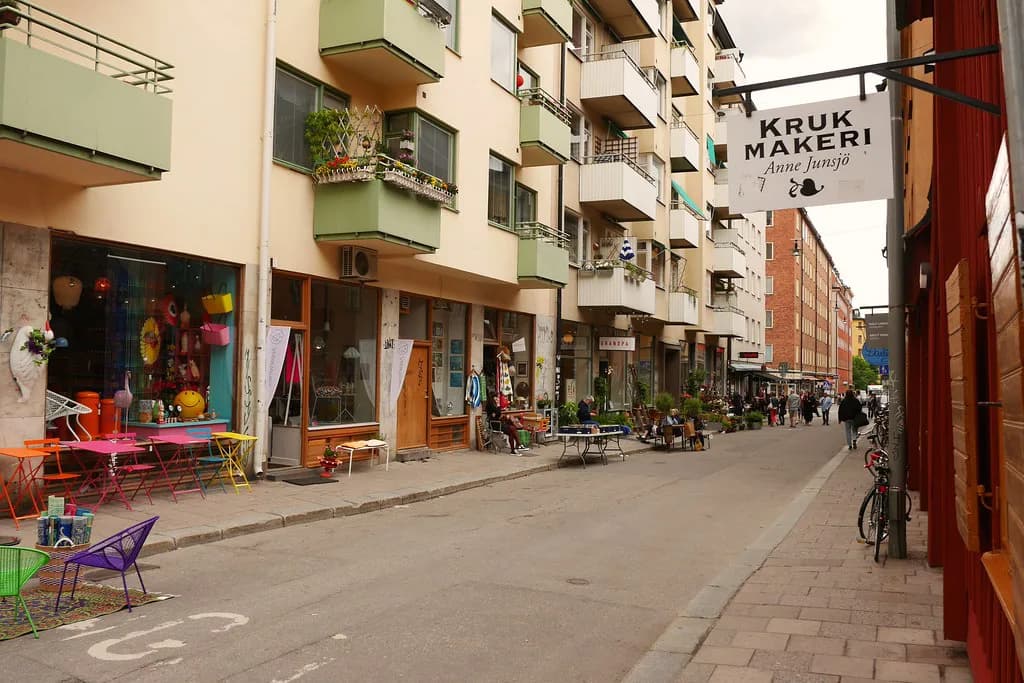
Stockholm is the easiest city for a single shopping day, with Dala horses, crystal and small design objects in the old town and museum shops. Gamla Stan rewards browsing, but check the same item in a second shop before buying, since the tourist streets price for convenience.
Gothenburg, Malmö and Uppsala suit craft browsing over flagship crystal stores: expect studio shops, flea markets and museum shops. Glassworks visits suit a car or a planned excursion, so set aside a half day rather than squeezing one in. If you are linking cities, the [trains in Sweden](/trains-in-sweden) guide explains how the routes fit together.
If shopping is a priority, give it one clear afternoon rather than scattering it across the trip. A [5 day Sweden itinerary](/5-day-sweden-itinerary) leaves enough slack for a proper browse without losing a sightseeing day, and buying fragile items on your last full day sends them straight into the case.
How to pack fragile glass and crystal for the flight home
Ask the shop to double-box glass and fill the gaps with paper, then pack it in the centre of your checked case surrounded by clothes. Small pieces can go in hand luggage, but check your airline's rules on glass and liquids before you rely on that. Never pack crystal against the hard shell of the case, where impact goes straight through.
Weigh your case before the airport, because glass and leather are the two categories most likely to push you over a baggage allowance. If you are over, wear the heavier shoes home and post the wooden items. Leave the bubble wrap on until you are unpacking at home.
Which Swedish souvenir should you actually buy?
Buy one thing made by a named maker, choose it for how it packs, and skip the rest. A Dala horse, a small signed glass piece or a tin of spruce balm will still be in use long after the T-shirt has gone to the charity shop.
If you are still planning the trip around the shopping, the [itinerary](/sweden-itinerary) pages show which cities give you the best craft browsing in a short break. Set a budget in SEK before you go, since the weak point of any souvenir hunt is the third shop.
Explore more Sweden guides
Frequently Asked Questions
What is a famous Swedish brand to look for?
For glass and crystal, look for Orrefors, Kosta Boda and Målerås, the three major Swedish crystal manufacturers. Their pieces appear in shops and glassworks, and a signed piece is easier to trace back to its maker than an unbranded one.
Is polkagris a Christmas sweet?
No. Polkagris is a peppermint candy cane eaten for special occasions rather than as a seasonal treat. It was created in 1859 by Amalia Eriksson in Gränna, where you can watch it being made.
Can I bring Swedish food and sweets home?
Packaged sweets such as polkagris travel well, but import rules for food and tobacco differ by country, so check your own government's guidance before buying in bulk. Keep receipts for anything you declare at customs.
Sources
Notes for your next Swedish city break
Optional updates to our Sweden guides.
You might also like

Continue reading
More guides you'll find useful