Birka: A Visitor's Guide to Sweden's Viking Trading Town
Birka was Sweden's first town, a Viking-age trading hub on Björkö in Lake Mälaren. Here is what the World Heritage site holds and how to reach it.
On this page
Birka is the Viking-age trading town on the island of Björkö in Lake Mälaren, and it is the place to go if you want to stand on the ground where Sweden's first town took shape. It was founded in the middle of the 700s and lived on for roughly two hundred years as the country's most important trading junction. This guide covers what the settlement was, how the island pairs with Hovgården on Adelsö, what the boat trip from Stockholm involves and how much of a day to give it.
What Birka is and why it matters
Birka is widely described as Sweden's first town: a dense settlement of traders and craftspeople on Björkö in Mälaren, founded in the mid-700s by initiative of the Svea king, who wanted to control trade in northern Scandinavia. The king himself lived about a kilometre away at Hovgården on Adelsö, and keeping order and protecting the town was part of his role. It is the earliest place in Sweden where you can see the physical outline of an urban trading community rather than a single farm or burial field.
At its height the town held somewhere between 700 and 1,000 inhabitants, and the working quarter along the waterfront housed comb-makers, bronze-casters, bead-makers and weavers in simple houses set in rows down towards the jetties. This is not a ruins-and-columns site in the Mediterranean sense: what survives is mainly the grave fields, the town embankment and the landscape, which is why the story carries the visit rather than the masonry.
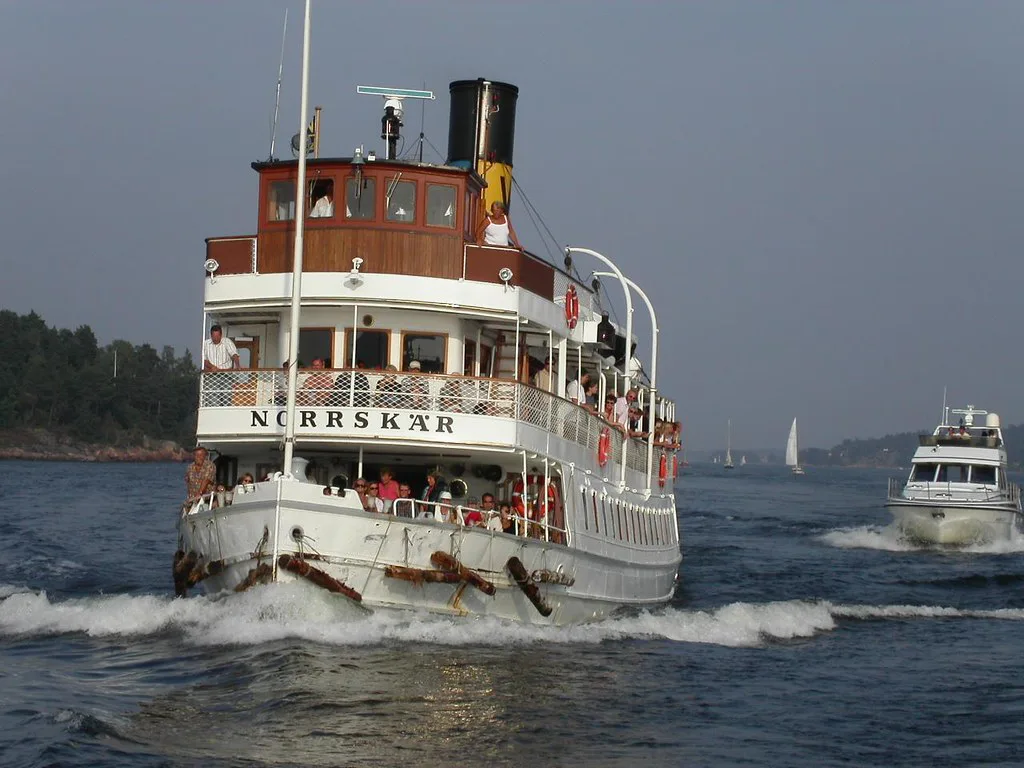
Where Birka is: Björkö in Lake Mälaren, with Hovgården on Adelsö
Birka sits on Björkö in Lake Mälaren, west of Stockholm, and it is only half of the World Heritage property. The other half is Hovgården on neighbouring Adelsö, the royal estate a short distance across the water, and together the two areas were inscribed on the UNESCO list in 1993 as one entry. Reading them as two halves of a single landscape is the key to understanding the site: one is the town of the traders, the other the seat of the king who oversaw it.
That geography explains why the location worked so well. In the Viking Age the water gave Birka a central but sheltered position with a route out to the Baltic, and it was only later, through land uplift, that the bay was cut off and became the lake we now call Mälaren. When you look at a modern map, remember that the water you see is not the coastline the traders used.
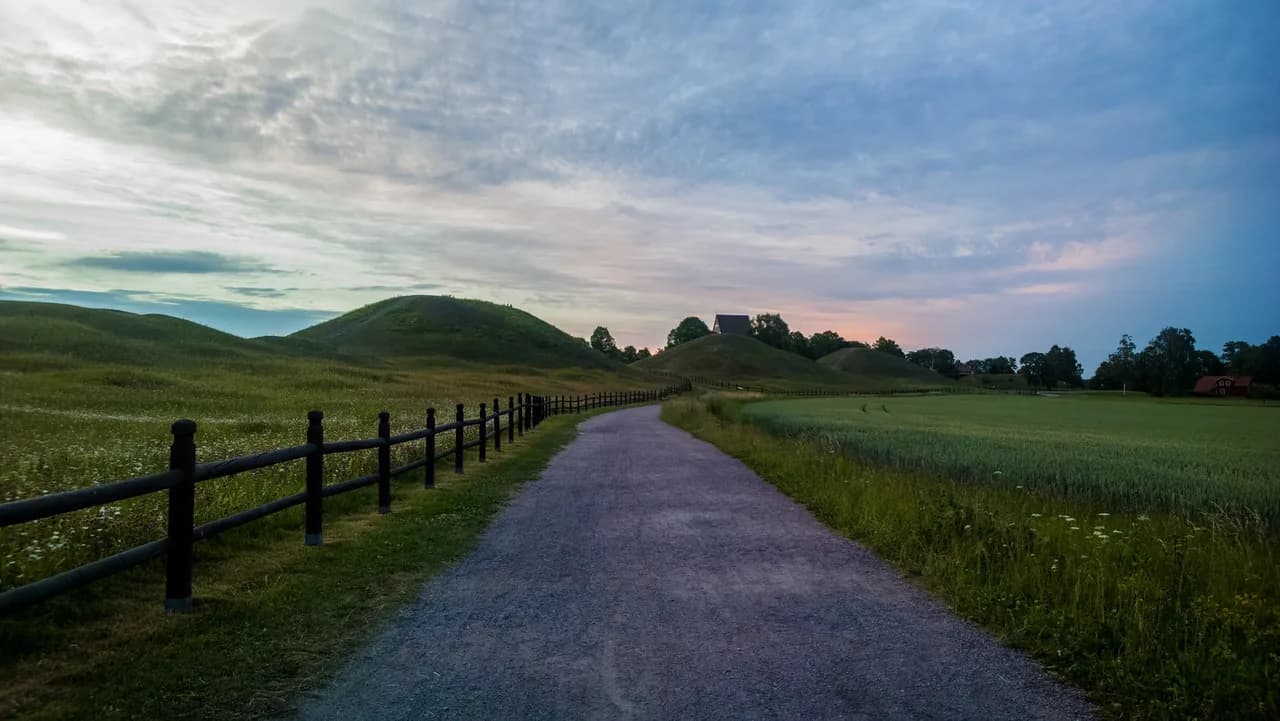
If the Viking landscape is the reason for your trip, it pays to see more than one site in the region. The Vikings in Sweden overview puts Birka alongside Gamla Uppsala, the royal and cult centre north of Stockholm, and Sigtuna: a Guide to Sweden's Oldest Town covers the town that took over Birka's trading role.
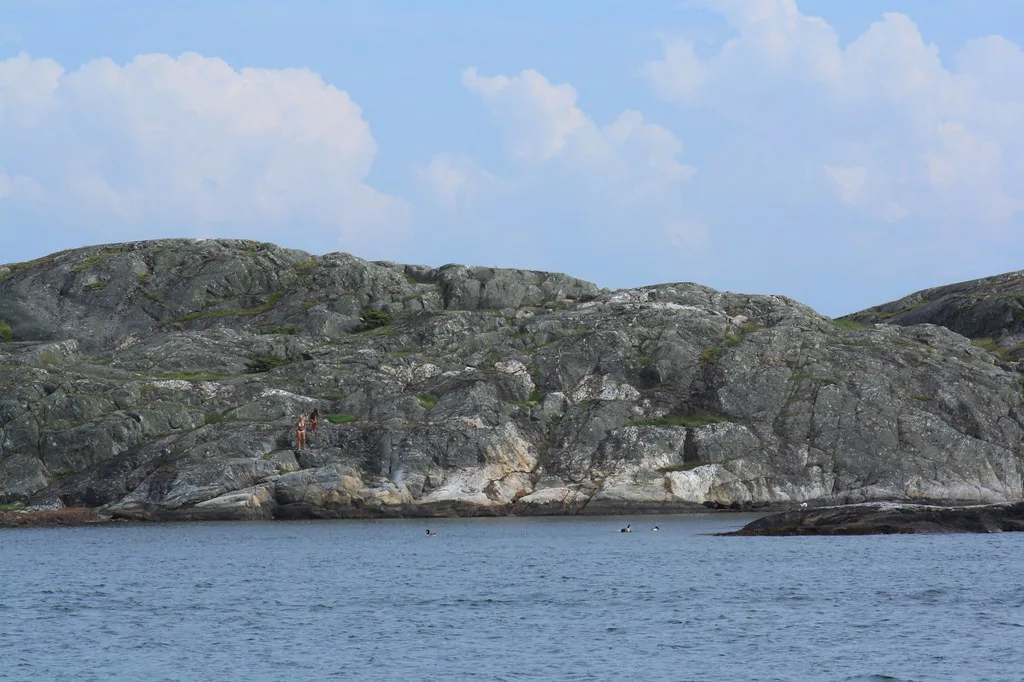
How to get to Birka: the boat trip from Stockholm
The practical decision for most visitors is the crossing, not the island itself. Strömma runs the boats to Birka and has done so since the late 1970s, taking over the public operation on behalf of Riksantikvarieämbetet in 2008, and tickets are sold online or at the operator's ticket kiosks, where tourist information is also available. Book through the operator's own channels rather than a resale listing, and treat the boat as part of the day out: the approach across Mälaren is the reason many people choose this site over an inland one.
Fares, departure points and sailing times change with the season, so confirm them directly with the operator when you book. Sailing is seasonal and the island is not somewhere you can simply turn up at on any day of the year, so build the rest of your Stockholm days around whichever date the timetable offers. The operator's own tours are led by archaeologists and guides, which is worth factoring into your choice of ticket.
Once on Björkö, expect to walk. The day is a combination of boat, site and open ground in whatever weather arrives, so sturdy shoes and a windproof layer matter more here than on a city day.
What there is to see at Birka today: the archaeological site and its landscape
The visit is built around the ancient monuments of the Björkö landscape and the story the excavations tell. There are large grave fields, the line of the town embankment and the harbour area, and the interpretation is delivered through the operator's guided walks rather than reconstructed streets.
Start with the orientation material, then walk the graves and the shoreline with the layout in mind. The site's power comes from scale and setting rather than from standing buildings, and the picture that stays with most people is the view from the water and the knowledge of how much trade passed through here.
Because the interpretation is delivered through guided tours, check what is included before you commit to a ticket. An archaeologist-led walk does more for a first visit than wandering the fields without context, especially if you are travelling with children or with someone who needs the story spelled out.
The World Heritage listing and what it covers
Birka and Hovgården form one of Sweden's fifteen World Heritage sites, and the citation describes the property as a well-preserved example of the Vikings' trading network during the two centuries when they expanded economically and politically across Europe. It also calls Birka one of the most complete and undisturbed Viking-age trading places of the 700s to 900s. In other words, the value lies in what has not been destroyed.
The site is managed under the national heritage authorities, with Riksantikvarieämbetet and Naturvårdsverket sharing responsibility for Sweden's World Heritage properties on behalf of the government. That matters to visitors mainly in one way: conservation rules shape what can be built and staged on the island, which is why the experience stays low-key rather than themed.
Why Birka was abandoned
After about two hundred years the inhabitants began to leave, and some are thought to have moved to Sigtuna, which became Sweden's next flourishing town. Nobody knows exactly why Birka was given up, but the accepted theories point to political decisions and to land uplift, which gradually stripped the town of its strategic and easily accessible position.
For a visitor, that is the honest answer: there was no single dramatic end, just a slow loss of purpose. It also explains why the site feels like a landscape with traces rather than a ruined city, and why pairing Birka with Sigtuna on separate days makes a coherent trip through the shift of power.
Birka and the Vikings: trade goods and contacts across Europe
The archaeology shows a town plugged into long-distance networks. Excavations have produced Arabic silver, eastern European beads, glass beakers, ceramics and fine textiles, all brought here and exchanged for goods the region could supply: iron, hides, horn and furs. That list is the most concrete evidence of how far Birka's reach extended.
The town briefly became a target for Christian mission as well. In 830 the monk Ansgar arrived, sent by the emperor Louis the Pious to preach to the peoples of the north, and he stayed for about a year and a half; some inhabitants were baptised, but Birka never became a Christian community.
If you want the wider context before you go, the Viking History in Sweden overview puts Birka's trade and mission episode alongside the rest of the period, and the runestones in Sweden guide covers the carved stones that mark the landscape in the same region.
How long a visit to Birka takes
Allow a full day rather than half of one. The crossing from Stockholm and back takes up a substantial part of the day on its own, and the walking and guided element on the island needs a couple of hours to be worth the journey.
Plan the shape of the day around the boat you have booked: site first, then a slower loop of the graves and shoreline if time allows. If you are in Stockholm for only two or three days, weigh Birka against a single city day and decide which is the better use of it.
Should Birka be your Viking day out?
Choose Birka if you want to see the birthplace of Swedish urban life and you are happy to give it a whole day, including the water crossing. Skip it if you need standing ruins or if your Stockholm schedule is already stretched thin, and use Gamla Uppsala or Sigtuna as a shorter alternative.
Book the boat before you fix the rest of your itinerary, since the timetable sets the day, and confirm the sailing details with the operator when you reserve. That done, the visit itself is refreshingly simple: a boat, an island, a landscape and two hundred years of trade.
Explore more Sweden guides
Sources
Notes for your next Swedish city break
Optional updates to our Sweden guides.
You might also like
Continue reading
More guides you'll find useful