Sigtuna: Sweden's Oldest Town, Runestones and What to See
Sigtuna is Sweden's oldest town, founded around 980 on Lake Mälaren. Here's what to see, from runestones to church ruins, and how to plan a half day.
On this page
Sigtuna is the oldest town in Sweden, founded around 980 by Erik Segersäll on the shore of Lake Mälaren, and it rewards a half day rather than a full one. Its compact medieval street plan, runestones and church ruins pack into a few walkable blocks, so it slots neatly into a Stockholm break. This guide covers where Sigtuna sits, how to reach it, how long to allow and what to see.
The town works best as an add-on rather than a destination in its own right: you come for the Viking-Age and medieval layers, not for a big museum day. If you are already following the country's Viking sites, Sigtuna fits naturally alongside the broader vikings in Sweden thread and the Viking-Age trading town at Birka: Viking-Age Trading Town on Björkö in Lake Mälaren.
What Sigtuna is and why it's worth the trip
Sigtuna is a small lakeside town that was Sweden's earliest urban settlement, founded by Erik Segersäll around the year 980. That age is the draw: the layers of Viking-Age and medieval Sweden sit in a few streets you can cross in minutes, rather than spread across a city.
The payoff is concentration. Carved stones, church ruins and a medieval street layout sit within a short walk of each other, which makes Sigtuna unusually efficient for a place with this much history. Come expecting a quiet town to wander rather than a ticketed attraction with a queue.
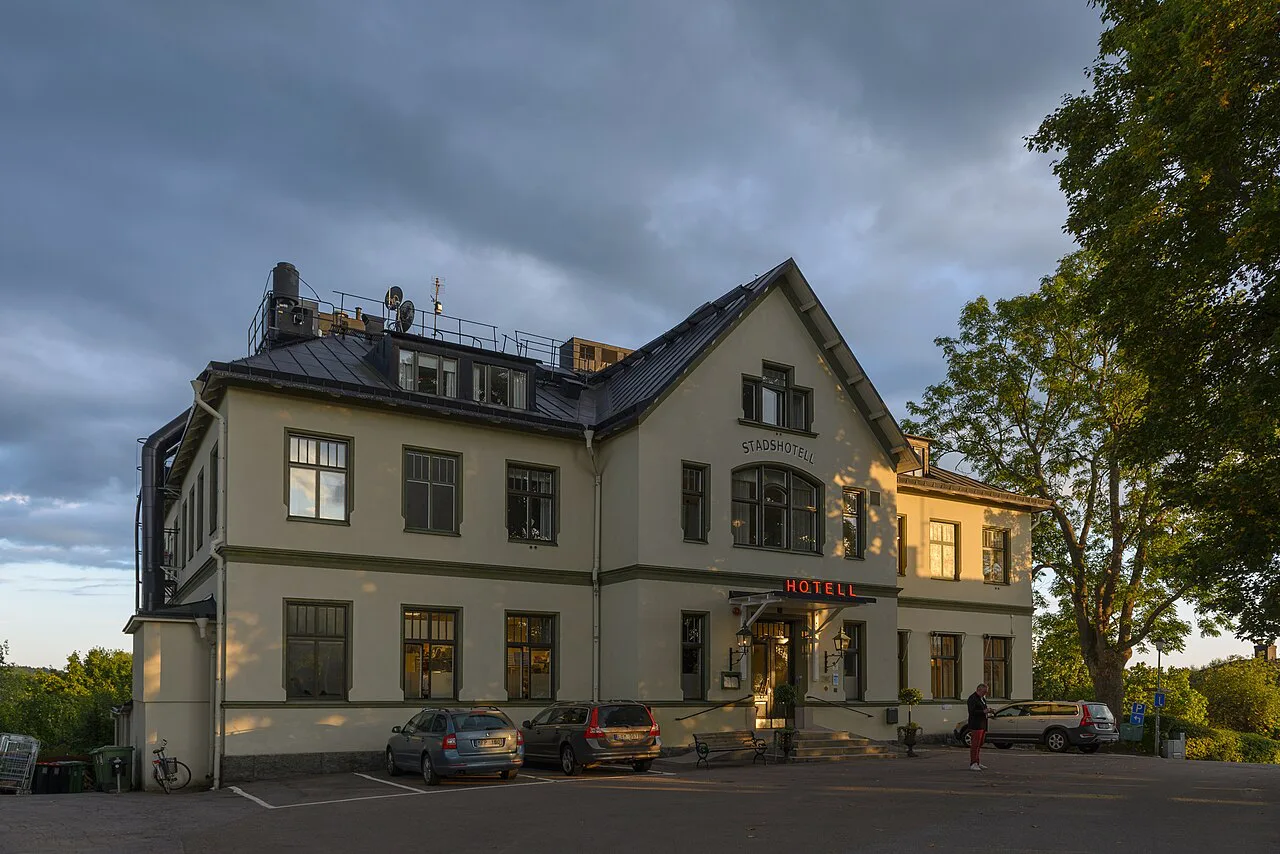
Where Sigtuna sits between Stockholm and Uppsala
Sigtuna lies on Lake Mälaren in Stockholm County. Its position between the Stockholm area and Uppsala makes it a natural stop for travellers moving between the two, but the town itself is compact and best explored on foot.
What is the oldest town in Sweden? Sigtuna, founded around 980 by Erik Segersäll on Lake Mälaren. It predates Stockholm and is the earliest urban settlement in the country, which is why its carved stones and church ruins carry so much weight for visitors.
How do you pronounce Sigtuna? The Swedish pronunciation is given as [²sɪkːtʉːna], with the stress on the first syllable and a short i and k sound. English speakers often soften it, but the Swedish form keeps the hard consonant cluster.
Is Sigtuna worth visiting? It is worth a half day if you are interested in Viking-Age and medieval Sweden, and it is easy to reach from Stockholm by public transport. Come for the carved stones, church ruins and lakeside walk rather than for a full day of attractions.
If your interest is the great burial mounds rather than a medieval town, Gamla Uppsala is the stronger draw and a bigger, busier day out. Read the two as different experiences: Sigtuna gives you a compact old town, Uppsala gives you scale and a university city around it.
How to get there: public transport from Stockholm
Sigtuna is straightforward to reach from Stockholm by public transport, and it is a short enough journey to treat as a half-day outing. Rather than quote a timetable here, check the current SL journey planner for the day you travel, since services and connections vary.
Because the town is close to Stockholm, it works as an outing on a longer break rather than a trip in its own right. Build in buffer time if you have onward plans, and confirm your route before you set out.
How long you need: a half day or a full day
A half day covers Sigtuna comfortably: the main street, the runestones, the church ruins and a stretch of the waterfront fit into a relaxed few hours. A full day only makes sense if you add a museum visit at a slow pace or combine the town with another stop.
The trade-off is depth against breadth. Sigtuna is small, so stretching it to a whole day risks repetition; using it as one half of a day, paired with something else in the area, usually works better.
The runestones and what they mark
Sigtuna's Viking-Age heritage is bound up with its runestones, part of the wider carved-stone tradition of the region. For the broader story of these stones across the country, the Runestones in Sweden guide explains what they record and where the major examples stand.
Reading about runestone inscriptions in advance turns them from decorated rocks into historical documents. Set against the town's founding date around 980, they give the place its texture.
Church ruins and the medieval street layout
Sigtuna's church ruins are the visible remnants of its medieval heyday, when it was a Christian centre before Stockholm eclipsed it. The ruins sit within the old street plan, so walking between them is itself the sight.
The street layout is the other half of the experience: a compact medieval grid you can cross in a few minutes, with low buildings and views opening onto the water. Take it slowly rather than rushing between named stops. For the broader medieval-to-Viking arc, the Viking history Sweden overview puts Sigtuna's era in context.
The main street and the wooden townscape
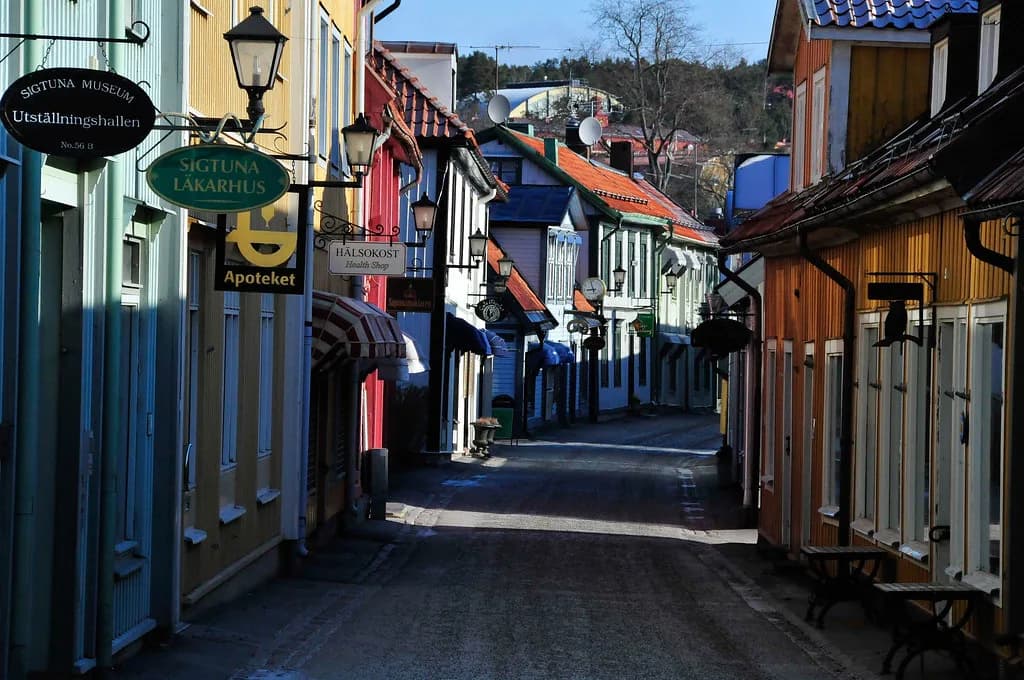
The old town is compact and walkable, with low buildings that give Sigtuna its scale; crossing it takes only a few minutes, so take it slowly rather than ticking off named stops.
What makes the townscape distinctive is the combination of small wooden houses and stone ruins in one view. It is a place to look up and sideways as much as ahead.
Lake Mälaren waterfront and walking route
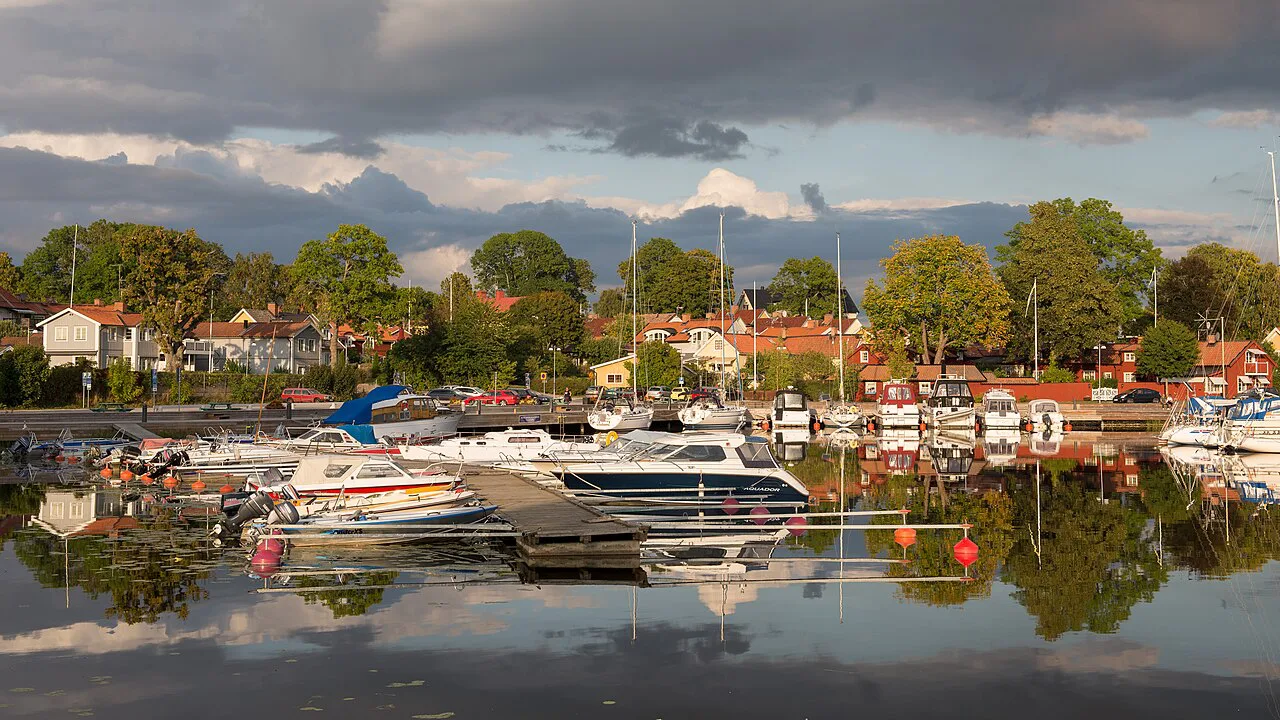
The waterfront on Lake Mälaren is part of the walk, not a separate attraction. A calm route along the lake, with the old town behind you, gives the day its breathing space and its best views.
Treat the shoreline as the natural end of your loop: see the town first, then follow the water before heading back. It is the kind of walk that suits a slow afternoon rather than a schedule.
Sigtuna Museum and the town's history
Sigtuna's history, from its founding around 980 through the medieval period, is best read through the streets themselves, and any small local museum you find open is a supplement to the walk rather than the main event.
Before you travel, check current opening days and ticket prices, as these change with the season and the day of the week.
Sigtuna or Uppsala: which to choose
Choose Sigtuna for a compact, quiet half day of runestones, ruins and a lakeside walk. Choose Uppsala for a fuller day with the Gamla Uppsala mounds, the cathedral and a university city's bustle around it.
If you have time for one Viking-themed outing, both are worthwhile but they answer different questions: Sigtuna asks what early Swedish town life looked like, Uppsala asks about the burial cults of the pre-Christian elite. Pairing them across two days covers both angles well.
When to go: summer versus the rest of the year
Summer gives you the longest days and the most comfortable walking, with the waterfront at its best. Outside that season the town is quieter, so check current opening times for anything you specifically want to see before you go.
Spring and autumn can be rewarding for the same reason: fewer people in a small town that does not absorb crowds well. Whatever the season, the town is small enough that a clear half day is usually enough.
What it costs in SEK
Walking the streets, the runestones and the church ruins is the core of a Sigtuna visit, and it is a cheap way to spend a morning or afternoon. Paid extras are limited to things like a museum and any guided tour, and those prices sit with the operator.
A private walking tour of Sigtuna is listed at around £121 per person for a two-hour experience with free cancellation, which shows the premium end of the market rather than what a normal visit costs. That is a sterling listing rather than a local price, so treat it as an indicative tour cost only.
Is Sigtuna worth the half day?
Yes, if you want Sweden's earliest town layers in a few walkable streets without committing a whole day. The town rewards a slow loop: the carved stones, the church ruins and the lake, in that order.
If your priority is Viking burial mounds and a bigger day out, Uppsala is the better bet, and Gamla Uppsala is the place to start. Either way, confirm transport and any museum hours before you set off.
Frequently Asked Questions
What is the oldest town in Sweden?
Sigtuna, founded around 980 by Erik Segersäll on Lake Mälaren. It predates Stockholm and is the earliest urban settlement in the country, which is why its carved stones and church ruins carry so much weight for visitors.
How do you pronounce Sigtuna?
The Swedish pronunciation is given as [²sɪkːtʉːna], with the stress on the first syllable and a short i and k sound. English speakers often soften it, but the Swedish form keeps the hard consonant cluster.
Is Sigtuna worth visiting?
It is worth a half day if you are interested in Viking-Age and medieval Sweden, and it is easy to reach from Stockholm by public transport. Come for the carved stones, church ruins and lakeside walk rather than for a full day of attractions.
Sources
Notes for your next Swedish city break
Optional updates to our Sweden guides.
You might also like
Continue reading
More guides you'll find useful