Runestones in Sweden: Where to See Them and What They Say
Runestones in Sweden explained: what the carved stones record, why Uppland has so many, and where travellers can see them in Uppsala and around Stockholm.
On this page
For a short Swedish city break, Uppsala is the runestone stop that pays off: the town and its old centre at Gamla Uppsala put Viking Age carved stones, burial mounds and a cathedral within a single day of Stockholm. Sweden holds over 3,000 runic inscriptions, the largest group in Scandinavia, so you are never far from one. This guide explains what a runestone actually is, why Uppland has so many, and which named stones are worth seeking out on foot.
It also separates the stones you can fold into a normal city itinerary from those that require a deliberate rural detour, and gives you the catalogue numbers to search for instead of hunting for "some runestones" in a field.
What a runestone is and who raised them
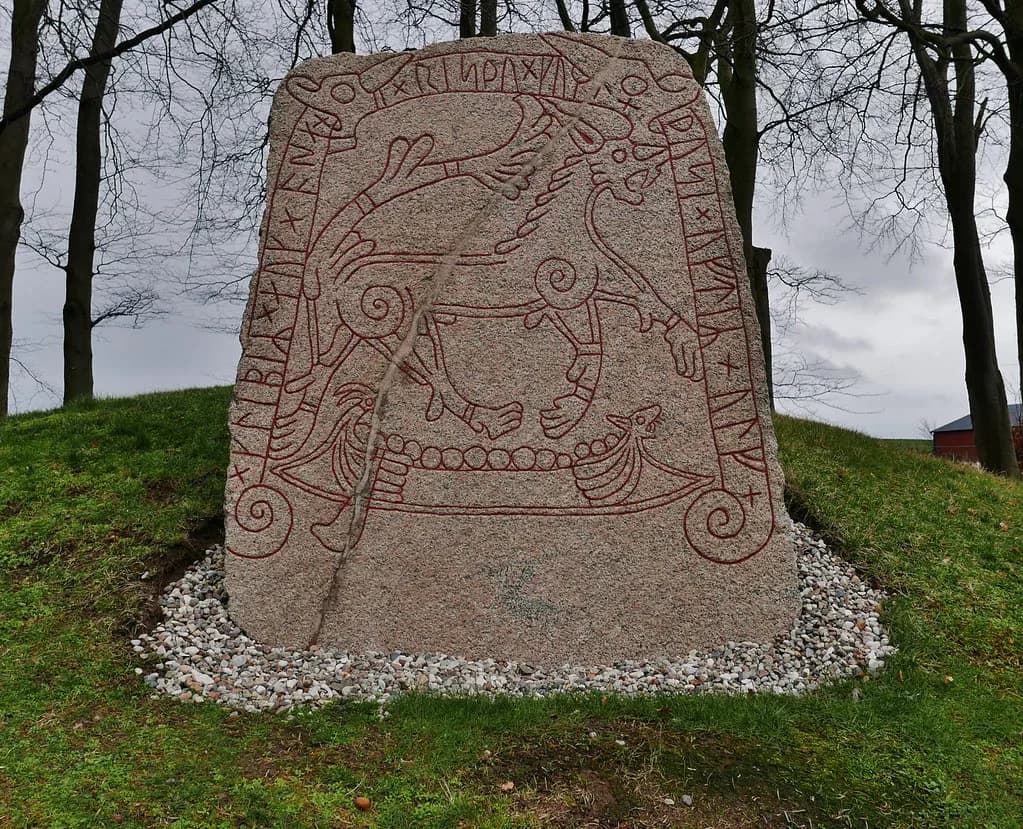
A runestone is an upright stone carved with runic letters, usually set in place as a memorial to someone who had died. Most surviving examples in Scandinavia were raised in the 9th and 10th centuries, in the later Viking Age, though the tradition of carving messages into standing stones reaches back to around the 4th century. They were rarely hidden away: many still stand close to where they were first placed, beside old roads, fields and waterways.
The people who commissioned them were often wealthy families marking a death, a lineage or a reputation. Inscriptions name the deceased, the person who raised the stone and sometimes the rune carver, which makes these stones unusually personal records rather than royal propaganda. That is the appeal for a visitor: you are reading a family's own memorial, not a museum label.
Why Sweden has so many runestones
Sweden accounts for the overwhelming majority of Scandinavian runestones, with more than 3,000 inscriptions recorded. Denmark, by comparison, has around 250 known rune stones from the Viking Age, according to the National Museum of Denmark. If you want to see carved stones in the landscape rather than behind glass, Sweden is where the numbers are.
What are runes and why are translations uncertain? The runic alphabets used across Scandinavia were not a single fixed system, and different versions developed over time, with language shifting quickly between regions and generations. That is why scholars translating a stone may reach different readings of the same inscription.
Where can I see Viking history in Sweden? For carved stones, head to Uppsala and Gamla Uppsala, where U 961 and U 939 sit in a landscape of burial mounds and churches. Nearby Sigtuna and Birka on Lake Mälaren add a town and a trading settlement to the same trip, and both can be planned around a Stockholm base.
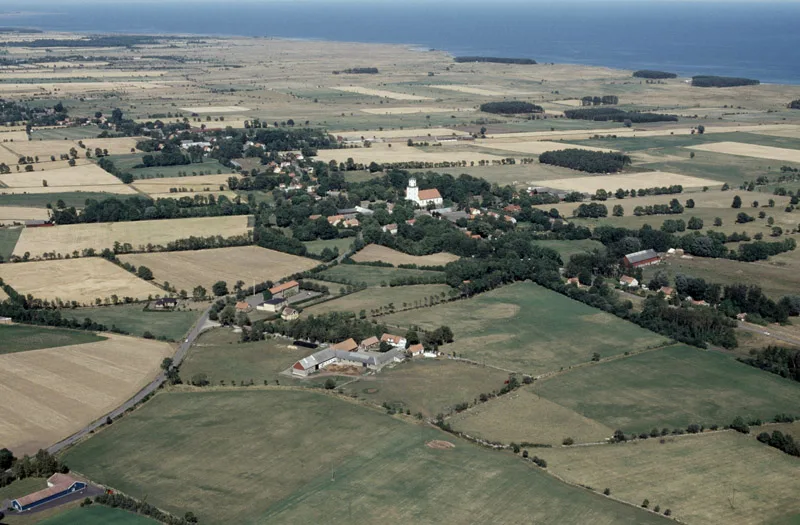
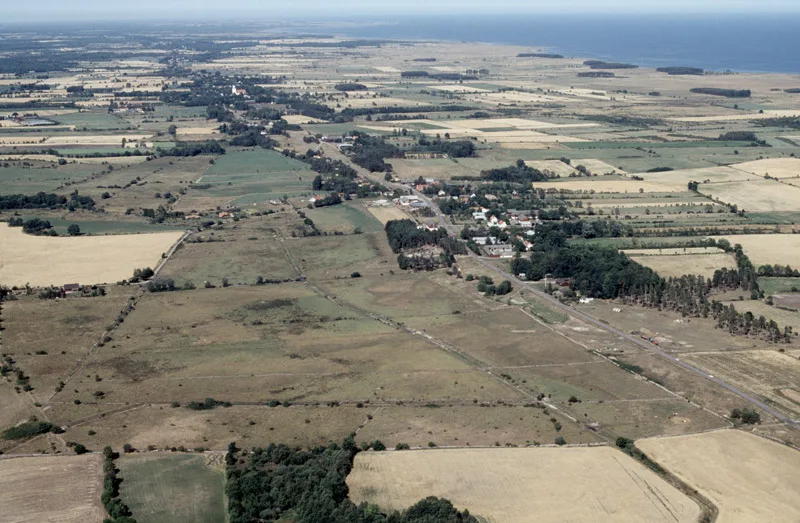
Within Sweden the densest cluster sits in Uppland, the province immediately north of Stockholm, and in particular the Tuna Valley. Stones here were positioned beside important roads and waterways, so they were seen by travellers and traders passing through a busy, well-connected region. That is why a Stockholm or Uppsala base puts you within reach of one of the world's great concentrations of these monuments.
If you want the wider Viking context around these stones, our guide to the vikings in Sweden places the carved memorials alongside the trading towns, burial grounds and conversion-era sites that make up the same story.
What the inscriptions actually say
Most inscriptions follow a formula: someone raised the stone in memory of a named relative, and then adds a line about what that person did or where they died. Some record achievements and journeys; others show anxiety about a changing world, including fears about the end of the age. Read a few in translation and the pattern becomes easy to follow, which makes even a single stone more rewarding than it looks.
Many stones were also raised during the slow conversion from Norse belief to Christianity, and that transition shows up in the carvings themselves. Crosses appear alongside traditional ornament, sometimes on the same face of the same stone.
Uppsala and Gamla Uppsala: mounds and stones in the landscape
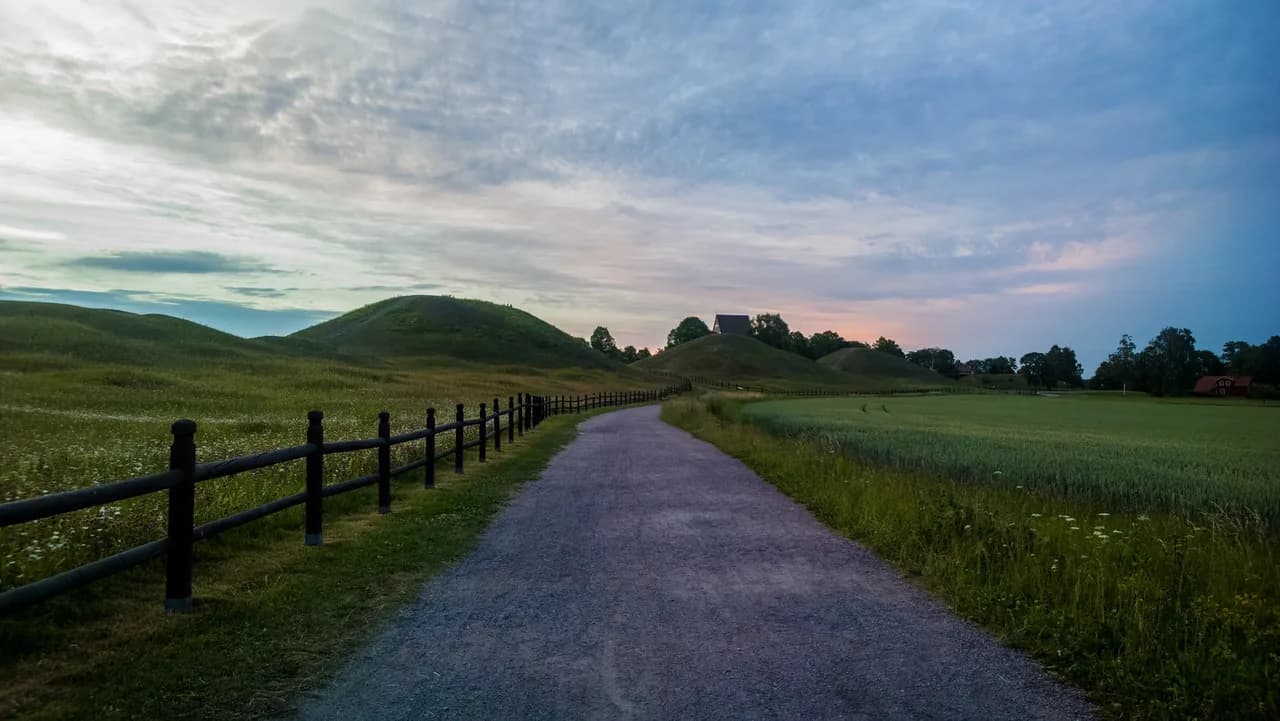
Uppsala is the most practical place to start, because Viking heritage, a university city and a compact centre sit together. Gamla Uppsala, a few kilometres north of the modern city, was once a powerful religious and political centre, and its large royal burial mounds dominate the surrounding fields. The mounds are believed to be the last resting place of early Norse kings, so treat the royal link as tradition rather than settled fact.
Several runestones are scattered across this landscape and around the churches. Our Gamla Uppsala guide covers how the mounds, church and surrounding area fit together on the ground, which helps you read the stones in context rather than as isolated objects.
The Vaksala runestone (U 961) and King Eric's marshal
One of the most interesting stones near Uppsala is U 961, known as the Vaksala runestone, which stands just outside the church in Gamla Uppsala. It was raised by a son in memory of his father, Spjót, and the inscription states that Spjót served as a marshal, a military leader, under King Eric. That gives a rare direct link between a carved stone and a named figure in Swedish royal history.
Look for it as part of a walk around the church and mounds rather than a separate trip. Because the stone is tied to a specific person at a specific court, it is the single best example to show a sceptical companion why runestones are worth ten minutes of anyone's day.
U 939 and the carved cross: old and new symbols on one stone
U 939, part of the Uppsala material, carries a traditional runic inscription together with a carved Christian cross. The combination is evidence of religious change at the end of the Viking Age, when Norse beliefs were gradually being replaced by Christianity. Seen up close, it is a conversion document in stone rather than a decorative flourish.
It is worth pairing U 939 with U 961 in a single loop around Gamla Uppsala and Vaksala. The two stones together show the same world from different angles: one records service to a king, the other shows a family hedging its bets between old and new faith.
The Gällsta runestones: four generations of one family
The Gällsta runestones in Uppland date from the 11th century and commemorate four generations of the same family. Three stones make up the group, catalogued as U 229, U 231 and one further stone, and together they trace a lineage across the generations in a way a single stone cannot.
For a visitor, this is the best argument for slowing down at one small group of stones instead of trying to tick off a dozen scattered across the countryside. Read the family sequence as one story and the formulaic wording suddenly becomes gripping.
Uppland's Tuna Valley: stones beside roads and waterways
The Tuna Valley in the heart of Uppland holds one of the most concentrated collections of runestones anywhere in the world. These stones were deliberately placed beside important roads and waterways, which means many of them sit in the open landscape rather than in museums. That is wonderful for atmosphere and awkward for a tight itinerary, because they are spread out.
The wider Viking story behind these places, from trading networks to the conversion, is covered in our Viking history Sweden overview, which helps you decide whether the rural detour is worth half a day.
Reading a stone: why translations vary
Do not expect a clean, settled reading. There was no single runic alphabet: different versions developed over time, and language shifted quickly between regions and even between generations in the same area. Scholars have translated most inscriptions, but their results vary, and a translation panel at a site may differ from a book. That uncertainty is part of the interest, not a reason to skip the stones.
Old Norse, the spoken language of the period, is a separate study again from the carved runes themselves. If you want to go deeper, read the English translation on a nearby information panel first, then look back at the carved lines to see where each name sits on the stone.
Practical trade-offs: scattered rural stones versus a city stop
The honest trade-off is this: the great set pieces of Swedish runestone country are rural and spread out, while the stones you can reach without losing a day are the ones around Uppsala and Gamla Uppsala. If you have one to four days in Stockholm, take the Uppsala day and see U 961, U 939 and the mounds; if you have longer, consider a dedicated drive through Uppland's Tuna Valley.
Sigtuna, Sweden's oldest town and a short trip from Stockholm, adds a further runestone stop with a walkable town centre attached. Our Sigtuna: a Guide to Sweden's Oldest Town covers what to see once you are there, including the stones in and around the town.
For a more immersive Viking day, Birka on Björkö in Lake Mälaren is the trading-town counterpart to the memorial stones, and Birka: Viking-Age Trading Town on Björkö in Lake Mälaren explains how to plan that visit.
Adding runestones to a Stockholm or Uppsala itinerary
The best-value version is a single day: train to Uppsala in the morning, walk the old centre and cathedral, then head out to Gamla Uppsala for the mounds, the church and U 961. Add U 939 if you have the energy, and finish with a fika before heading back. You get the Viking landscape, a named royal connection and conversion-era carving without committing a whole trip to rural driving.
If you are staying longer, give the rural Uppland stones their own half-day rather than squeezing them into the Uppsala day. The Gällsta group and the wider Tuna Valley reward unhurried reading, and rushing between them in a car defeats the purpose. Either way, confirm church and museum access with the site before you set out.
Is a runestone day worth giving up a Stockholm day?
Yes, if you take the Uppsala version: the Gamla Uppsala mounds, the church and U 961 give you a genuine Viking Age landscape within a day of Stockholm, and U 939 adds the conversion story on one stone. Stay in the city instead if you want museums and waterfronts, and accept that you will see runestones only in passing.
If runestones become the point of the trip rather than a bonus, plan a separate Uppland day for the Gällsta stones and the Tuna Valley, and read our Vikings in Sweden guide before you go so the stones sit inside the full story.
Frequently Asked Questions
What are runes and why are translations uncertain?
The runic alphabets used across Scandinavia were not a single fixed system, and different versions developed over time, with language shifting quickly between regions and generations. That is why scholars translating a stone may reach different readings of the same inscription. For a visitor, the practical answer is to read the site's English translation panel first and treat the individual runes as lettering rather than a code you need to learn before visiting.
Where can I see Viking history in Sweden?
For carved stones, head to Uppsala and Gamla Uppsala, where U 961 and U 939 sit in a landscape of burial mounds and churches. Nearby Sigtuna and Birka on Lake Mälaren add a town and a trading settlement to the same trip, and both can be planned around a Stockholm base.
Sources
Notes for your next Swedish city break
Optional updates to our Sweden guides.
You might also like
Continue reading
More guides you'll find useful