Gothenburg Architecture: A Walking Guide to the City's Buildings
Gothenburg architecture from the 1654 Kronhuset to the 1994 opera house, with a walking route through the canals, squares and districts of the city.
On this page
Gothenburg's architecture fits into one long day on foot if you keep to the canal line and the two hills that bookend the centre. The city was founded in 1621 by King Gustav II Adolf, and the historic core still reads as a port city built around canals, a planned grid and later layers wrapped around it. This guide groups the buildings by period and district, starting at Gustaf Adolfs torg and ending on the waterfront, so you can judge what fits a one- to three-day break.
Where to start: Gustaf Adolfs torg and the Norra Hamngatan waterfront
Begin at Gustaf Adolfs torg, the square named for the king who founded the city; the bronze statue of Gustav II Adolf by Bengt Erland Fogelberg was erected there in 1854, and the square took its current name in 1959. On the northern edge stands the former Börsen, a white neoclassical exchange built in 1859 that now houses Gothenburg municipality offices and is used for council meetings and formal receptions. You see both from the pavement in ten minutes, which makes the square a sensible orientation point before you commit to a route.
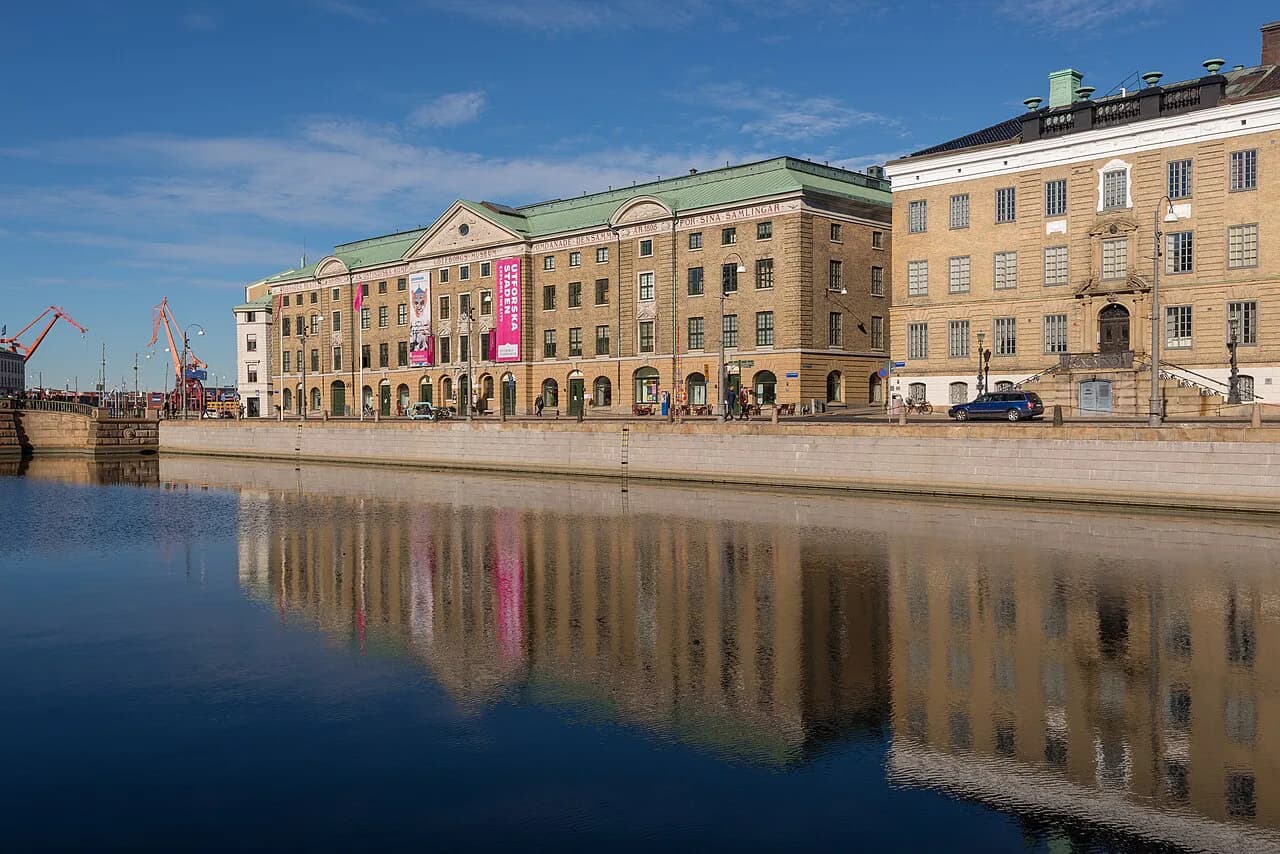
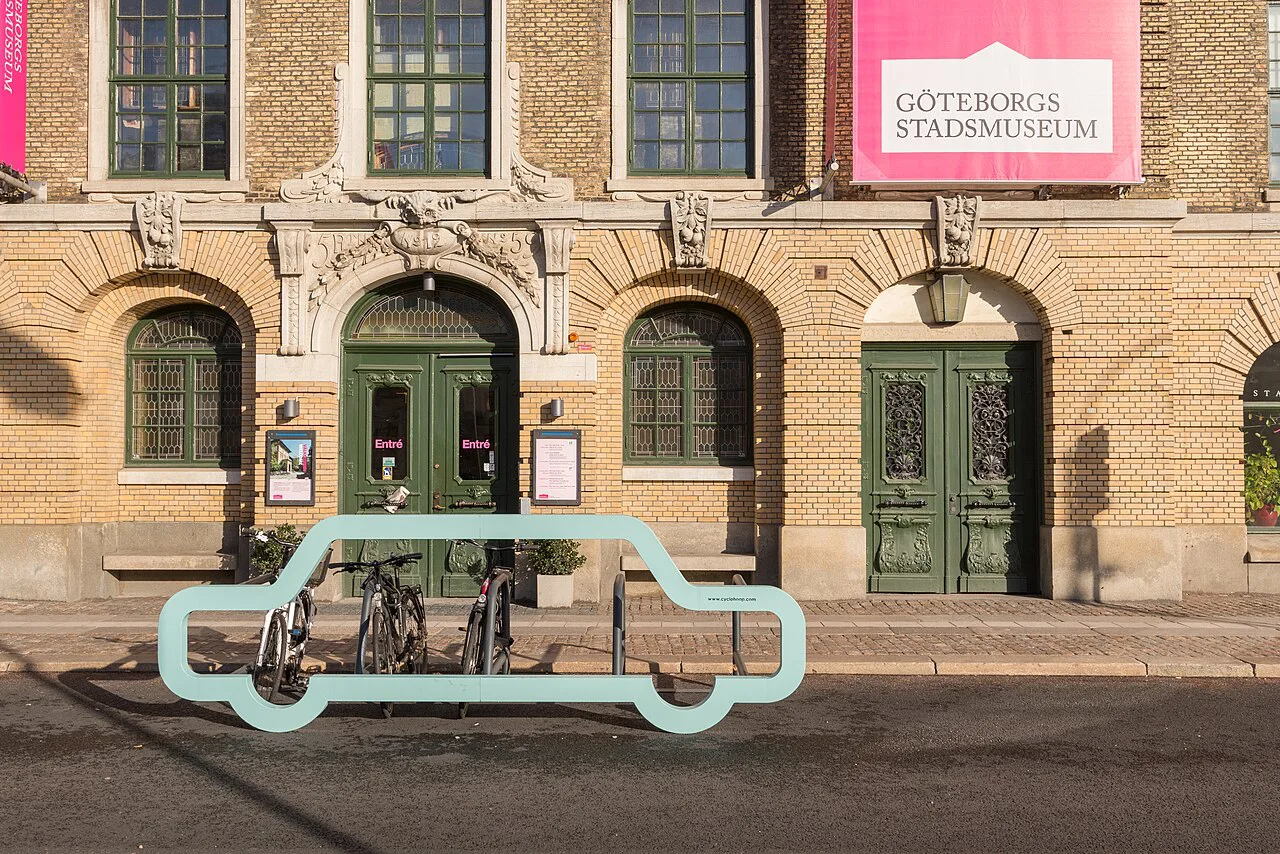
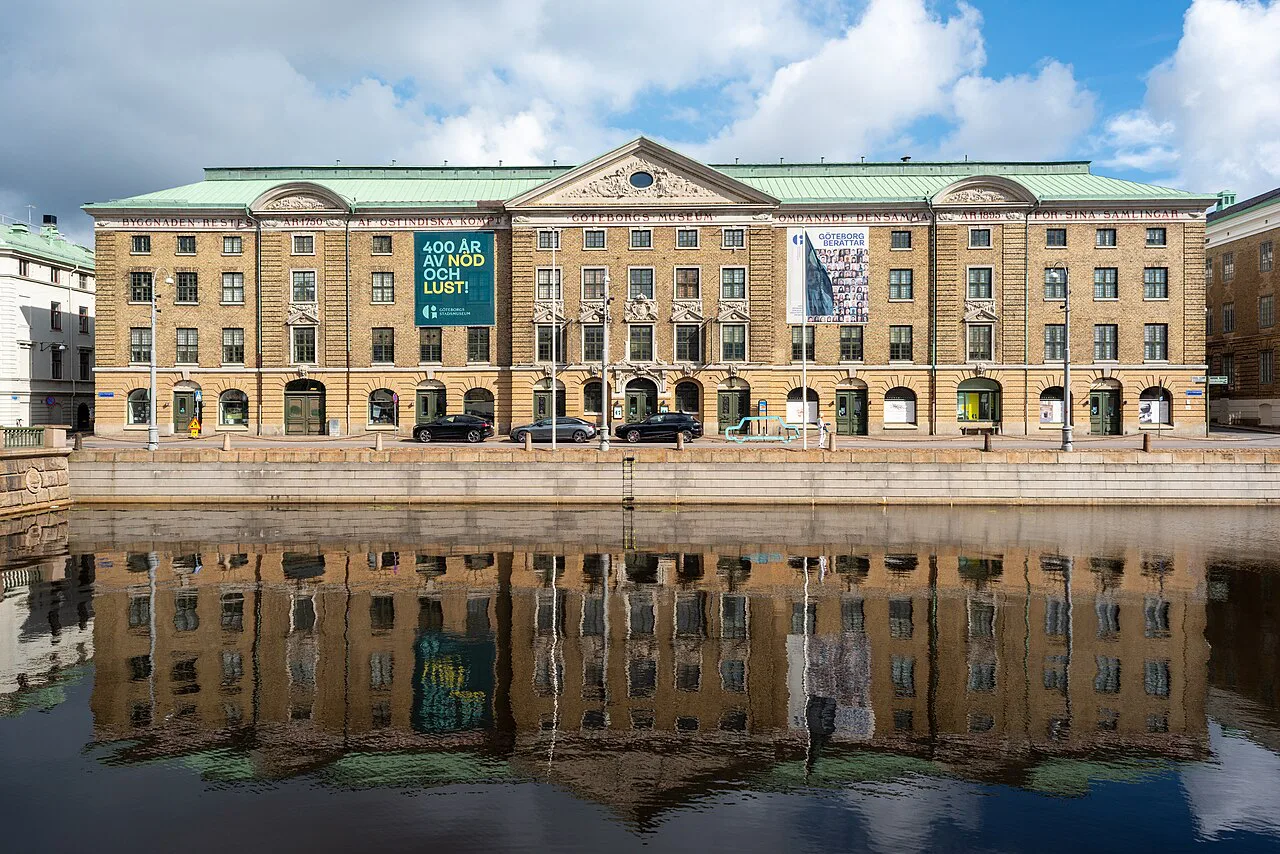
Walk east along Norra Hamngatan, the north harbour street, where three buildings sit almost within sight of each other. The Christinae Kyrka clock tower was finished in 1748 and named for Queen Christina, who reigned from 1632 to 1654; the neighbouring Sahlgrenska House went up in 1753 as the private residence of Brigitta Sahlgren, who owned a sugar refinery and shipping business. Carry on to the East India House, commissioned in 1747 by the Swedish East India Company and now the Gothenburg City Museum, whose collections run from antiquity onwards.
This stretch is where the canal grid is easiest to grasp: the street, the water and the warehouse fronts line up in the way the 17th-century plan intended. Take the south side of the canal for the full building fronts rather than the north side, which is more interrupted by crossings. If you want the wider context of the old core before you start walking, the Gothenburg Old Town guide covers the same streets at a slower pace.
Kronhuset and the Kronhuskvarteret courtyard
Kronhuset, at Kronhusgatan 1D, is the city's oldest building, put up in 1654 as an armoury and grain store for the military. Six years later Karl X Gustav died while visiting Gothenburg and his five-year-old son Charles XI was brought here and announced as the new king, with his mother acting as regent until 1672. The building has since served as storage, a museum, a church and a town hall, and it now hosts the Göteborg Wind Orchestra.
The Kronhus sheds encircle a cobbled courtyard, and the surrounding Kronhuskvarteret houses boutique shops and a café, so the stop works as a pause rather than a dash past a facade. Give it half an hour if you want to look at the brickwork and the courtyard properly; ten minutes is enough if you are only ticking off the oldest building in town.
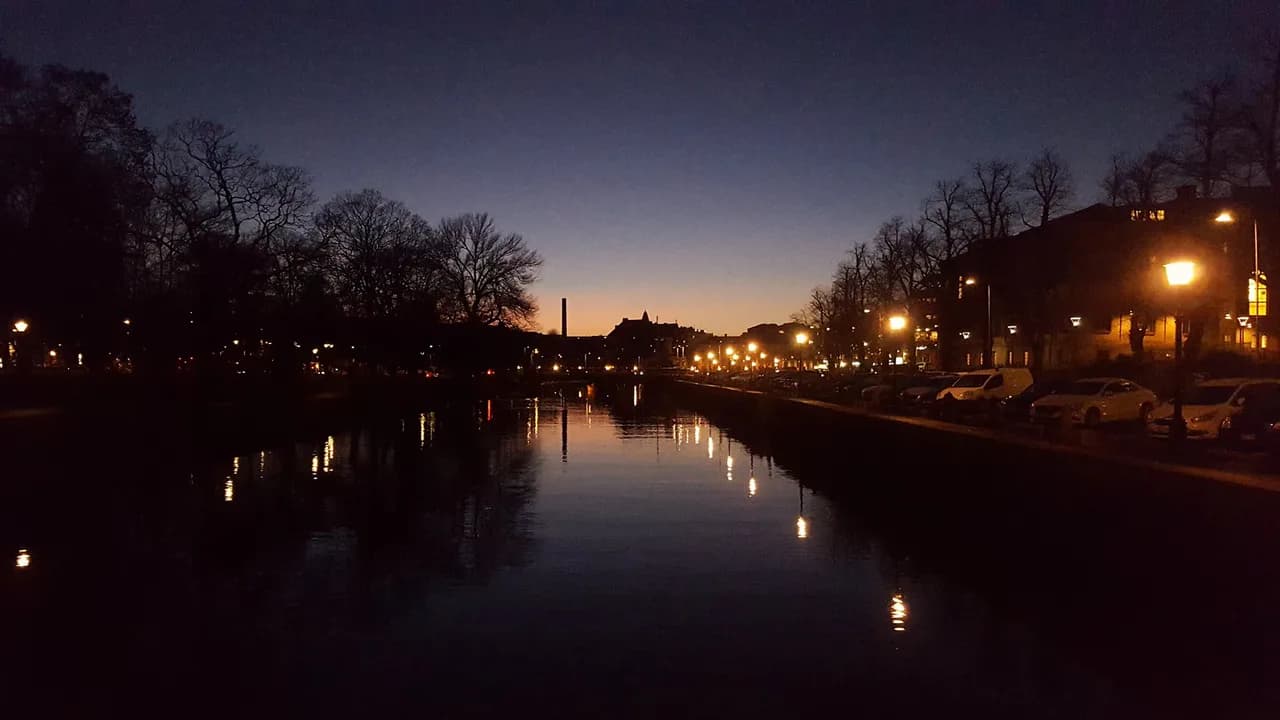
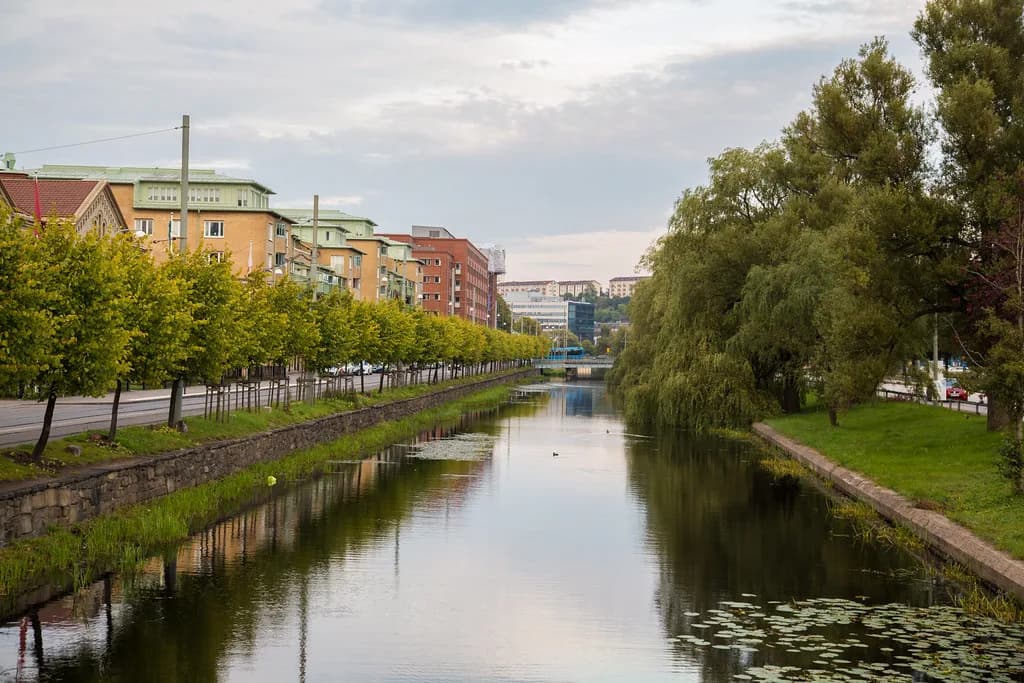
Along Stora Hamnkanalen: the canal spine of the walk
Stora Hamnkanalen is the canal that gives the centre its shape, and a self-guided canal-side walk built around it runs five stops over about 5.4 km, taking roughly two hours on foot. The route links Skansen Kronan, the Röhsska museet, Brunnsparken, Stora Hamnkanalen itself and Göteborgsutsikten, which is a practical way to hold the periods together in one line rather than criss-crossing the grid.
Brunnsparken, one of the stops, is a transit hub built over an island of iron scales and a nineteenth-century health well, which is a reminder that the canal system was working infrastructure before it was scenery. The Röhsska museet is Sweden's only museum dedicated entirely to design, crafts and fashion, so it is the one indoor stop on this line where the collection itself is the attraction.
Skansen Kronan, the octagonal fortress tower on the hill, has served as a prison, a museum and emergency housing, and it sits at the start of this route because the climb sets up the rest of the walk. Treat the tower as a viewpoint and a marker rather than a full sight, then descend towards the canal and pick up the waterfront streets.
The 19th-century layer: Stora Teatern and the civic front
The 19th century gave Gothenburg its civic front, and the neoclassical Börsen at Gustaf Adolfs torg is the clearest single building from that period on this route. Pair it with Stora Teatern, a short walk away, and you have two civic landmarks of the centre on the same afternoon rather than separate days.
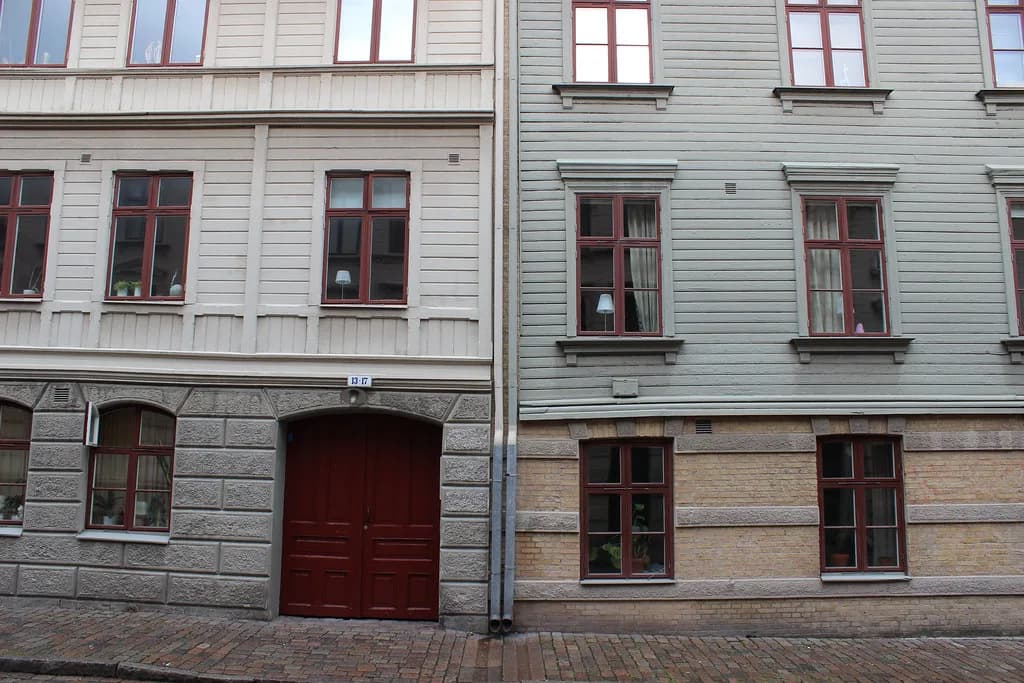
Haga, immediately west of the centre, is the district to walk through rather than a single address: its 1870s buildings include Hagabadet Haga on Haga Östergata, a listed bathing facility with social-historical value that now operates as a spa. It is worth a passing look at the facade for the period detail, not a stop to plan around. For more on the shops and streets of the neighbourhood, see the Gothenburg shopping guide.
Feskekôrka: the 1874 fish market
Feskekôrka at Fisktorget 4 is the building most people photograph without knowing why it looks the way it does: the indoor fish market was built in 1874 without pillars, and its long chapel-like form earned it the nickname the Fish Church. Inside are seafood counters and restaurants serving west coast tastes, herring, shellfish and oysters, so the architecture and the market share one roof.
Approach it from the canal side to see the roof line before you go in, then walk round to the market entrance. The Gothenburg Market Halls guide covers the other covered markets in the city if this one leaves you wanting more of the same typology.
Götaplatsen and the Museum of World Culture: the 20th-century axis
Götaplatsen anchors the 20th-century cultural axis, and the Museum of World Culture is the building to look at on the same outing. Together with the Gothenburg Museum of Art and the Gothenburg Cathedral, they form a cluster you can cover in a single loop rather than treating each as a separate trip across town.
This is also the part of the route where you decide between exteriors and interiors. The square and the museum facade can be seen from the street; going inside the art museum is a separate decision that eats into the walking time. If the budget matters, the free things to do in Gothenburg guide covers other things to see nearby.
The waterfront today: Lilla Bommen and the Göteborgsoperan
Two landmarks sit side by side at Lilla Bommen: the Barken Viking, the Nordic countries' largest sailing ship at 387 feet, launched in 1906 for Denmark's merchant fleet and decommissioned in 1950, and the Skanska Skyscraper, formally Lilla Bommen but nicknamed the Lipstick Building for its red upper floors. Near the top of the building's 282 feet is the Götheborgs Utkiken observation deck, which is where you get the view over the harbour and the waterfront.
The Göteborgsoperan opened on the shoreline of the Göta Älv river and Lilla Bommen harbour in 1994; the architect Jan Izikowitz described the design as capturing the wings of seagulls, and the building holds more than 1,100 rooms with an auditorium seating over 1,300 and an orchestra pit for up to 100 musicians. It stages around 250 performances a year, so the foyer and exterior are the reliable part of a visit unless you have booked a performance.
This end of the walk is modern rather than old, and it is the section to cut first if you are short of time: the historic core holds together without it, but the contrast between the 1654 arsenal and the 1994 opera house is the point of doing the whole route. The Gothenburg Attractions: 21 Visitor Guides hub lists the other sights that share this waterfront.
How to walk it: route, distances and timings
Start at Gustaf Adolfs torg, take Norra Hamngatan east, cut inland to Kronhuset, then follow Stora Hamnkanalen south-west to Feskekôrka before climbing to Skansen Kronan. The canal-side walk that covers the middle of this route runs 5.4 km and takes about two hours at an unhurried pace, so add the Gustaf Adolfs torg start and the Götaplatsen detour on top of that.
The distances are short enough that you can walk the whole thing in a day, but the stops split naturally into two halves: the canal and the old core in the morning, Götaplatsen and the waterfront in the afternoon. If you would rather have the order set for you, the Gothenburg walking tour guide covers a comparable loop of the centre.
Bike rental is an option for the outer legs, particularly the climb to Skansen Kronan and the run out to Lilla Bommen, though the cobbles in Kronhuskvarteret and Haga make walking the better choice through the middle. The Gothenburg ferry is not needed for this route, since every stop is on the mainland and within the grid.
What you can go inside, and what you only see from outside
Kronhuset, the Gothenburg City Museum in the East India House, the Röhsska museet, the Museum of World Culture and the Gothenburg Museum of Art are buildings the sources describe as museums or cultural venues, while Börsen, the Sahlgrenska House and the Lipstick Building are exteriors you see from the street or the observation deck. Feskekôrka is both: a market you walk through and a building you step back from to look at.
Check the museums' own websites for opening days before you build a day around them, since several of these are the kind of place that closes one weekday. That one check is worth doing the evening before, and it keeps the walking route flexible around whatever is actually open.
Which half of the route to do first
If you have one day, do the canal and the old core: Gustaf Adolfs torg, Norra Hamngatan, Kronhuset, Feskekôrka and Skansen Kronan, which gives you the 17th- and 19th-century layers in a single stretch of walking. If you have two, add Götaplatsen in the morning and the Lilla Bommen waterfront in the afternoon, and you will have seen the city from 1654 to 1994 without ever needing a bus.
The trade-off is depth against coverage: Feskekôrka and the City Museum reward an hour each, and squeezing both into the canal morning leaves little time for the courtyard at Kronhuset. Pick one interior per half-day and let the rest be exteriors, which is how most short-break visitors see the city anyway.
Explore more Gothenburg guides
Frequently Asked Questions
What defines Gothenburg's architecture in the centre?
The centre layers a 17th-century canal grid and planned streets with neoclassical civic buildings from the 19th century and a modern waterfront from the late 20th century. The contrast is the point: Kronhuset dates from 1654, Börsen from 1859 and the Göteborgsoperan from 1994, and all three sit within walking distance of each other.
Do I need tickets for the architecture walk?
The route passes streets, squares and building facades that you see from outside, so there is nothing to book for looking at the architecture itself. The museums and the Göteborgsoperan set their own admission and performance prices, so check each venue's website before you go.
Sources
Notes for your next Swedish city break
Optional updates to our Sweden guides.
You might also like
Continue reading
More guides you'll find useful