Gothenburg Walking Tour: A Self-Guided Route Through the City Centre
A self-guided Gothenburg walking tour through the city centre, with statues, churches and Kronhuset in order, plus the distance and walking times.
On this page
The best free Gothenburg walking tour is a do-it-yourself loop of ten stops through the centre, roughly 3.5 km and about 45 minutes of walking at the published leg times, which makes a comfortable half day including stops. You start at Mariakyrkan in Stampen, thread west past statues, the Garden Society park and Kronhuset, and finish at the two big inner-city churches. This guide gives the stops in walkable order with the distances between them, then sets out the paid guided alternatives and how to choose.
What the walk covers
The route runs from Mariakyrkan in Stampen into the compact centre around the Garden Society, the statues and Kronhuset, finishing at Gothenburg Cathedral, so you never need a tram between stops. That short span is why the walk works as a first orientation: the statues, churches and civic buildings sit within a few minutes of each other, and you can break off for coffee without losing the thread. If you want the wider list of sights beyond this line, start with the broader things to do in Gothenburg guide before committing a day to the centre.
Treat the route as a spine rather than a strict itinerary. The published distances add up to about 3.5 km across nine legs, so a steady pace with photo stops fits easily into a morning. Add a museum or a long lunch and it fills the day.
The route at a glance
Ten stops, about 3.5 km, half a day. The legs, as published, run Mariakyrkan to Mandala (944 m, 11 min), Mandala to the Garden Society (431 m, 5 min), Garden Society to Karl IX (538 m, 6 min), Karl IX to Såningskvinnan (274 m, 3 min), Såningskvinnan to Gustav II Adolf (198 m, 2 min), Gustav II Adolf to Kronhuset (269 m, 3 min), then Tyska kyrkan (259 m, 3 min), Jonas Alströmer (267 m, 3 min) and Gothenburg Cathedral (298 m, 4 min).
The legs between the central statues are short enough to walk without thinking about it, and the one long stretch is the opening walk in from Stampen. Wear shoes you can walk in for an hour or two on paving and cobbles, and carry a light layer because the route crosses open squares and riverside streets.
Start at Mariakyrkan in Stampen
Mariakyrkan, formerly the Poor House Church, stands in Stampen, east of the central grid, and belongs to the Gothenburg Cathedral Parish. It makes a quiet start before the busy shopping streets, and the roughly 940 m walk west into the centre is the longest single leg of the day.
Mandala and the Garden Society of Gothenburg
Mandala is a sculpture on Stora Nygatan in the Inom Vallgraven district, a short hop from the church and an easy landmark to aim for. From there the Garden Society of Gothenburg, a park and horticultural garden, sits next to Kungsportsavenyen and the Gamla Ullevi stadium, giving you a green pause before the statues.
Karl IX at Kungsportsplatsen and Såningskvinnan in Brunnsparken
Karl IX's equestrian statue, known locally as Kopparmärra, was created by John Börjeson, inaugurated in 1904 in the middle of Östra Hamngatan at Kungsportsplatsen and moved in 1936 to the east side of the street. Two minutes on, Såningskvinnan — the sowing woman, popularly called Johanna i Brunnsparken — was sculpted by Per Hasselberg in 1883 and is thought of as the city's first female statue.
Gustav II Adolf on Gustaf Adolfs torg
The bronze Gustav II Adolf on Gustaf Adolfs torg, by Bengt Erland Fogelberg, was erected in 1854 and is the city's oldest public work of art, the king pointing down at the square where the city is said to have been founded. It is the symbolic heart of the walk, and a good place to pause before the northern streets. The square's setting is covered in more depth in the Gothenburg architecture guide if you want to read the buildings around it.
Kronhuset in Västra Nordstaden
Kronhuset is a redbrick building in Västra Nordstaden, built between 1643 and 1654 in a Dutch style and thought to be designed by the royal architect Simon de la Vallée. It served as an arsenal and a granary so the city could survive a siege, and it has been a listed building since 1968. It is Gothenburg's joint-oldest secular building along with the Torstenson Palace.
Kronhuset is marked as a ticketed sight, so treat the exterior and courtyard as the free part of the stop and check the venue's own listing for what is open and when before you go inside. Nearby, the old town streets around Kronhuset reward a slow loop rather than a dash to the next statue; the Gothenburg old town guide picks out what to look for.
Tyska kyrkan and Gothenburg Cathedral
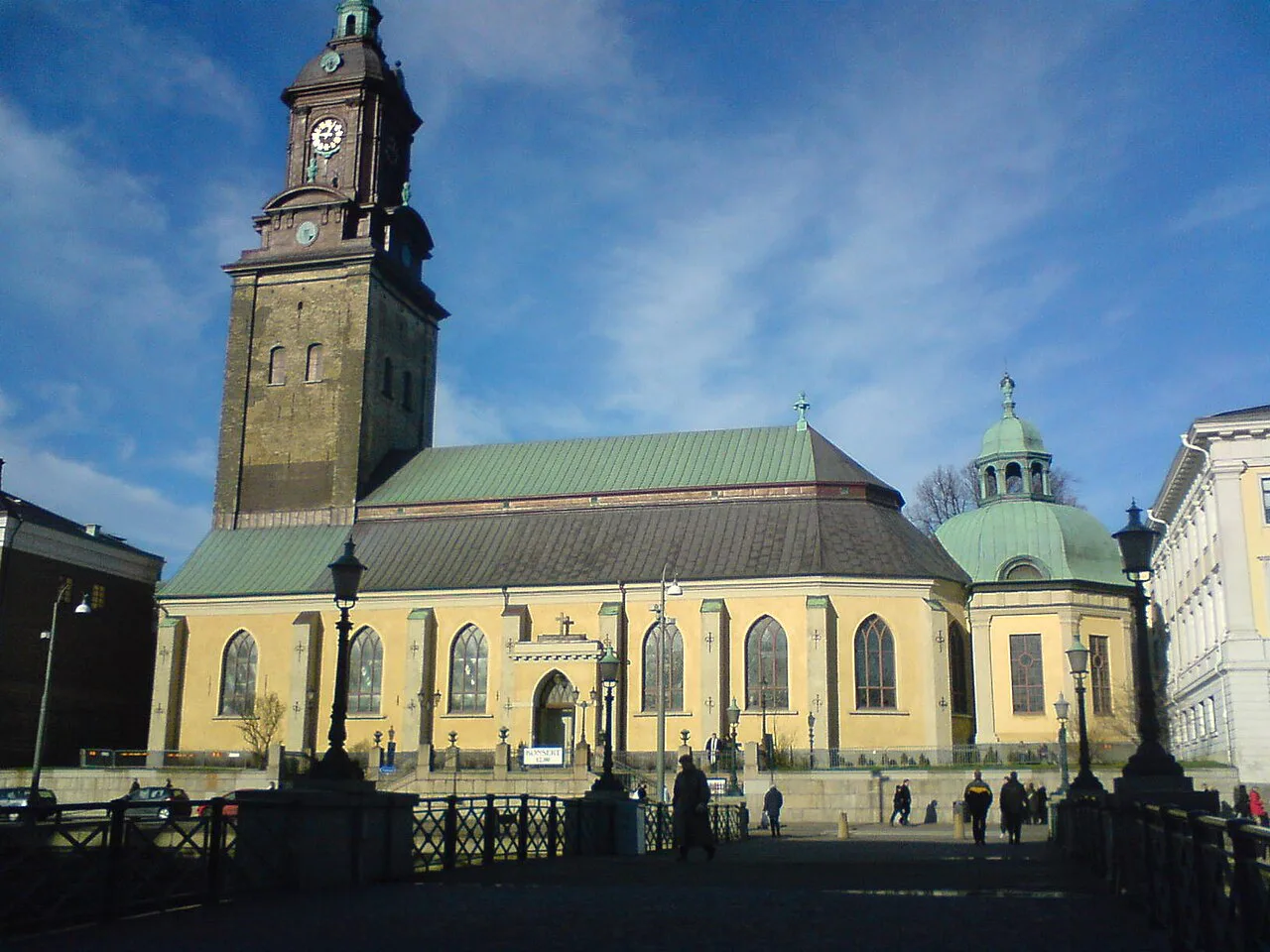
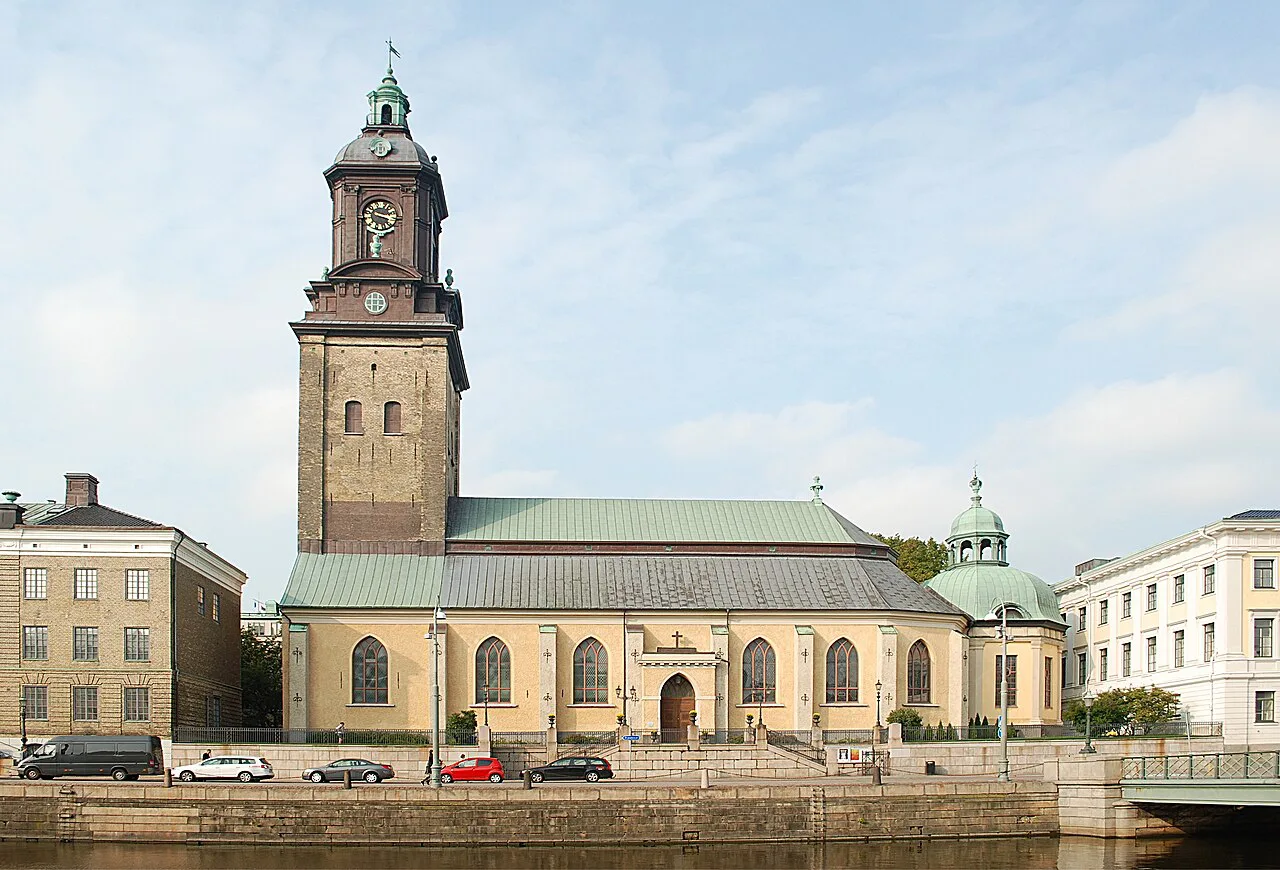
Tyska kyrkan, also called Christinae Church, was inaugurated in 1748 and used by the German and Dutch congregation; its 42-bell carillon was cast by the Bergholtz Bellfoundry in 1961. From there the route passes the Jonas Alströmer statue, created by John Börjeson and unveiled at Lilla Torget in 1905, and closes at Gothenburg Cathedral, the seat of the bishop of the diocese of Gothenburg.
The cathedral is also marked as ticketed, so plan the visit around the building's published opening rather than assuming you can walk in. Ending here leaves you a couple of minutes from the shopping streets and the market halls, which is the natural next move if you have the afternoon free.
Guided alternatives: Haga, fika and the landmarks
If you would rather have a guide, the Haga old town walking tour runs two hours from Fredsgatan 14, with a published season of 1 February to 31 December 2026, and takes in the oldest districts and their cafés. The guided walking and Swedish fika tour also runs two hours, with a season of 1 January to 31 December 2026.
A third option, the guided walking tour of the main landmarks, lasts about 1.5 hours and is published for May to December 2026. City walking tours generally run one to two hours, many start at Avenyn, Gothenburg Central Station or another central meeting point, and booking ahead is advised in high season. Most operators run tours in English.
The Go City Gothenburg Pass is sold for 1, 2, 3 or 5 days and bundles admission to named sights and tours, including the Paddan tour, Universeum and the City Museum. Whether it saves you money depends on how many of those you would actually visit on top of the walk, so price it against your own shortlist rather than buying on principle.
Self-guided versus guided
Walking the route yourself costs nothing and lets you spend twenty minutes at Kronhuset and two at a statue if that is what you fancy. A guided tour buys you the stories behind the statues, the founding legend and the church interiors, plus a fixed pace that suits first-time visitors who want the city explained rather than just pointed out.
The trade-off is time and freedom. A two-hour Haga tour covers one neighbourhood in depth and gives you the old-town cafés on a plate; the self-guided line covers more ground but leaves you reading plaques. If you have only one day, pick one format rather than trying to do both.
Where to break the walk for fika
The natural pause is in the old districts, where the Haga tour stops at the 17th-century streets and their cafés. A cinnamon bun and a coffee in the middle of the walk splits the day neatly and gets you off your feet before the northern churches. For a wider shortlist of spots, the Fika in Gothenburg guide covers the options by neighbourhood.
If you would rather eat standing or pick up provisions, the Gothenburg Market Halls cluster near the end of the route and make an easy lunch stop. Shopping in Gothenburg is concentrated in the same streets, so the walk can end with errands rather than a detour.
Walking conditions and what to wear
The centre mixes paving, cobbles and short slopes, and the published tour notes ask for comfortable shoes — sound advice for the self-guided version too. The legs are short, but the day adds up if you wander into the Garden Society park or loop the old streets, so build in buffer time.
If the weather turns, the route passes close enough to museums and covered markets that you can duck inside and rejoin later. Check the day's forecast in the morning, then decide whether to walk the spine in one go or split it either side of lunch.
Should you walk it yourself or book a guide?
Walk the ten-stop route yourself if you want the statues and churches at your own pace, with fika in the old districts as the natural pause. Book the two-hour Haga or fika tour if you would rather hear the stories and let someone else set the pace, especially on a short first visit.
Either way, check the venue listings for Kronhuset and Gothenburg Cathedral before you set out, since both are ticketed and their visiting arrangements decide how long the stop takes.
Explore more Gothenburg guides
Frequently Asked Questions
How long does a Gothenburg walking tour take?
The self-guided ten-stop route through the centre covers about 3.5 km and roughly 45 minutes of pure walking, so allow half a day with stops. Guided city walks in Gothenburg generally last one to two hours, with the Haga and fika tours running two hours and the landmarks tour about 1.5 hours.
Do I need to book a guided walking tour in Gothenburg in advance?
Booking ahead is advised, particularly in high season when guided tours often fill up. Tours can usually be booked online, and several operators run them in English.
Is the Gothenburg walking route suitable for children?
Most city walking tours suit both children and adults, and some are adapted for families. The self-guided route's short legs between the central statues make it easy to cut short if younger walkers tire.
Sources
Notes for your next Swedish city break
Optional updates to our Sweden guides.
You might also like

Continue reading
More guides you'll find useful