Marstrand: Sweden's Car-Free Island Town Near Gothenburg
Plan a day in Marstrand, the car-free island town near Gothenburg, with Carlsten Fortress views, harbour lanes, the ferry crossing and a lighthouse walk.
On this page
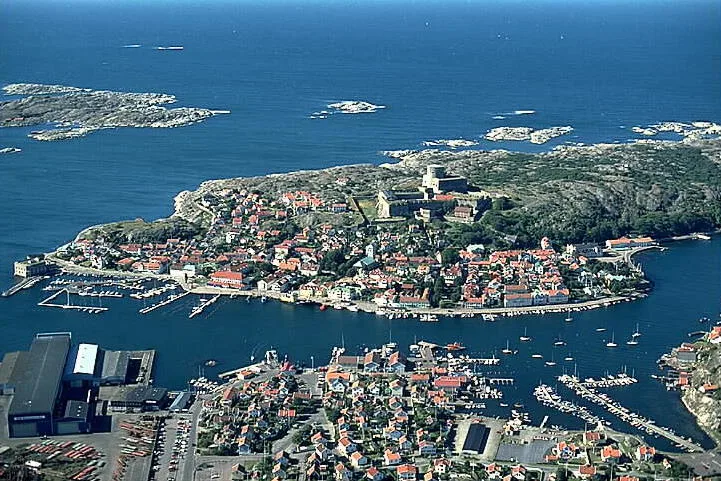
Marstrand is worth a full day rather than a quick stop: a car-free town on Marstrandsön, reached by a five-minute ferry from Köön, where the bus from Gothenburg ends. It sits roughly 47 km from the city at the outer edge of the west coast archipelago, where the sheltered harbour meets the Skagerrak. This guide covers the crossing, the fortress climb, the old town lanes and the longer walk to Skallens lighthouse.
Allow a day and you can climb Carlsten Fortress, wander the 19th-century resort streets below it and still reach the lighthouse path; allow less and you should choose between the fortress and the outer island. The town itself is small enough to cross on foot in minutes.
Two islands, one small town
Marstrand spreads over two islands. Köön carries the road and the last bus stop, with a bridge back to the mainland, while Marstrandsön is the car-free town itself, reached by a short ferry hop across the strait. Knowing which side you are on makes the arrival simple: you leave the bus on Köön and walk onto the boat as a foot passenger.
The town has held privileges since around 1200 and grew rich on herring, then reinvented itself as a seaside health resort in the 19th century. That history explains the layout: a working harbour, a leafy park behind it and ornate wooden houses packed along narrow cobbled lanes.
If you are weighing Marstrand against a day inside the city, the contrast is the point: this is rocks, salt water and a village small enough to learn in an afternoon. Use the Gothenburg Attractions: 21 Visitor Guides hub to see what else sits alongside it before you commit a day.
Getting there from Gothenburg without a car
Public transport from Gothenburg makes its final stop on Köön, on the mainland side of the bridge, and from there the ferry crossing to car-free Marstrandsön takes about five minutes. That makes the trip perfectly doable by bus and boat, with no need for a car at any stage. Check the current ferry times with the operator before you set out, since the crossing is short but the service pattern matters for your return.
Arriving by car is possible as far as Köön, where the bridge ends and vehicles stop, so you park and join the ferry as a foot passenger. The difference in effort is small either way; the ferry is a crossing, not an excursion, and you should not plan your day around it.
If island hopping is the main draw of your trip, it is worth comparing Marstrand with the closer southern islands before you book a whole day. Our Gothenburg Archipelago Guide sets out the options so you can pick the crossing that suits your timetable.
A day or an overnight?
A day trip is enough to climb to Carlsten Fortress, walk the old town and eat by the harbour. Add the lighthouse walk and you have a full, satisfying day out of Gothenburg, but you will be moving at a steady pace rather than lingering on the rocks.
Staying overnight buys you the early morning and late evening, when the day visitors have gone and the harbour is quiet. The town has guesthouses and hotels, including Marstrands Havshotell by the old shipyard site, so an overnight is a real option rather than a compromise.
Think about what you want from the island: a fortress and a harbour lunch, or a long coastal walk with a swim. The first works in a half day, the second needs the better part of a day and decent light.
Arriving: harbour, park and square
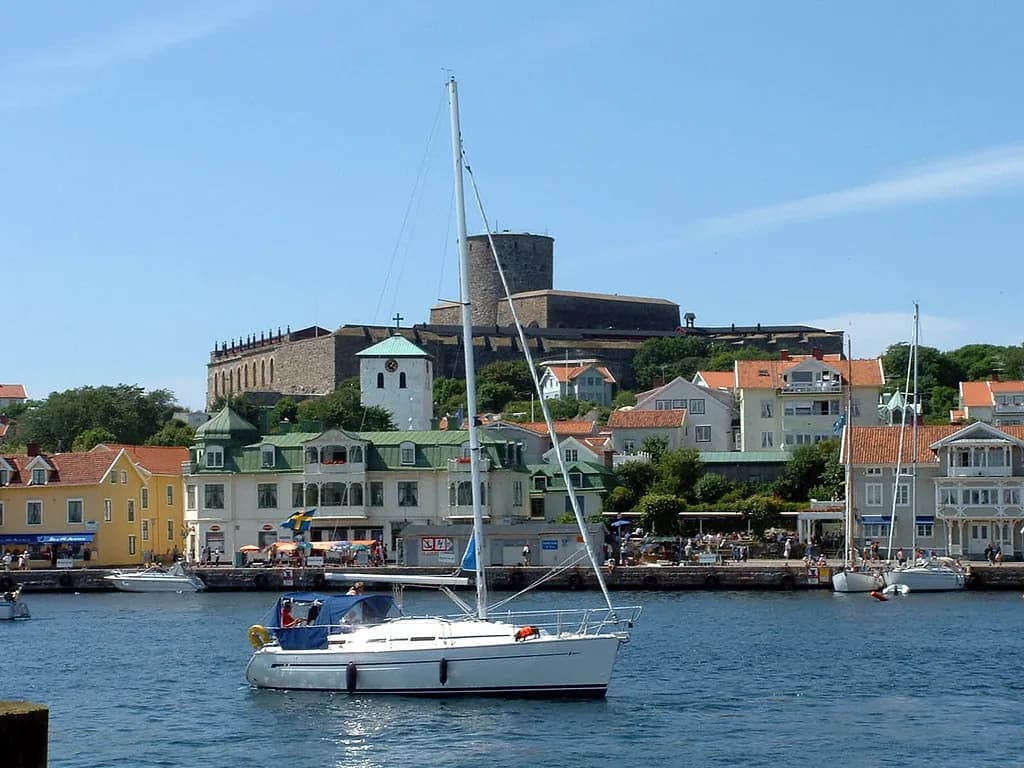
The ferry lands you at the harbour, where sailing boats moor on both sides of the strait and the waterfront park sits at the edge of the town. From here the main square is a short walk inland, with Marstrand Church, a whitewashed stone building dating to around 1300, close by.
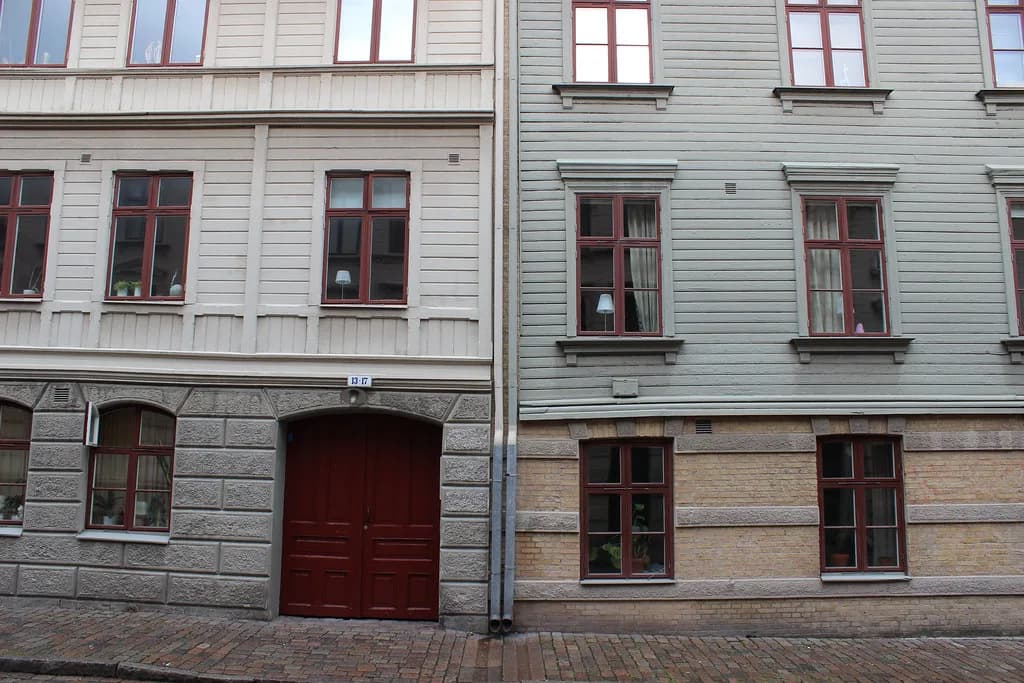
This is the part of Marstrand to slow down in. The lanes behind the harbour are lined with carefully kept Victorian-style houses from the resort era, and the whole circuit takes little more than half an hour at an unhurried pace.
If you want a coffee or a pastry before the climb, Bergs Bakery sits next door to Arnell På Kajen by the harbour, both named in visitor accounts of the town.
Carlsten Fortress: the climb, the view and the dungeons
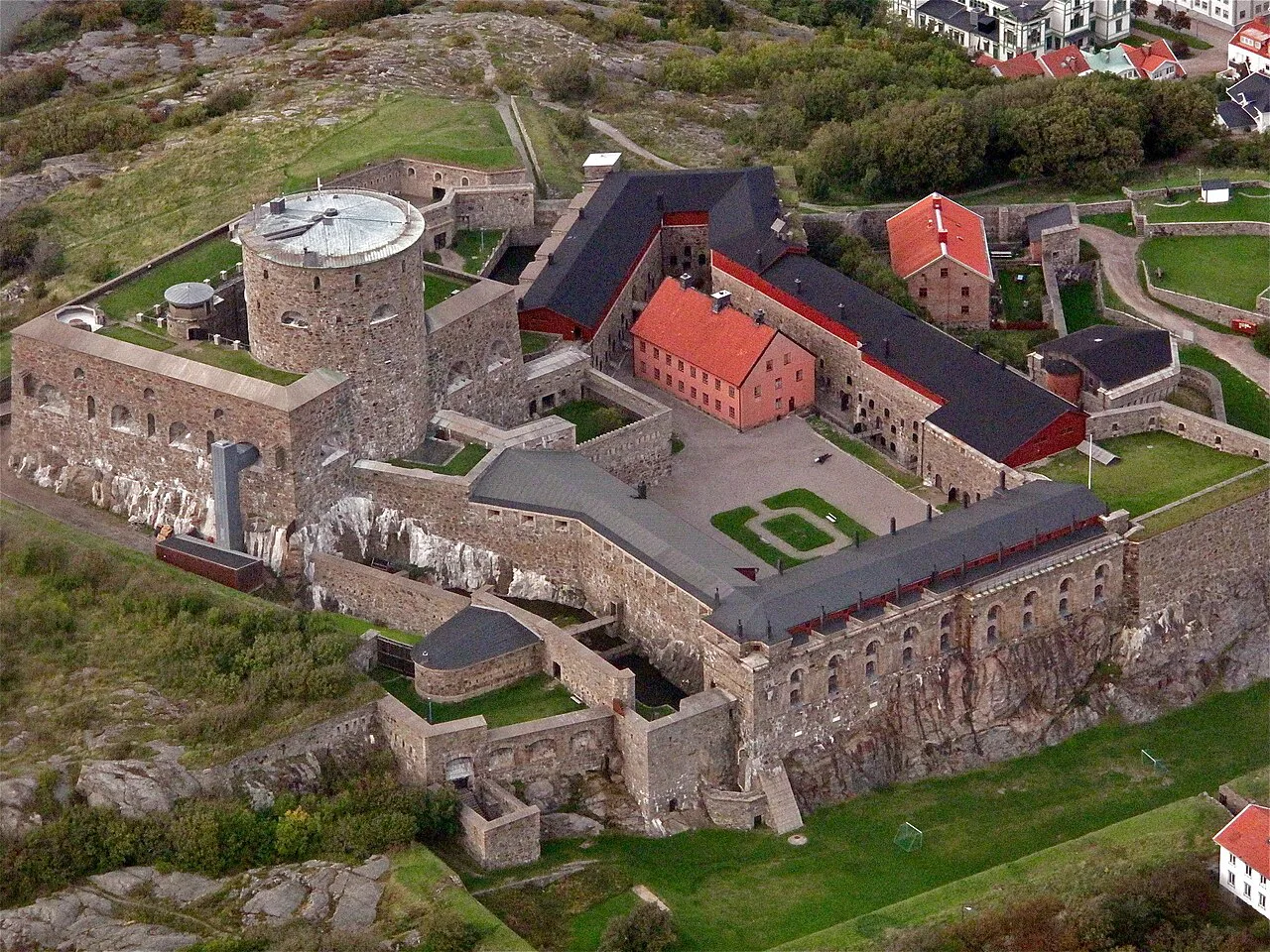
Carlsten Fortress sits on the high rock above the town, built after Marstrand became Swedish in 1658, and the walk up is the single best use of an hour on the island. The payoff is a panorama over the town, the harbour, the neighbouring islands and the open sea.
Below the ramparts the fortress keeps its darker history: the dungeons are part of the visit and are not for everyone, so decide before you pay whether the cells or the view is your priority. The climb itself is straightforward but steep in places, and sturdy shoes make a difference on the rock.
Time it for late afternoon if you can. The light over the archipelago is the reason most people remember the fortress, and it also means you have already done the old town while the day was at its busiest.
The old town lanes and Strandverket
Below the fortress, the town rewards wandering more than ticking off. The streets around the harbour hold the resort-era houses, the church and the small square, and the whole is best seen on foot without a fixed route. Our Gothenburg Old Town guide shows how the same wooden-town character plays out back in the city.
By the sailboat harbour, the old southern fortress of Strandverket has been turned into a venue for art and photography exhibitions, talks and concerts, some of them held outdoors in the courtyard. It is the one indoor stop worth building into a Marstrand day, particularly if the weather turns.
Pair the lanes with a slow lunch by the water rather than a rushed sandwich, because the harbour is the heart of the place. Arnell På Kajen is known for its fish soup, and the setting does most of the work.
The outer island and Skallens lighthouse
Beyond the houses, most of Marstrandsön is wild rock, low cliffs and a small but dense forest crossed by well-marked paths. The longest of these circuits the whole island and ends at Skallens lighthouse, where the view west over the open sea is at its best towards sunset.
This is the trade-off to plan around. A short winter or autumn day will not fit both a proper fortress visit and the lighthouse circuit, so pick one: the fortress for history and a town view, the outer path for rock, water and quiet. The walk also passes ponds and caves, which makes it the more adventurous of the two.
Wear shoes with grip and carry water, since the path is exposed rock in stretches and there is little shelter once you are out there. With only a half day, the fortress and harbour lanes are the better use of it.
Sailing, swimming and the spa past
Marstrand has drawn visitors for centuries, first for herring and later as a spa resort where people came to restore their health by the sea. Today sailing and swimming do the same job: the harbour fills with boats in summer and the sun-warmed rocks on the outer shore serve as bathing spots.
There are sheltered swimming spots outside the town along the outer path, so a towel is worth packing even on a day trip. The water is salt and bracing rather than warm, and the rocks are the point as much as the swim.
If swimming and islands are the core of your trip rather than the fortress, the ferry network around Gothenburg gives you plenty more of both. Our Gothenburg Ferries guide covers the crossings worth knowing.
Summer versus the rest of the year
Marstrand has a short, intense summer: for around eight weeks at the height of the season the harbour, rocks and restaurants are busy, with sailing crowds and Midsummer visitors. Outside that window, before Midsummer and again in autumn, it turns quiet and the island feels like a different place.
Quiet does not mean closed. The sea, the rocks and the views are there all year, and a picnic on the rocks above the Marstrand Fjord is a fair reason to come in May or September when the town is calm.
The practical consequence is daylight. A spring or autumn visit gives you shorter days, so the fortress and the lighthouse walk compete for the same hours, and a summer visit gives you long evenings but more company on the paths.
Practicalities for a Marstrand day
Most of the day is spent on your feet on cobbles and rock, so treat the ferry crossing as your only sitting-down transport and build in a proper pause at lunch. Book any harbour table ahead in high summer, when the town fills with sailors and day visitors.
Payment in Sweden is overwhelmingly by card and phone, so a foreign card is usually all you need; keep a small backup just in case. Confirm the current ferry times and any exhibition hours with the operators on the day you travel, as these are the details most likely to shift with the season.
If the weather turns, Gothenburg has indoor options that do not depend on daylight. Browse the things to do in Gothenburg guide for museum and market-hall ideas to hold in reserve.
Fortress first or lighthouse first?
With a full day and long light, do both: climb to Carlsten Fortress in the morning, wander the lanes and harbour at midday, then take the outer path towards Skallens lighthouse for the evening. With a shorter day, take the fortress and the old town, which sit together and need no extra planning.
Whichever you choose, go by bus and ferry rather than driving onto the island, since the town itself is car-free and the crossing is only minutes. Marstrand rewards a day spent mostly outdoors, so dress for rock and salt water and leave the schedule loose.
Explore more Gothenburg guides
Frequently Asked Questions
Is Marstrand worth visiting?
Yes, if you want a car-free island town with a genuine sight at its centre. Carlsten Fortress gives you the best panorama on the coast here, the 19th-century harbour lanes are pleasant to wander and the outer island adds a proper coastal walk to Skallens lighthouse. It is a full day out of Gothenburg rather than a quick stop.
Can you visit Marstrand without a car?
You can. The bus from Gothenburg ends on Köön, the mainland side of the strait, and a short ferry crossing takes you to the car-free town on Marstrandsön. Cars stop at Köön, so even drivers finish the journey as foot passengers.
How long is the ferry to Marstrand?
The crossing between Köön and Marstrandsön takes about five minutes, so it is a hop rather than a boat trip. Because the service is short but the timetable still governs your return, confirm the current times with the operator before you travel.
Sources
Notes for your next Swedish city break
Optional updates to our Sweden guides.
You might also like
Continue reading
More guides you'll find useful